Hazardous waste

Using Artificial Intelligence to Optimize Waste Recycling Processes

16.08.2026

The use of artificial intelligence (AI) is revolutionizing waste management processes, providing powerful tools for their optimization. AI is capable of analyzing vast amounts of data, predicting waste streams, and automating sorting, significantly increasing efficiency and reducing operational costs. This contributes not only to environmental sustainability but also to economic benefit, transforming waste management into a more intelligent and productive industry.

Innovative solutions for textile waste recycling

15.08.2026

Innovative Solutions for Textile Industry Waste Recycling The textile industry is one of the largest sources of waste, polluting the environment and depleting natural resources. The increasing volume of clothing production and consumption leads to the accumulation of vast amounts of textile waste, most of which ends up in landfills. This creates serious environmental problems, such as soil and water pollution, greenhouse gas emissions, and the loss of valuable materials that could be reused. Traditional methods of textile waste disposal, such as incineration and landfilling, are inefficient and harmful. Incineration releases toxic substances into the atmosphere, while landfilling leads to the decomposition of materials, generating methane – a potent greenhouse gas. Furthermore, these methods do not allow for the recovery of valuable resources contained in textile waste, such as fibers, dyes, and chemicals. In this regard, there is an urgent need to develop and implement innovative solutions for textile waste recycling. These solutions must be environmentally friendly, economically viable, and capable of ensuring maximum resource recovery. They aim not only to reduce waste volumes but also to create new business opportunities and promote sustainable development. Modern Approaches to Textile Waste Recycling: 1. Mechanical Recycling: This method involves shredding textile waste into fibers, which can then be used to produce new textile products, insulation materials, fillers, or composite materials. Mechanical recycling is a relatively simple and inexpensive method, but it has limitations regarding the quality of the final product, as fibers can be damaged during shredding. 2. Chemical Recycling: This method involves breaking down textile fibers into their constituent components (monomers or oligomers) using chemical reagents. The resulting components can then be used to synthesize new polymers or other chemical products. Chemical recycling allows for the production of high-quality materials, but it is more complex and energy-intensive than mechanical recycling. 3. Biological Recycling: This method uses microorganisms or enzymes to break down textile fibers. Biological recycling is an environmentally friendly method, but it is in its early stages of development and has limitations regarding the speed and efficiency of the process. 4. Thermal Recycling: This method involves using high temperatures to convert textile waste into energy (through incineration) or into chemical products (through pyrolysis or gasification). Thermal recycling allows for the reduction of waste volumes and the generation of energy, but it can lead to the emission of harmful substances into the atmosphere if proper purification technologies are not applied. Innovative Technologies and Solutions: 1. Sorting Technologies: Effective sorting of textile waste is a key step for successful recycling. Innovative sorting technologies, such as automated systems based on artificial intelligence and optical sensors, allow for quick and accurate separation of textiles by fiber type, color, and other characteristics. 2. Development of New Fibers from Recycled Materials: Researchers are actively working on creating new types of fibers that can be made from recycled textile waste. This allows for the creation of high-quality and functional materials with minimal environmental impact. 3. Use of Textile Waste in Construction: Textile waste can be used as fillers for construction materials, such as cement or concrete, or as insulation materials. This allows for the reduction of waste volumes and the creation of new, environmentally friendly building materials. 4. Creation of Closed-Loop Production Cycles: The concept of a closed loop involves using recycled materials to produce new products, which reduces dependence on virgin resources and minimizes waste generation. 5. Development of Startups and Innovative Business Models: More and more startups and companies are emerging that offer innovative solutions for textile waste recycling, from developing new technologies to creating platforms for exchanging and reusing clothing. Challenges and Prospects: Despite significant progress in developing innovative solutions for textile waste recycling, certain challenges exist. One of them is the lack of a unified infrastructure for collecting and sorting textile waste. Additionally, technical and economic barriers associated with scaling new technologies need to be overcome. However, the prospects for the development of this industry are very promising. Growing consumer awareness of environmental issues, as well as support from governments and international organizations, create favorable conditions for the implementation of innovative solutions. Textile waste recycling will not only reduce the negative impact on the environment but also create new jobs, promote the development of a "green" economy, and ensure the sustainable development of the textile industry. Conclusion: Innovative solutions for textile industry waste recycling are a key element in the transition to a circular economy. They allow for the transformation of waste into valuable resources, reduce environmental burden, and create new business opportunities. Further research, development, and cooperation among scientists, industry, and governments are critically important for achieving sustainable development in this field. --- Excerpt/Summary: Innovative solutions for textile waste recycling are critically important for reducing environmental burden and transitioning to a circular economy. These include mechanical, chemical, and biological recycling, as well as advanced sorting technologies and the creation of new materials from recycled raw materials. These approaches not only minimize waste but also transform it into valuable resources, contributing to the sustainable development of the textile industry.

Development of effective methods for purification of industrial gases from nitrogen and sulfur oxides

14.08.2026

This scientific work is devoted to the development and improvement of methods for cleaning industrial gases from harmful compounds, such as nitrogen and sulfur oxides. Chemical and physicochemical processes are investigated that allow for the effective removal of these pollutants, minimizing their impact on the environment. The goal is to create innovative and economically viable technologies for industry.

Technologies for extracting valuable metals from spent electronic components

13.08.2026

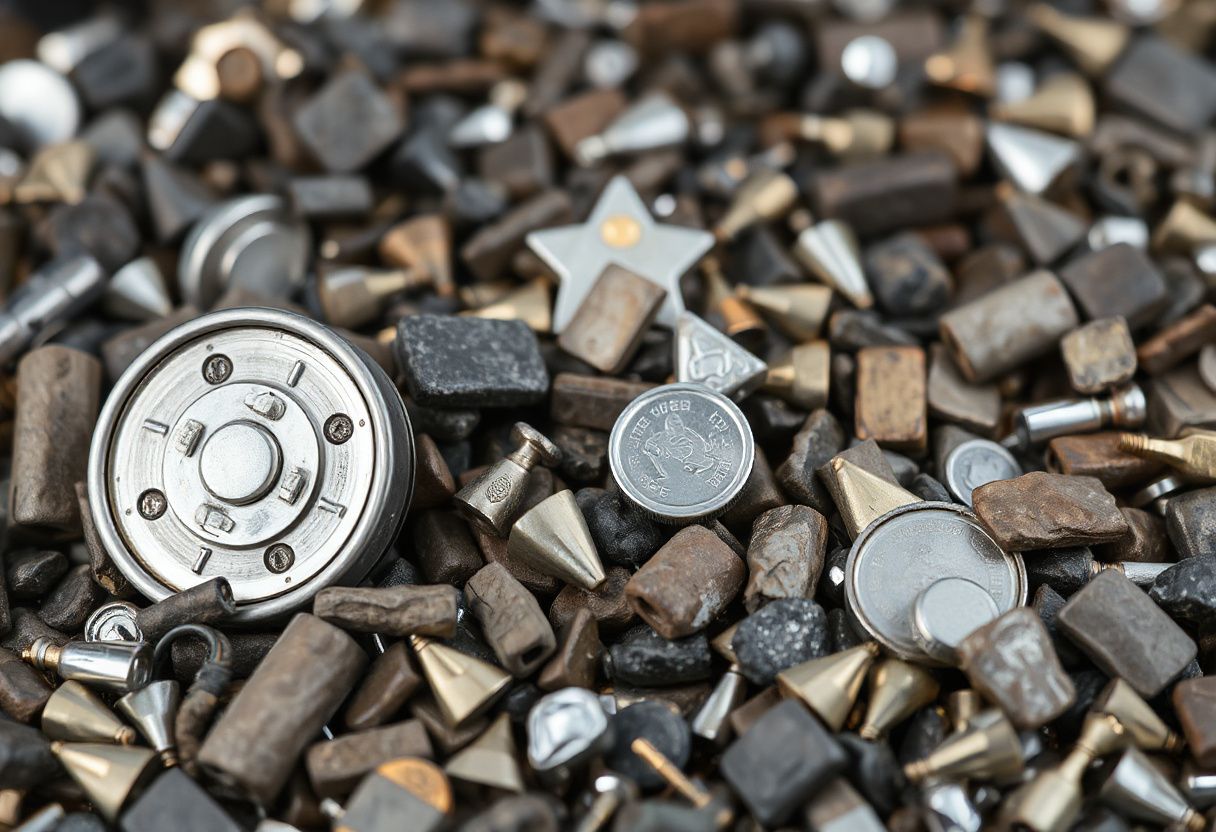
Modern technologies allow for the efficient extraction of valuable metals such as gold, silver, platinum, and palladium from spent electronic components. This includes hydrometallurgical, pyrometallurgical, and biometallurgical methods, which minimize environmental impact and contribute to a circular economy. The development of these technologies is crucial for sustainable electronic waste management and reducing reliance on primary raw material sources.

Development and application of geographic information systems for industrial waste management

12.08.2026

The development and application of geoinformation systems (GIS) ensures effective industrial waste management through visualization, analysis, and monitoring of their location, volumes, and composition. These systems allow for optimizing collection and transportation logistics, as well as forecasting potential environmental risks, contributing to informed decision-making. The implementation of GIS significantly enhances the transparency and controllability of industrial waste management processes, minimizing negative environmental impact.

Recycling and Reuse of Construction Industry Waste

11.08.2026

Recycling and reusing construction waste is a key area for reducing environmental impact and preserving natural resources. This involves converting dismantled materials into new raw materials, contributing to a circular economy in the construction industry. Such an approach not only reduces landfill volumes but also lowers the cost of producing new materials.

Optimization of energy consumption in industrial waste processing

10.08.2026

Optimizing energy consumption in industrial waste processing is crucial for reducing the environmental footprint and increasing economic efficiency. This includes implementing energy-efficient technologies, heat recovery, and utilizing secondary energy resources, which significantly reduces energy costs. Such an approach contributes to sustainable development and minimizes the impact of industry on the environment.

Application of Nanotechnology for Microplastic Removal from Industrial Wastewater

09.08.2026

Nanotechnologies offer effective solutions for the purification of industrial wastewater from microplastics, utilizing materials with unique properties. The application of nanofiltration, nanoadsorbents, and catalytic nanomaterials allows for the removal of even the smallest microplastic particles, which are difficult to eliminate with traditional methods. This contributes to a significant improvement in water quality and a reduction in environmental burden.

Technologies for Recycling and Regeneration of Industrial Lubricants and Cooling Fluids

08.08.2026

Technologies for the recycling and regeneration of industrial lubricants and coolants are crucial for reducing environmental impact and conserving resources. They enable the restoration of used materials to a state suitable for reuse, minimizing waste volumes. Modern methods include filtration, centrifugation, distillation, and chemical treatment, which ensure high quality of regenerated products.

Waste Search

Calculate cost?

Calculate processing cost for