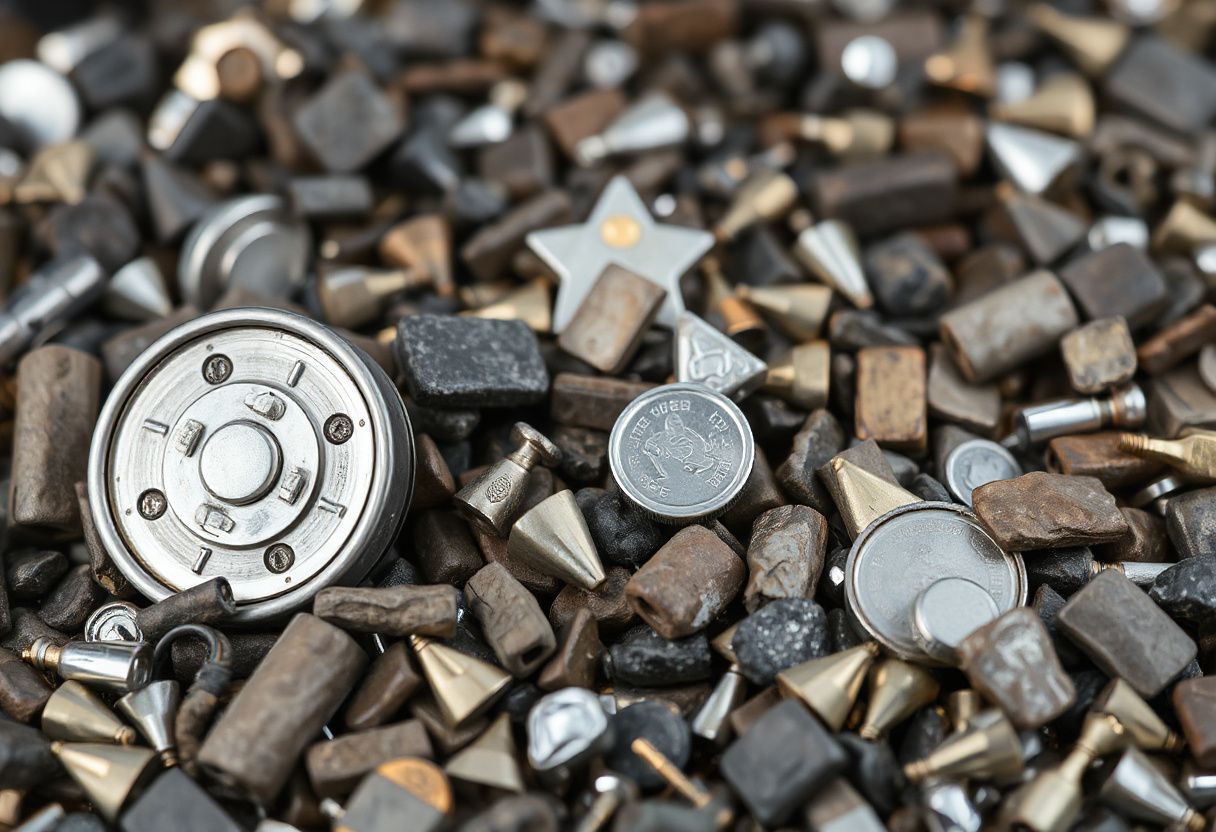
Approximately 80% of the mass of spent lead-acid and lithium-ion current sources is formed by valuable non-ferrous metals, which are subject to recovery using various technological schemes. Thermal treatment in high-temperature furnaces involves the combustion of organic binders and the melting of the metal fraction to obtain crude ingots of cobalt, nickel, and copper. The hydrometallurgical method is based on the leaching of crushed raw materials with solutions of sulfuric or nitric acid. Pyrometallurgical plants require lower costs for preliminary sorting of battery packs, but are accompanied by a high volume of toxic gas emissions. Chemical extraction provides a higher level of purity for the recovered lithium and lithium carbonate. The choice of the optimal option depends on the type of power sources and the content of graphite powder. At the same time, manual disassembly of large industrial storage units increases the risks of short circuits and uncontrolled thermal runaway inside the cells.
Pyrometallurgical processing at 1200 °C
Slag melts in shaft furnaces are formed at a temperature regime exceeding 1200 °C. Gaseous combustion products undergo mandatory neutralization in bag filters with a carbon sorbent.
Hydrometallurgical recovery of cobalt and nickel salts
Dissolving the active mass in acid solutions allows for the selective separation of soluble non-ferrous metal salts with a total recovery efficiency of up to 95%. The liquid phase is subject to multi-stage filtration. The main limitation of this method lies in the need to neutralize a significant volume of acidic wastewater using sodium hydroxide or slaked lime. Automated lines for the mechanical shredding of batteries operate in an inert nitrogen atmosphere to prevent the ignition of electrolyte residues and metallic lithium. After leaching, the residual graphite is subjected to additional washing and drying in vacuum chambers.
- Traction battery packs for electric vehicles and hybrids.
- Industrial uninterruptible power supplies for telecommunication towers.
- Lead-acid starter batteries for freight and special equipment.
- Household chemical power elements and compact batteries.
Classification and codes of the National Waste List 16 06 01* and 16 06 02*
The legislation of Ukraine requires precise identification of hazardous waste according to the National List of Waste. Lead batteries are classified under the code 16 06 01* as toxic raw materials. Nickel-cadmium current sources are collected under the code 16 06 02*, while other batteries with hazardous components are marked with the code 16 06 05* in accordance with regulations. Labeling and separate accumulation prevent the mixing of electrolytes with different chemical properties.
Transferring accumulated power sources without proper documentation entails financial penalties during inspections by ecological control authorities. During the transportation of batteries, hermetically sealed container packaging is used, which completely eliminates the leakage of sulfuric acid or potassium hydroxide solutions. Enterprises must issue waste acceptance and transfer certificates to confirm environmental reporting.
Organization of waste transfer to the company UtilVtorProm
The company UtilVtorProm holds a license to conduct business activities in hazardous waste management. The general organization of the technological chain covers collection, safe loading, and removal by special motor transport. Regular collection of raw materials eliminates accumulation. Storage areas are equipped with closed pallets made of chemically resistant polypropylene. A preliminary inspection of the batch at the customer's territory makes it possible to accurately determine the morphological composition of materials to choose the optimal option for further processing.
The initial contact of the enterprise with the customer usually begins with the coordination of batch volumes, types of power sources, and the presence of housing damage. After assessing the condition of the property, a removal schedule is drawn up and a accompanying passport for hazardous waste is issued for transportation across the territory of Ukraine. The customer receives a full package of closing documents for controlling state authorities. Specialized service maintenance from UtilVtorProm ensures the transfer of accumulated batteries for waste management in accordance with current environmental regulations.