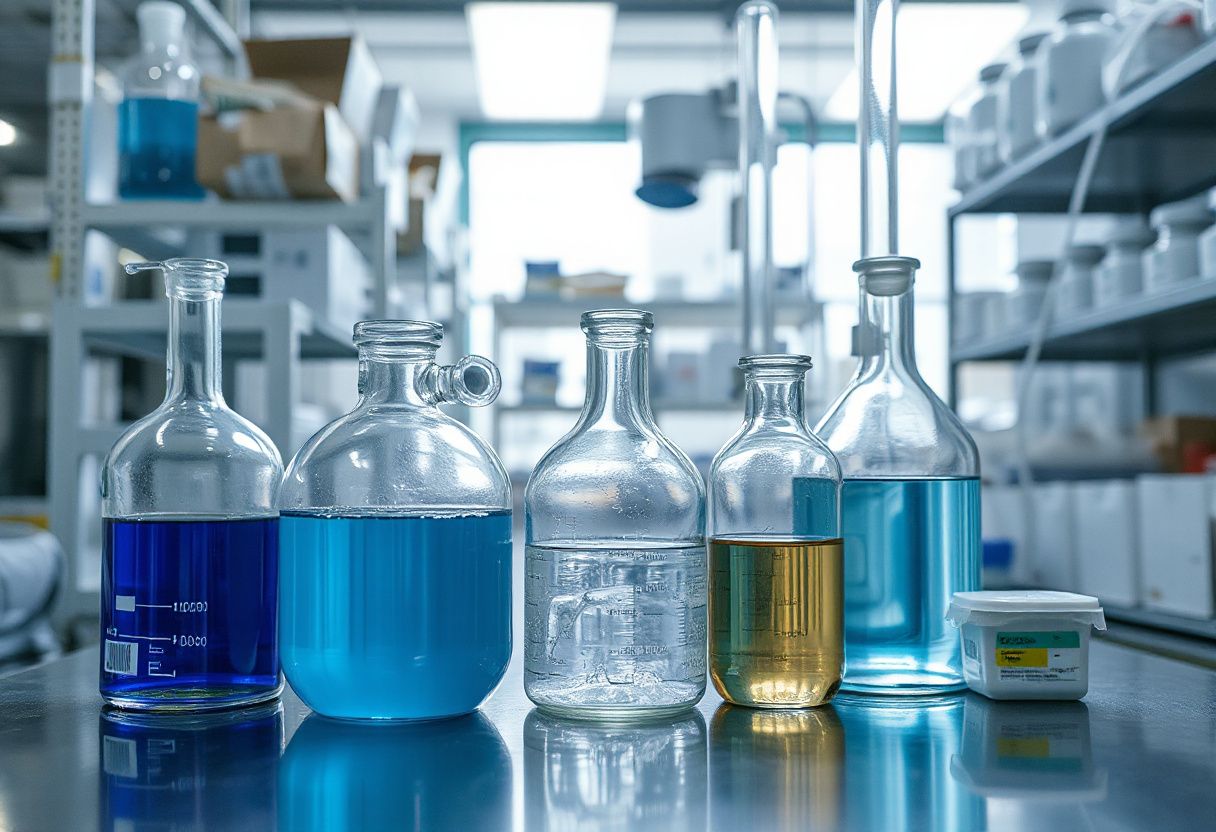
Pharmaceutical enterprises generate about 80% of all liquid hazardous waste in the form of spent volatile compounds used during the synthesis and extraction of biologically active substances. Liquid mixtures based on methanol, isopropanol, and dichloromethane with the code 07 05 04* require strict control due to their high toxicity, explosiveness, and ability to form azeotropic mixtures with water. Aqueous washing liquids and mother liquors under the code 07 05 01* additionally contain residues of active pharmaceutical ingredients. The heat of combustion of such liquid substances ranges from 15 to 38 MJ/kg, which determines the possibility of their thermal decomposition or reuse as a secondary energy resource. The concentration of organic substances in distillation overheads after rectification columns usually exceeds 95%. The residual content of sulfate ash in the purified material must not exceed 0.05%.
Rectification and Recovery of Solvents with Code 07 05 04*
Halogenated and non-halogenated liquid substances require fundamentally different approaches to separation and subsequent processing. Chlorinated hydrocarbons such as chloroform form highly toxic phosgene and phosphoric acid at high temperatures. Non-halogenated compounds burn much more easily. The efficiency of fractional distillation is completely determined by the difference in boiling points of the components in the mixture.
Incineration at 1200 °C and Thermal Oxidation
Incorrect storage of halogenated solvents in metal tanks without anti-corrosion enamel coating leads to rapid wall corrosion and the release of the vapor-gas phase into the atmospheric air. Uncontrolled discharge of liquid synthesis waste into the industrial sewer system destroys the activated sludge of biological treatment facilities and causes shock pollution of water bodies with toxic metabolites. Thermal neutralization without proper gas scrubbing causes emissions of dioxins and furans. The degree of combustion completeness of molecules strongly depends on the residence time of gases in the afterburning chamber and the gas flow turbulence at 1100–1200 °C. Rectification bottom residues often contain tars and heavy pharmaceutical substances. The viscosity of residues at 20 °C often exceeds 150 mm²/s.
- Non-halogenated organic solvents and washing liquids with code 07 05 04*.
- Aqueous mother liquors after substance crystallization with code 07 05 01*.
- Halogenated extraction mixtures containing dichloromethane or chloroform.
- Bottom residues of vacuum evaporators and rotary evaporators.
- Spent activated carbon from purification adsorption columns.
Technological Regulation of Neutralization according to ISO 14001 Standard
Laboratory analysis of the composition of liquid waste by gas chromatography is the first stage of safe processing. The obtained data make it possible to choose between vacuum distillation and high-temperature incineration in a furnace. The choice of a specific neutralization scheme is determined by the mass fraction of water in the raw material, the presence of mechanical impurities, and the concentration of halogens.
The sorted mixture is fed into closed hermetic containers made of 12Kh18N10T stainless steel for temporary accumulation and settling. Explosion-proof pumping equipment ensures safe transfer of the flammable liquid to specialized tank trucks for subsequent transportation to the processing site. Transfer acts are prepared in accordance with the requirements of the Resolution of the Cabinet of Ministers of Ukraine of 2023. The UtilVtorProm company provides a full cycle. Licensed waste management guarantees environmental safety and the absence of fines.
Organization of Waste Transfer to the UtilVtorProm Company
The organization of liquid waste transfer requires prior sampling of representative samples for analysis. Specialists evaluate the flash point indicators in a closed crucible and the component composition of the liquid phase. Based on the obtained test protocol, an individual regulation for the collection, draining, and safe transportation of chemical substances by special transport is drawn up. Ordering waste management begins with the inventory of all sources of solvent generation. To start cooperation, it is necessary to agree on accumulation volumes, removal frequency, and fill out the appropriate technical application form on the website. The UtilVtorProm company accepts, transports, and thermally processes technological residues using specialized equipment in compliance with all environmental standards. The first step is to conduct an audit of liquid residue generation directly at the production site.