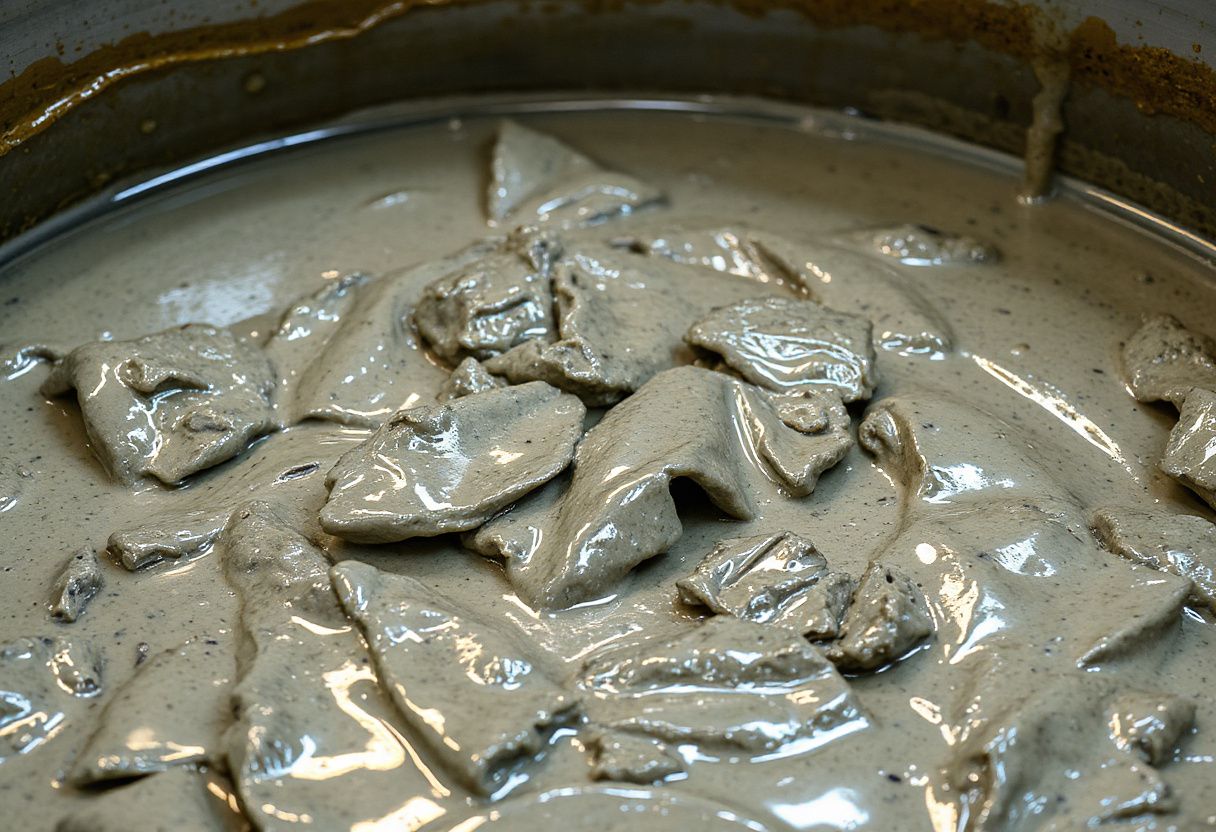
Cleaning electroplating baths at machine-building plants regularly leads to the accumulation of paste-like sludge with a high concentration of toxic heavy metal compounds. Wet sludge usually contains chromates. The liquid phase leaches copper, nickel, and zinc ions directly into groundwater through cracks in concrete collectors. Laboratory analysis of the residues shows the presence of harmful hydroxides with a high apparent moisture content of the entire mass up to 85%. Lime reagent treatment only temporarily binds toxic substances into sparingly soluble compounds. Leaving such sediments in open storage facilities for more than 30 days is prohibited. Enterprises are forced to look for reliable technological ways of drying, neutralizing, and disposing of the sludge for the subsequent safe removal of materials from the industrial site.
Physicochemical properties and dehydration at 105 °C
Electroplating sludge precipitates during the sedimentation of metal cations with alkaline solutions. Prolonged storage of the mass causes a gradual change in acidity and re-dissolution of toxicants. When heated to 105 °C, the moisture content of the starting substance decreases by 4 times, but the dry residue becomes a mobile finely dispersed dust.
Chromium plating baths and coating workshop equipment
The largest volume of toxic sludge is formed in the lines of galvanizing, pickling of 12Kh18N10T steel, and the technological application of a protective nickel coating. Industrial treatment facilities with membrane disc filter presses retain the dry residue, creating a dense cake with a high class of chemical hazard. Technological pickling of copper parts additionally releases soluble sulfates into the wash water.
Impact on membrane filters
Regeneration of spent pickling solutions requires rapid replacement of working filtration elements. Polypropylene cartridge filters accumulate up to 15 kg of heavy metals every month. Is it possible to safely contain such aggressive components in a regular closed warehouse without specialized equipment and appropriate approvals?
Classification and codes of NPB 11 01 09* and 11 01 11*
The state waste list clearly defines the accounting procedure for toxic residues generated as a result of chemical treatment and coating application. Sludges and cakes after dehydration are classified under the code 11 01 09* if they contain hazardous substances in concentrations above the limit values. Liquid spent solutions and wash water receive the code 11 01 11*. The enterprise UtilVtorProm provides a full regulated complex of actions for the collection, processing, and transportation of the specified hazardous substances by specialized hermetic motor transport. Special transportations are carried out in hermetic containers with appropriate labeling of the dangerous cargo.
Modern processing methods involve high-temperature vitrification and solidification of the sludge. The cement matrix blocks the leaching of toxins. Special reagents convert mobile chromium compounds into insoluble oxide. The resulting monolith is stored in specially equipped hazardous waste landfills. High-temperature thermal treatment at 1200 °C completely destroys associated organic impurities, surfactants, and toxic solvents in the composition of the residues.
Execution of acts and transfer of residues to UtilVtorProm company
The official transfer of toxic materials for processing requires proper execution of primary documentation and confirmation of the ecological safety of the industrial facility. A specialized operator carries out the collection, removal, and processing of the toxic mass in full compliance with licensing conditions and current environmental standards. The environmental services of the enterprise receive full reporting after the completion of work. The documents guarantee legal protection. Timely transfer of sludges prevents the accrual of fines during inspection audits. The signed certificate of completion confirms the fact of proper neutralization of hazardous residues.