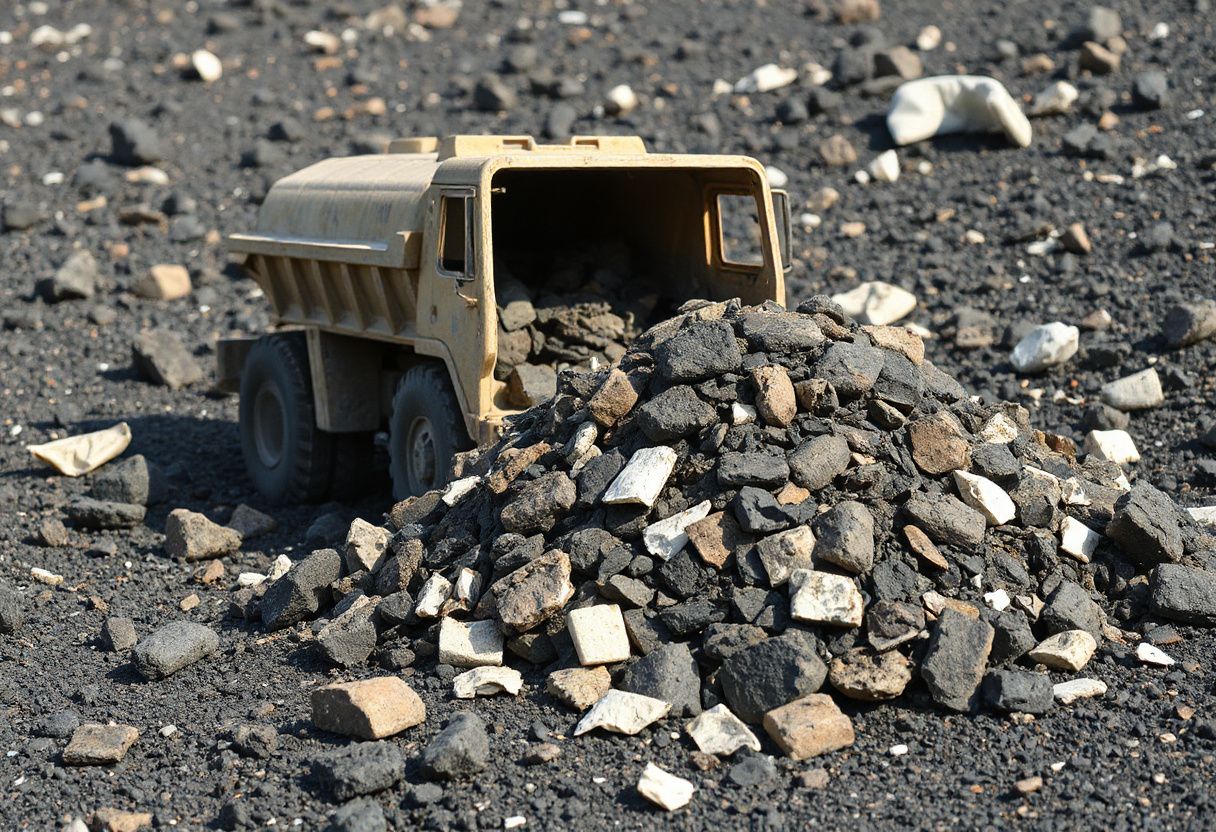
According to the National Waste List and the requirements of the Law of Ukraine "On Waste Management", road construction enterprises are obliged to carry out separate collection and accounting of all residues of bituminous compounds. Failure to comply with these regulations entails administrative fines and also threatens soil and groundwater pollution with heavy petroleum fractions and toxic aromatic hydrocarbons. During road repairs, road millings daily cut tons of outdated asphalt concrete pavement. The resulting reclaimed asphalt pavement contains organic binders that have lost their initial elasticity under the influence of solar radiation, regular temperature fluctuations, and high mechanical loads. Without special processing, such waste accumulates at sites and creates an environmental threat.
Asphalt plants and repair crews regularly face the accumulation of spoiled resins. Also, residues occur during the cleaning of bitumen melting boilers, bitumen tankers, and technological pipelines. Long-term storage of spent bitumen in the open air leads to its erosion by rainfall, although compacted layers are poorly susceptible to natural decomposition.
Composition of BND 60/90 petroleum bitumens and regeneration technologies
The basis of BND 60/90 and BND 90/130 road petroleum bitumens is a complex mixture of high-molecular-weight hydrocarbons, heteroatomic compounds, asphaltenes, resins, and oils. Asphaltenes provide the material with hardness and a high softening point, while resins provide viscosity and adhesive properties to mineral materials. When heating bitumen mixtures up to 160 °C, cationic bitumen emulsions are released.
Use of recyclers and asphalt mixing plants
Modern road works involve the use of specialized machines for pavement restoration directly on-site. Cold recyclers crush old asphalt and mix it with new plasticizers. Can any enterprise independently perform such manipulations without certified equipment and the appropriate permit to work with hazardous materials?
Classification by codes 17 03 01* and 17 03 02 in the NWL
According to the National Waste List, residues of road pavements containing coal tar are classified under code 17 03 01* as hazardous substances. Other bitumen-containing mixtures that do not contain carcinogenic coal tars receive code 17 03 02 and belong to safer materials. The collection of such residues requires the use of covered dump trucks and special airtight containers. Transportation is carried out along a strict route. The carrier must have a license for hazardous waste management of the appropriate category. Temporary storage is allowed only on asphalted sites with bunding.
At the initial stage, specialists conduct a laboratory study of the chemical composition of the residues. Then the materials are sorted by the degree of contamination and fractional composition. Further processing depends on the mixture. Although thermal destruction is not suitable for all types of bituminous binders, it ensures the neutralization of resins. Cleaned mineral components are sent for secondary use in the construction of lower layers of road pavements or the manufacture of building conglomerates. The licensed company UtilVtorProm provides a full technological cycle of work in compliance with environmental standards of Ukraine, guaranteeing the complete extraction of harmful substances. Processing complexes crush monolithic pieces using rotary crushers.
- Laboratory analysis of waste composition and determination of the hazard class.
- Loading and safe transportation of materials by special transport.
- Thermal or mechanical processing of residues using specialized equipment.
Proper processing of road construction residues reduces the burden on the environment and allows mineral raw materials to be returned to the production cycle. The process requires strict control. Although asphalt regeneration requires significant energy costs, the use of secondary raw materials reduces the costs of extracting new stone materials. To order services for the collection, transportation, storage, and efficient processing of bitumen waste, contact UtilVtorProm through the official form on the website.