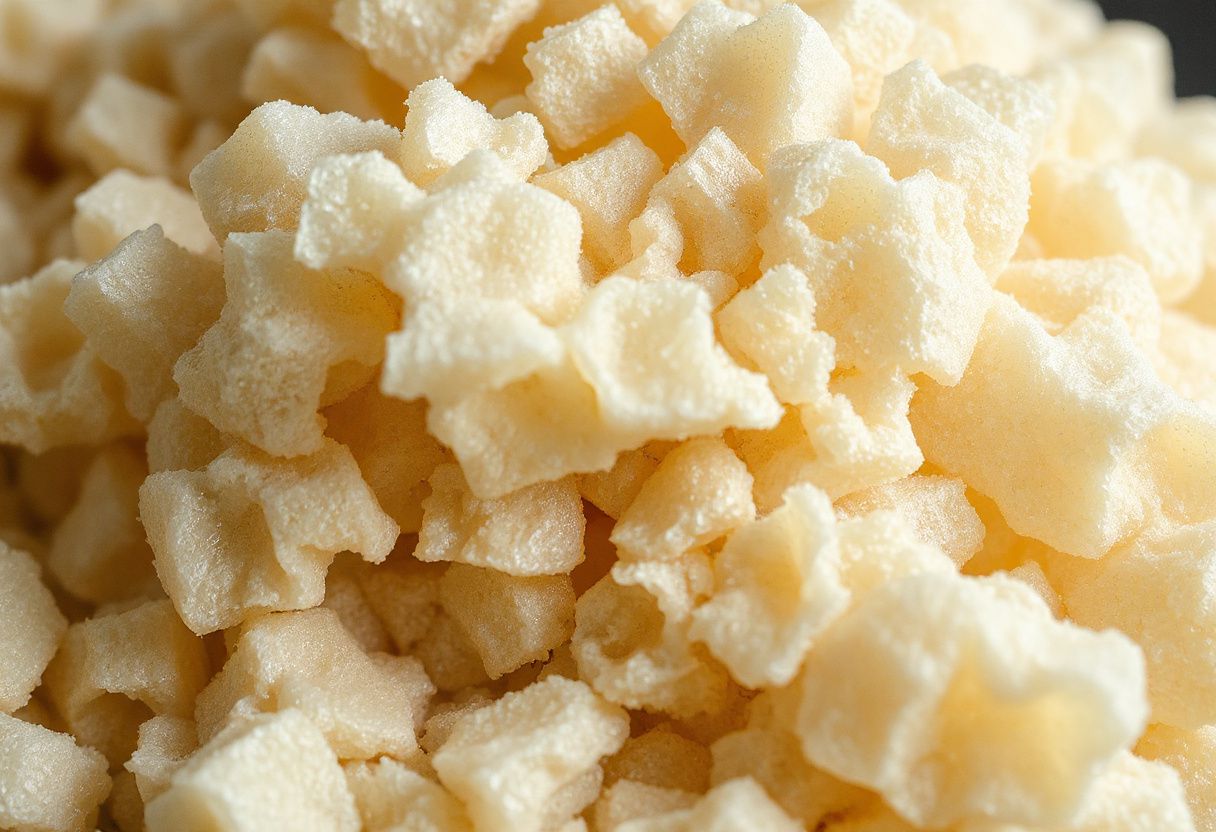
Residues of polyurethane foams after insulation dismantling or packaging are a porous polymer mass with closed cells. Note that in the presence of residual monomers, this material releases toxic toluylene diisocyanate when heated. UtilVtorProm accepts such process trimmings and defective construction layers at specialized sites for mechanical or chemical processing.
Due to its high thermal conductivity at the level of 0.022 W/m·K and density starting from 30 kg/m³, rigid polyurethane foam is resistant to biodegradation. The chemical composition of the mass includes polyesters and modifying flame retardants, which require grinding in rotary knife crushers at 1500 rpm. The resulting 5 mm fraction is then mixed with additional binding components for board production.
Glycolysis and thermochemical recovery at 200 °C
Thermochemical decomposition of polyurethane foam residues is carried out in reactors using diethylene glycol at a temperature of 200 °C. The reaction takes about 4 hours. If the feedstock contains moisture, the mixture is pre-dried in a drum dryer. The resulting secondary polyol is added to new construction mastics and sprayed thermal insulation coatings.
Application of secondary raw materials in sandwich panels
Defective panels with metal cladding are processed into powdered regranulate after preliminary separation of the 0.5 mm thick steel sheet. Technological residues of sprayed polyurethane foam, after grinding, are pressed under a pressure of 10 bar when heated to 160 °C to form floor soundproofing blocks. Such products are widely used for interfloor insulation in residential construction.
Classification under codes 17 06 03* and 07 02 14* and logistics
According to the residual content of hazardous mixtures, insulation waste is classified under code 17 06 03*. Production residues of additives and reaction components of polymer synthesis receive the code 07 02 14*. To prevent the release of residual gases and moisture absorption of the material, the collected mass is stored in sealed containers in indoor warehouses with forced ventilation. Transportation is carried out by curtain-sider trucks under covered loading conditions.
Before starting the construction site cleanup, it is recommended to conduct an inventory of the residues and separate the metal elements from the polymer. Proper sorting and transfer of the collected raw materials for licensed processing makes it completely possible to avoid the accumulation of fire-hazardous insulation residues on the facility's territory. This simplifies the technological audit. To organize systematic and safe collection of accumulated polyurethane foam residues at the construction site, you should order a service from UtilVtorProm. The application is formed based on the calculated volume and hazard class of the waste. Transportation is coordinated in accordance with the approved schedule for dispatching technological batches.