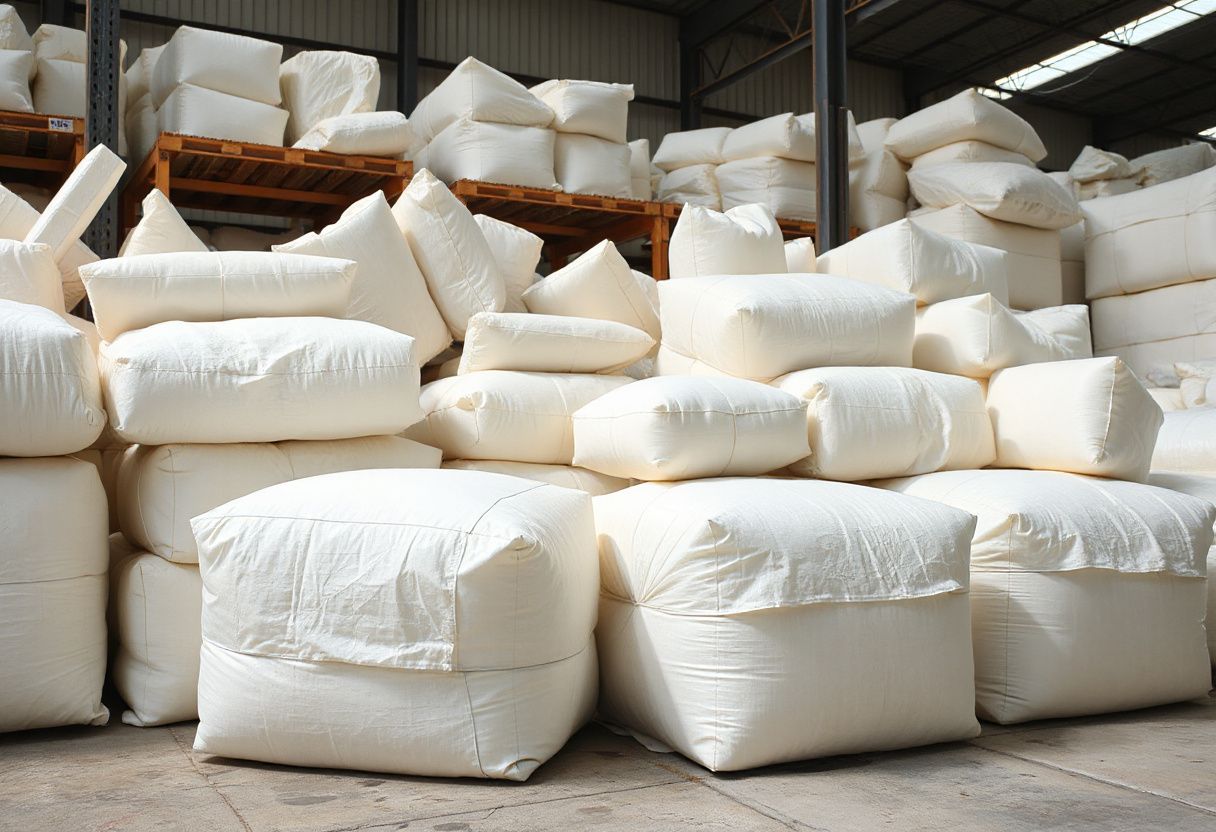
Accumulated polyurethane foam scraps from furniture factory warehouses arrive at sites in the form of large bales of uneven density and varying sizes. This residue is generated during the cutting of soft sofa parts, and small fragments with high dust contamination cannot be re-pressed. The material has a complex chemical structure. The basis of such foam consists of polyesters that react with toxic isocyanates such as tolylene diisocyanate in the presence of catalysts and blowing agents. The bulk density of these pieces usually ranges from 20 to 45 kg/m3. Due to its high porosity, the raw material quickly absorbs ambient moisture during storage. That is why the accumulated volumes require immediate removal, as the moistened polymer loses its properties and begins to rot intensively in open areas.
Classification of polymer residues under code 07 02 13
In the furniture industry, solid plastic pieces are generated under the code 07 02 13. Liquid chemical components are classified separately before mixing under the code 07 02 08*.
Rigid foams differ from their elastic counterparts by a higher content of closed cells, which are filled with gas having low thermal conductivity for structural insulation. The elastic material has an open pore structure that ensures high elasticity of parts during long-term use of the finished furniture. Different types of polyurethane foam require separate sorting directly at the assemblers' workstations. Mixing these categories significantly complicates subsequent mechanical grinding, although modern extruders are capable of processing combined mixtures with careful temperature control.
Environmental threats during the destruction of isocyanates
Open burning of furniture foam residues releases hazardous hydrogen cyanide. Which components pose the greatest danger to the health of the factory personnel? Smoldering releases isocyanates, nitrogen oxides, and carbon monoxide, which cause severe poisoning and chronic respiratory diseases in people. Polymer compounds accumulate in the soil and poison underground aquifers for decades.
Algorithm for collecting polyurethane foam pieces on the conveyor
The technological process begins with the arrangement of enclosed accumulation areas directly near the cutting machines, where special mechanical presses are installed to reduce the volume of the collected materials. Pressing is carried out every two shifts. This measure reduces the initial volume of raw materials by approximately 5 times, which greatly facilitates subsequent temporary storage and transportation to the processing site. The prepared packages are marked in accordance with the hazard class and moved to warehouses where the air humidity is maintained at no higher than 60 percent. The enterprise's activities in this area are regulated by a specially developed industrial waste management instruction. All operations are recorded in accounting logs to ensure transparency during state environmental control.
For the safe transportation of raw materials, licensed organizations with appropriate transport are engaged. Such activities are carried out by UtilVtorProm. The company's specialized vehicles ensure reliable transportation of residues without the risk of environmental pollution. After delivery to the site, the raw material is sent for grinding or thermal processing.
Processing of elastic foams at licensed sites
Interaction with furniture enterprises usually begins with a detailed environmental audit of the accumulated waste volumes and the determination of their exact morphological composition. Based on the data obtained, the specialists of UtilVtorProm draw up an individual schedule for the removal of polymers and select the optimal types of containers for raw material accumulation. After agreeing on all technical details, the parties sign an official service agreement. The customer receives a full package of permits and reporting documentation confirming the safe processing of polyurethane residues in industrial furnaces at a temperature of 1100 °C.