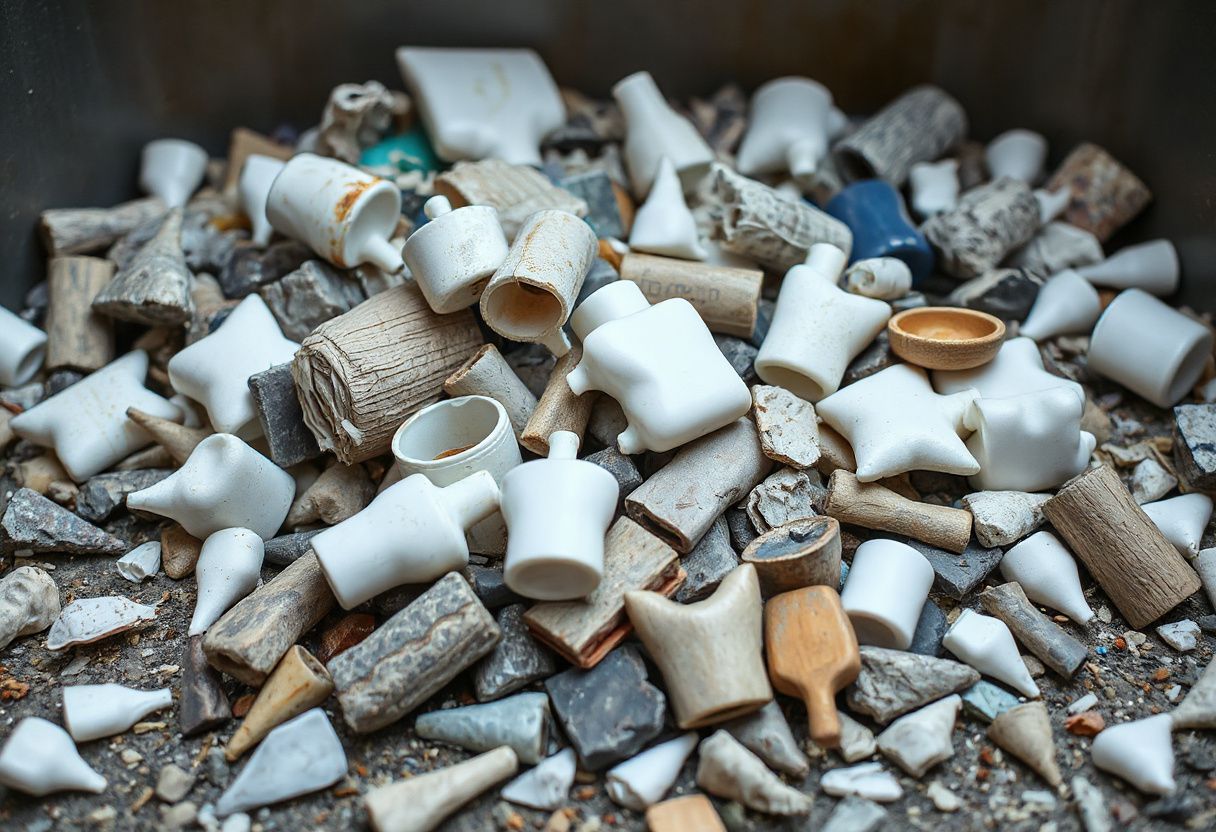
Construction companies often dump residues of silicone mastics and hardened sealants into ordinary waste containers. Ukrainian legislation classifies liquid and uncured polymer compounds as potentially hazardous materials. Violation of environmental safety requirements when handling such residues entails penalties and state supervision orders.
Requirements for developers and code 08 04 09*
During the installation of facade systems and translucent structures using automatic dispensers, defective tubes and chemical waste constantly accumulate. Production sites must ensure separate collection of tubes with residues of acetoxy silicones to prevent the release of acetic acid into the air. The company UtilVtorProm accepts these fractions at specially equipped temporary accumulation sites.
Classification by codes 08 04 09* and 08 04 10
Uncured sealants with organic solvents belong to the classification group 08 04 09*. Completely polymerized silicone masses without hazardous impurities receive the code 08 04 10.
Regulations for the transportation of sealants in 1000 L IBCs
Proper regulated storage of liquid waste in sealed steel drums or 1000 L IBCs prevents the spread of toxic vapors. Reagent leaks create a fire hazard. Specialized transport for the transportation of silicone residues must bear hazardous cargo labeling and be equipped with means for neutralizing accidental spills. Is a construction enterprise capable of independently providing thermally insulated warehouses for the temporary placement of these reactive mixtures without involving licensed operators? The prolonged presence of uncured elastomers under direct sunlight leads to self-heating of the mass. Due to this, the accumulation period of technological residues at the site is limited to 30 days.
Thermal treatment of polydimethylsiloxane at 1200 °C
The basis of most construction sealants is the synthetic polymer polydimethylsiloxane with the addition of mineral fillers. To accelerate molecular cross-linking, manufacturers introduce organotin catalysts and organosilicon amines. The high heat resistance of silicone rubber requires the use of incineration methods in high-temperature incinerators at indicators not lower than 1200 °C. During thermal decomposition, fine silicon dioxide, water vapor, and carbon dioxide are formed. Gas emissions require multi-stage purification. The use of industrial bag filters and wet scrubbers prevents fine aerosol particles from entering the open environment.
Application of high-pressure extraction units at 2 bar
The presence of modifying additives based on alkoxytitanates in construction sealants significantly reduces the possibility of their secondary chemical processing into monomeric compounds. Direct pyrolytic processing of complex formulation polymer residues leads to rapid slagging of the reactor and failure of the main heating elements. This exception complicates substance regeneration. The use of the pyrolysis method requires the mandatory preliminary removal of mineral fillers in special extraction units at a working pressure of 2 bar. The formation of highly abrasive sediment during extraction creates additional pressure on pump assemblies. Fluoroelastomer sealing collars wear out three times faster than standard operating periods.
Environmentally safe handling of sealants requires strict compliance with the technological regulations for their collection. Proper classification of silicone residues minimizes environmental risks for any construction enterprise. Transferring toxic fractions to specialized organizations completely eliminates the possibility of harmful chemical compounds entering surface and ground waters. UtilVtorProm collects, transports, and professionally processes any hazardous construction waste. To issue acceptance certificates and coordinate the sealant removal schedule, you can contact the specialists using the contacts indicated on the website. Obtaining an official document on the environmental processing of waste guarantees the full compliance of your enterprise's activities with all established state requirements.