Hazardous waste
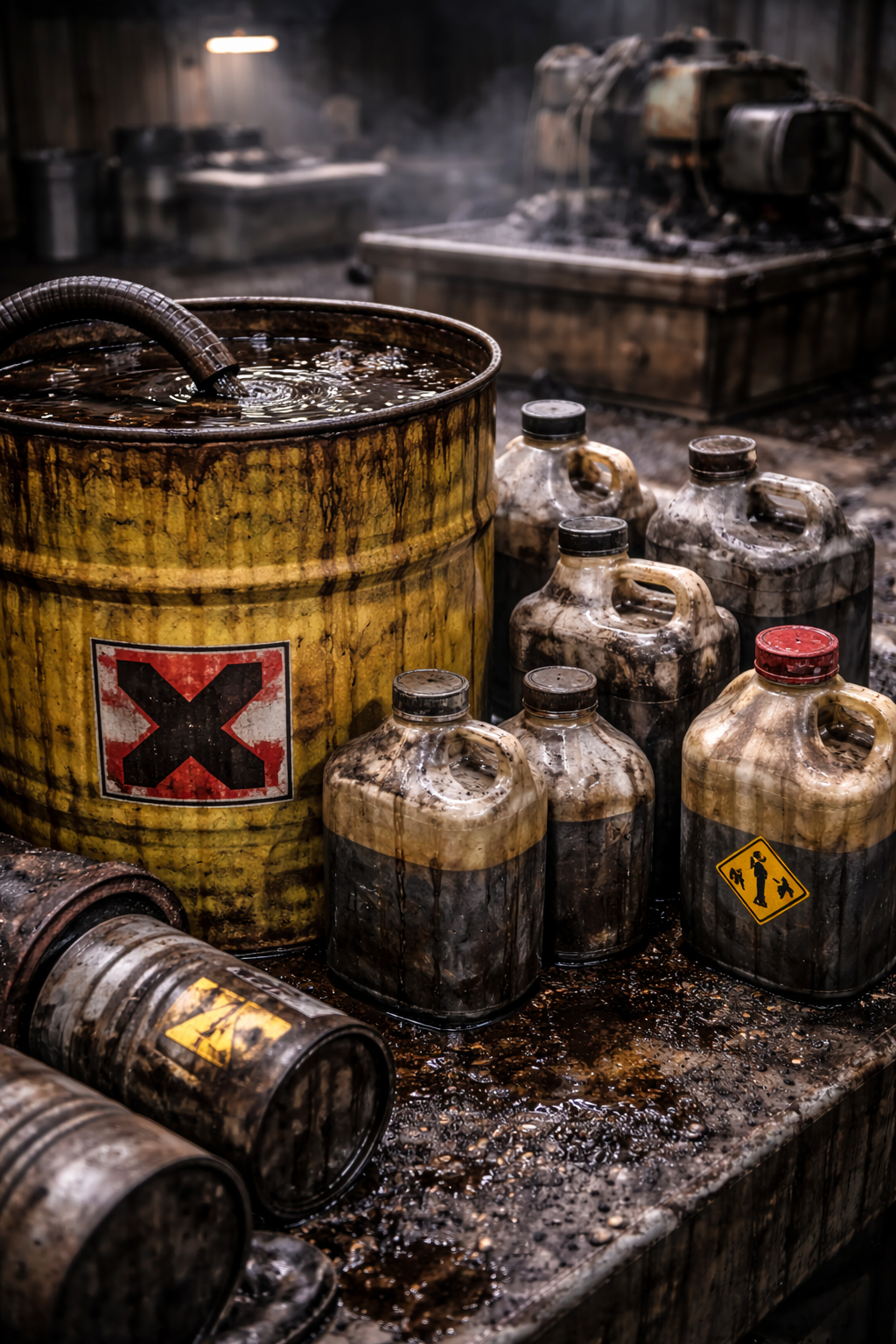
Hydraulic lubricants containing polychlorinated biphenyls in industrial systems
20.02.26
Hydraulic lubricants containing polychlorinated biphenyls (code 13 01 01*) were historically used in industrial hydraulic systems due to their high thermal stability. Polychlorinated biphenyls ensured reliable equipment operation under high temperatures and loads.
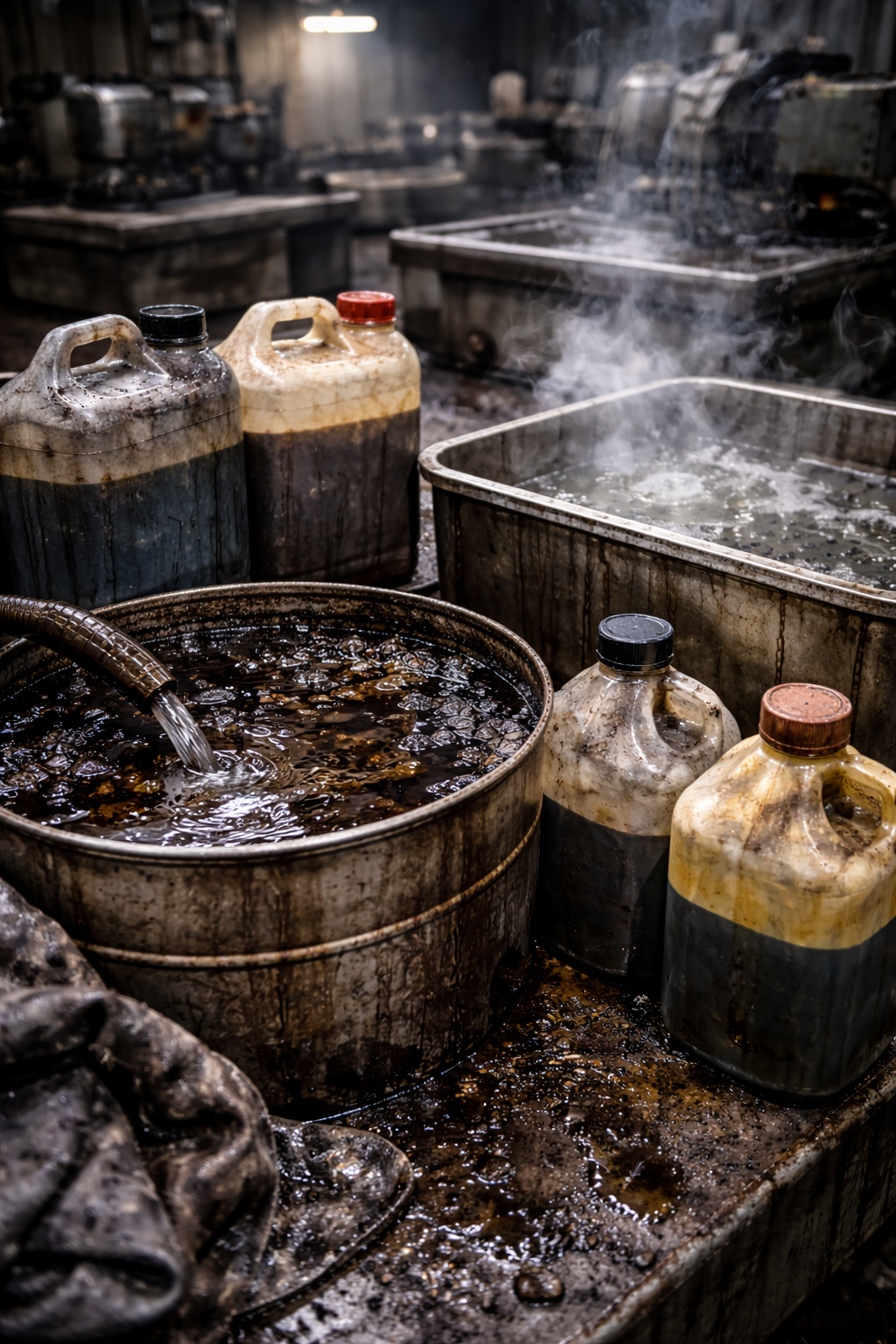
Steam degreasing wastes in industrial metal cleaning processes
17.02.26
Отходы парового обезжиривания (код 12 03 02*) образуются при очистке металлических изделий в среде паров растворителей и обезжиривающих агентов.
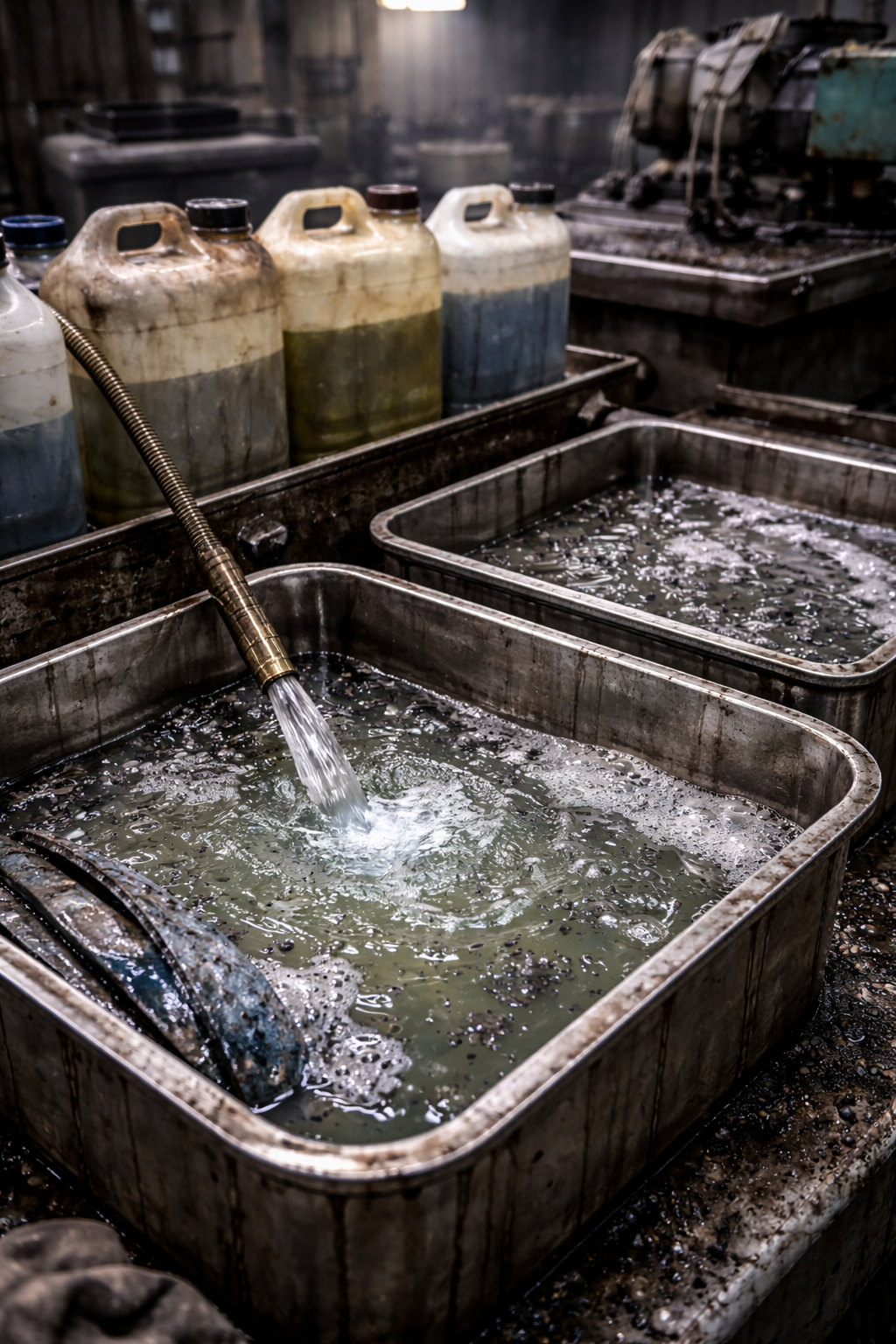
Aqueous rinsing liquids in industrial cleaning and processing operations
14.02.26
Aqueous rinsing liquids (code 12 03 01*) are generated during industrial cleaning, rinsing, and surface preparation processes following mechanical or chemical treatment. These liquids are used to remove residues of lubricants, abrasive particles, metal dust, and other process-related contaminants.
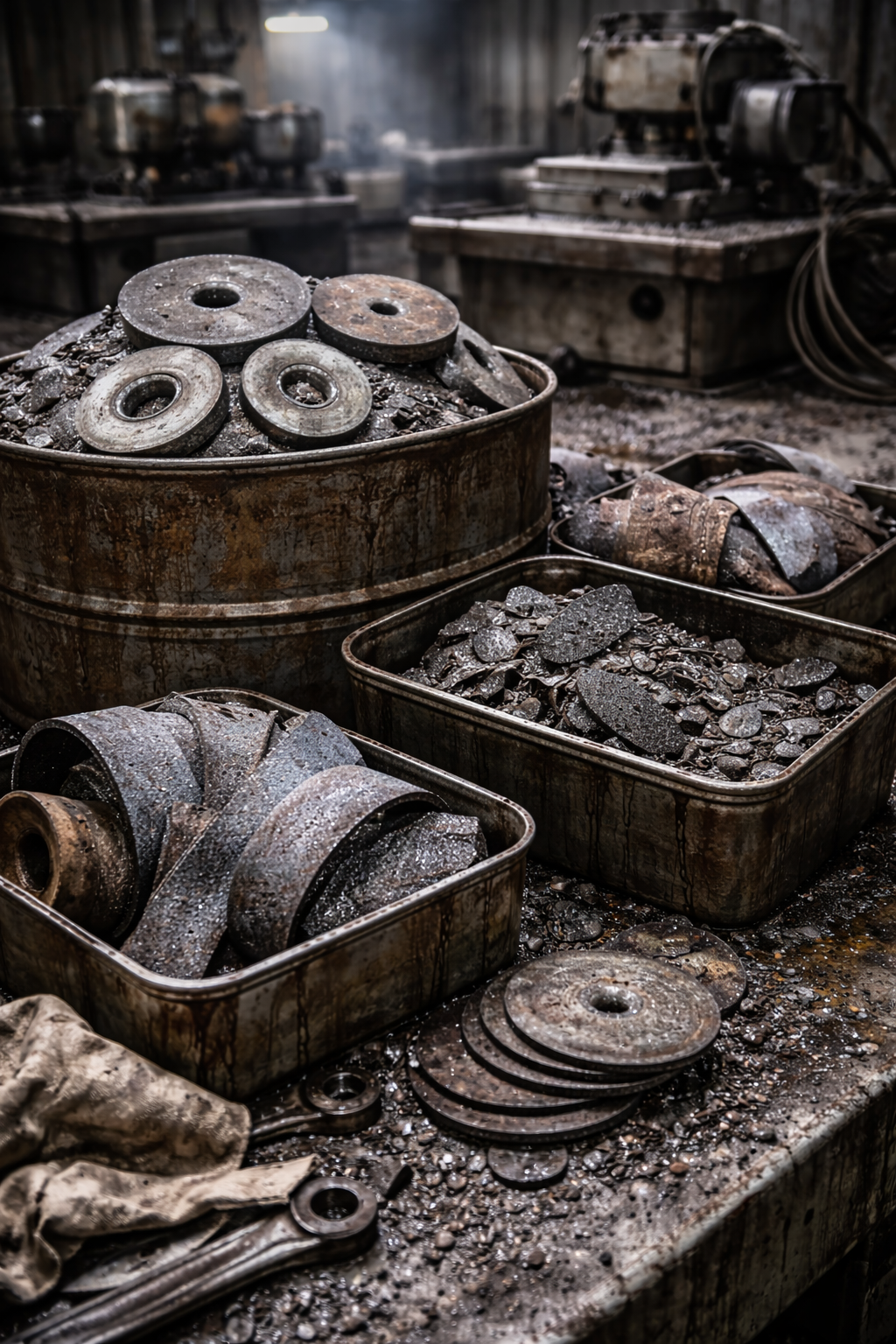
Waste grinding materials in mechanical surface treatment processes
11.02.26
Spent grinding bodies and grinding materials containing hazardous substances (code 12 01 20*) are generated during intensive mechanical processing of metals and alloys in industrial operations.
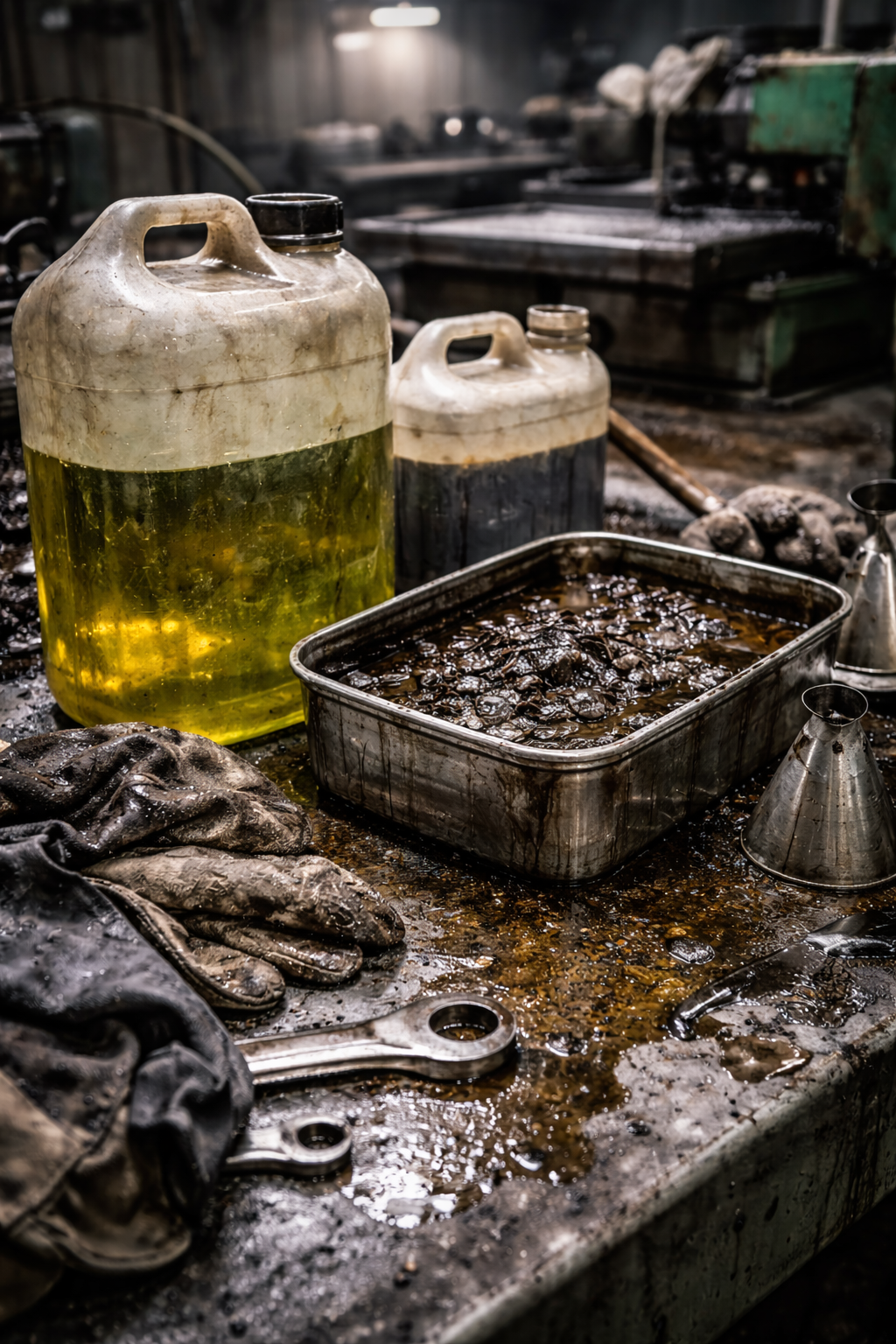
Biodegradable oils in metalworking processes
08.02.26
Oils from mechanical processing that are subject to rapid biodegradation (code 12 01 19*) are used in metalworking operations with increased environmental performance requirements for lubricants.
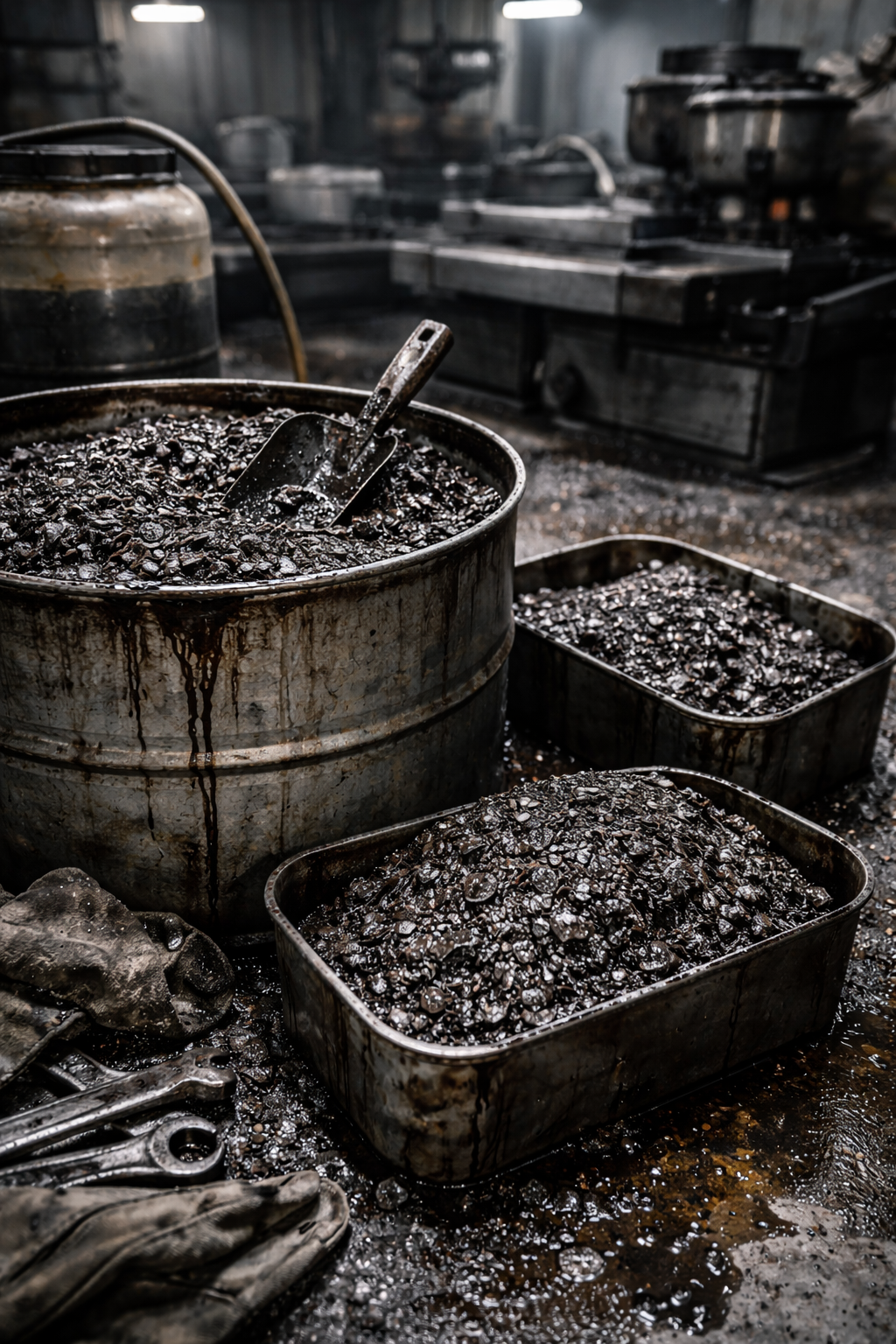
Metal sludges from fine mechanical processing containing oil residues
05.02.26
Metal sludges from grinding, honing, and lapping processes containing oils (code 12 01 18*) are generated during high-precision finishing operations in metalworking.
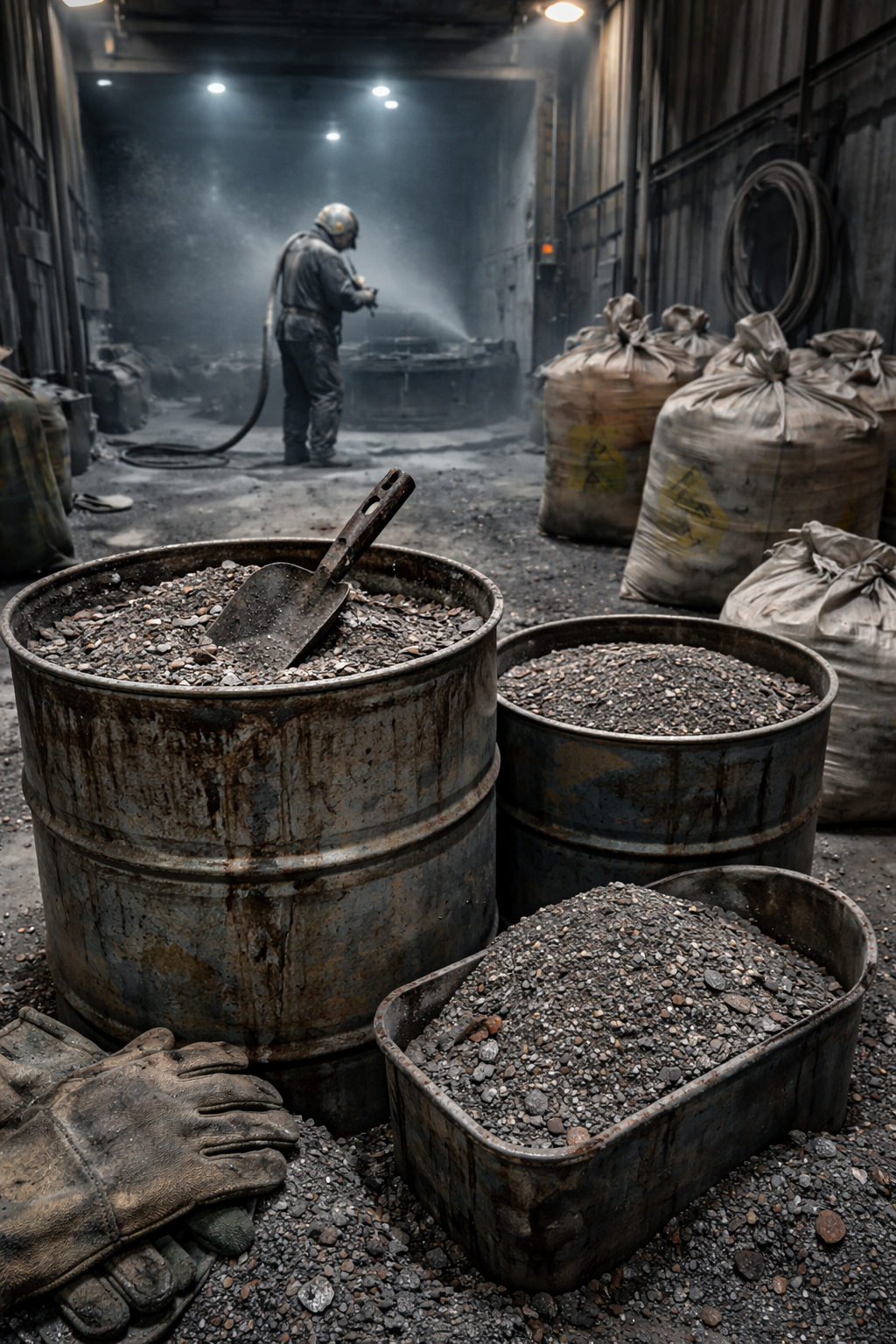
Abrasive waste materials in shot blasting and surface treatment processes
01.02.26
Waste abrasive materials from shot blasting processes containing hazardous substances (code 12 01 16*) are generated during cleaning, strengthening, and surface preparation of metal components in industrial environments.
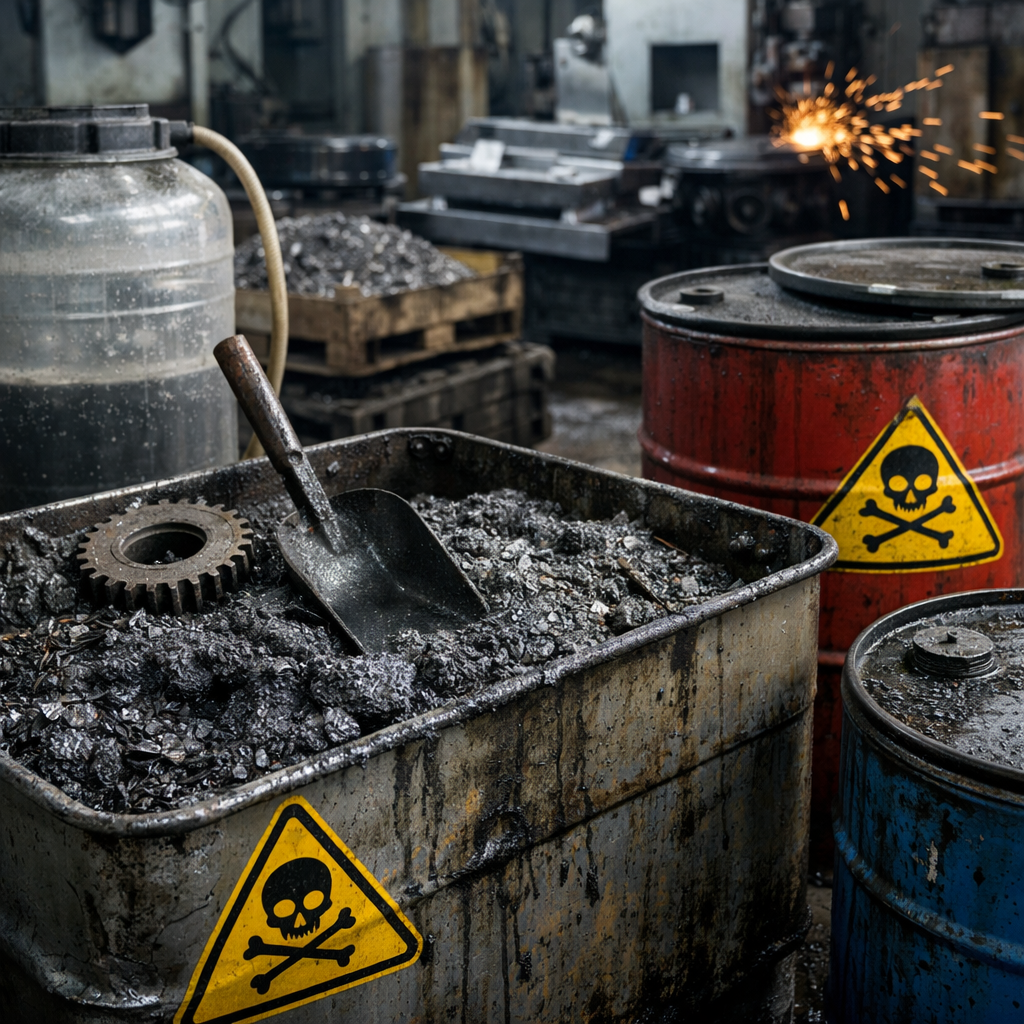
Metal Machining Sludge Residues in Industrial Production
29.01.26
Sludges from mechanical processing containing hazardous substances (code 12 01 14*) are generated during turning, milling, grinding, and drilling operations in metalworking processes.
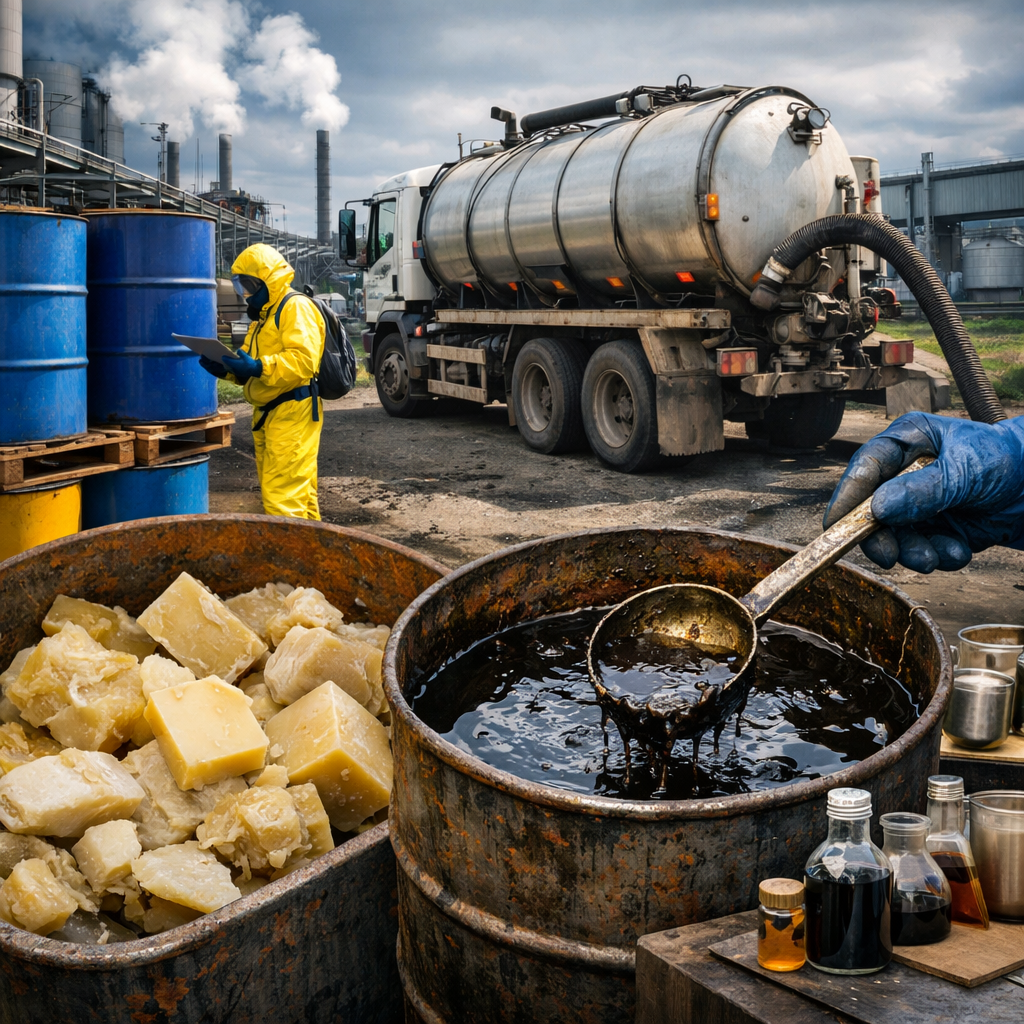
Spent technical wax materials and lubricating compounds in industrial processes
26.01.26
Spent wax masses and lubricants (code 12 01 12*) are generated during metalworking and forming processes where specialized lubricating and protective compounds are used to reduce friction and surface wear.
Waste Search
Calculate cost?
Calculate processing cost for