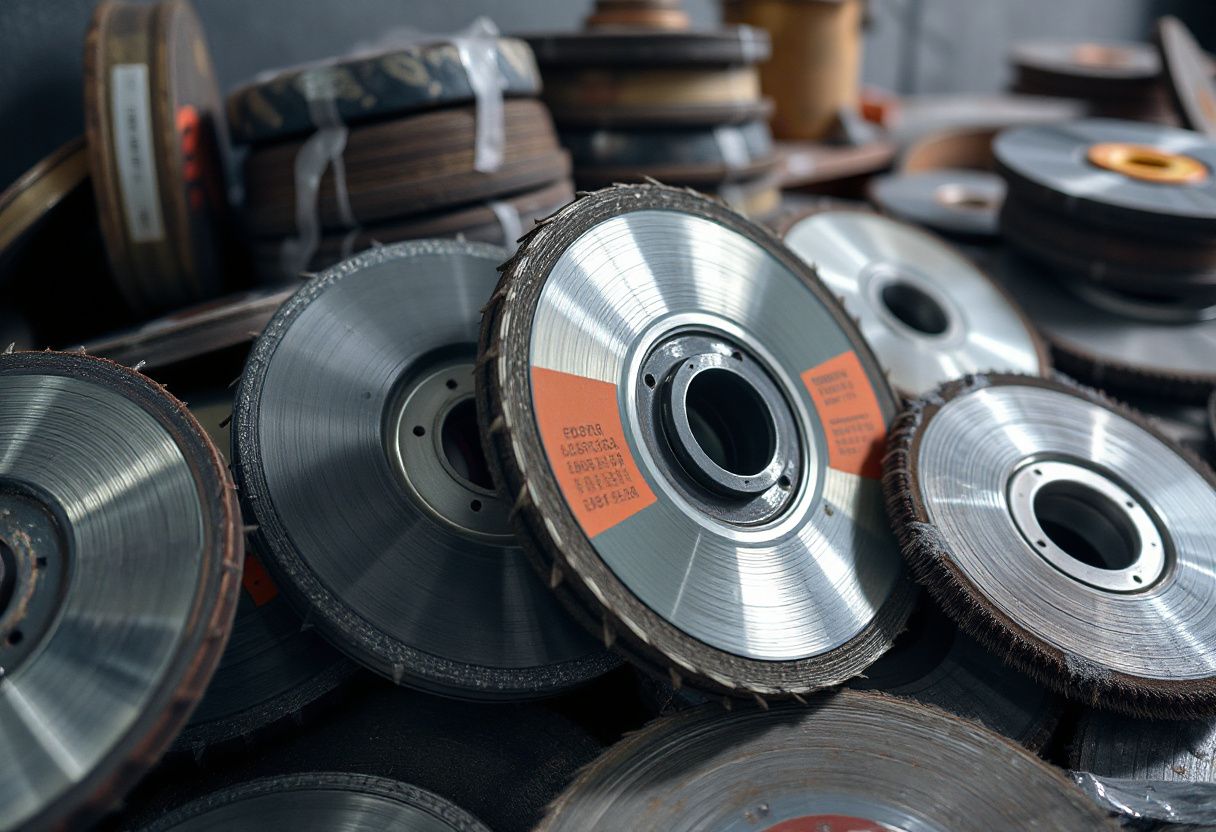
In accordance with the requirements of the Law of Ukraine on Waste Management, metalworking enterprises are obliged to classify spent abrasive wheels. During the mechanical processing of parts of welded structures and blanks, a large amount of microcrystalline dust is formed. Grinding sludge contains residues of coolants, vanadium, and chromium, which makes its open-air storage a threat to the environment. According to the chemical composition of the binding material, different degrees of danger of the accumulated debris are distinguished.
Composition of 25A Electrocorundum and Bakelite Binders
Abrasive tools based on white electrocorundum grade 25A contain more than 99% aluminum oxide Al2O3, preserved in the crystal lattice. Sintered ceramic blocks and vulcanite bonds retain their strength during long-term interaction with water, but 63C silicon carbide fractions gradually break down. Under the influence of high temperatures above 250 °C, phenol-formaldehyde resins decompose with the release of volatile toxic compounds. The deposition of washing emulsions on the surface of the spent wheel creates a persistent film of heavy petroleum products, which complicates the subsequent physical separation of components. As a result of prolonged open storage of such residues on sites, harmful substances are washed away by rainwater. The rate of mixture degradation depends on the humidity level and the presence of aggressive chemical components in the air.
Residues from 3M151 Cylindrical Grinding Machines
The main volumes of metal-abrasive waste are formed in the mechanical assembly and roughing shops of blank production. Equipment such as 3M151 cylindrical grinding machines generates a significant amount of sludge when processing 12Kh18N10T grade steel. In turning and grinding areas, high-speed roughing wheels wear out at a linear speed of 80 m/s, creating small fragments of the ceramic base. Fine abrasive clogs filter screens. After processing parts, the sediment of technological solutions settles in sumps, where it mixes with coolants and metal chips. The volume of solid sediment formation depends on the intensity of stock removal and the frequency of replacing the working tool on the automated line.
NPV Codes 12 01 20* and 12 01 21 in Accounting Records
According to the National Waste List, residues of grinding bodies are classified under code 12 01 20* if they contain hazardous components. For safer materials without impurities of toxic lubricants or heavy metals, the category under code 12 01 21 is used in routine accounting. The personnel of the plant's environmental service draw up a declaration and primary documentation according to form 1-VT. Laboratory analysis of samples is used to determine the presence of petroleum products and solvents in the mass of accumulated abrasive to select the processing method. Classification errors lead to penalties during inspections by the State Ecological Inspection. For the safe transportation of hazardous fractions, the business entity engages a specialized enterprise UtilVtorProm.
Thermal Treatment at 1200 °C and Neutralization
When handling abrasive materials, several consecutive technological stages are applied. The choice of a specific technological route depends on the level of sludge contamination with lubricants.
- Collection and sorting of worn tools directly in shop containers.
- Taking samples to measure the content of toxic binders and petroleum products.
- Removal of the liquid phase by centrifugation and settling.
- High-temperature incineration of resin components at 1200 °C in special furnaces.
Magnetic Separation and Reuse of Fine Fraction
Magnetic separators are used to separate high-alloy steel chips from the mineral component to return the metal to secondary production. Cleaned aluminum oxide fragments, after grinding, are used as an additive in the manufacture of refractory mixtures and some building materials. Before disposal in special landfills, non-granulated dust is bound with cement mortar.
Transfer of Waste to UtilVtorProm Enterprise
Thanks to the systematic removal of spent grinding tools, the ecological safety of the enterprise is ensured. The availability of a license allows for the extraction, transportation, and processing of waste of all hazard classes. According to the norms, the process is controlled. Representatives of the UtilVtorProm enterprise accept applications to coordinate the removal schedule and draw up certificates.