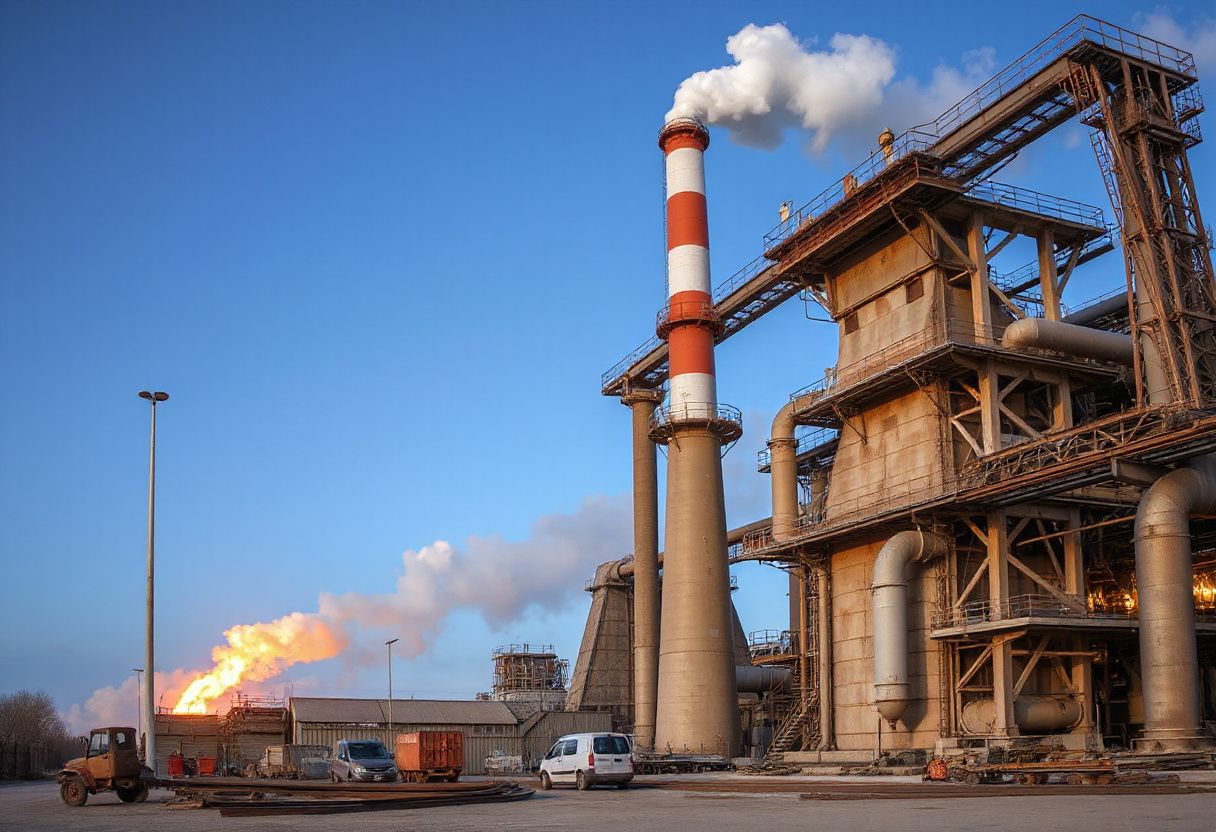
The Law of Ukraine on Atmospheric Air Protection obliges metallurgical plants to strictly control emissions of dust and gas mixtures into the environment during metal smelting. Traditional dry filtration using fabric materials competes with wet cleaning, which uses absorption liquids to neutralize toxic compounds directly in Venturi scrubbers. Both methods have their own technological limitations when working with hot streams.
Dry dust collection in FRI-60 type bag filters
Dusty gas first passes through chambers with heat-resistant elements to settle coarse fractions. This technology is mostly used at the pig iron tapping areas of BF-8 blast furnaces.
Absorption cleaning at a temperature of 80 °C
Application of alkaline solutions in scrubbers
Thanks to the wet method, it is possible to effectively capture small dust particles and absorb acid gases, turning them into neutral salts under continuous irrigation. However, the appearance of large amounts of sludge requires additional water treatment costs, which limits the introduction of such equipment at water-scarce sites. In modern converter shops, such systems are used less often due to the high corrosiveness of the environment. Will plants be able to completely abandon water purification without a significant decrease in the overall level of environmental safety of production processes? The answer lies in cycle optimization. Through recirculation, it is possible to reuse more than 90% of industrial water after settling. Sludges are dehydrated on plate filter presses to a residual moisture content of 30%.
Waste codes 10 02 07* and 10 02 13* according to the National Waste List
When exhaust gases are cleaned, hazardous dust and fine-grained sludge constantly accumulate at the enterprise. Dry gas cleaning dust is officially registered under the special code 10 02 07* in the state classifier. Sludges have the code 10 02 13*. These substances contain heavy metals, at least in practice at significant concentrations.
Chemical composition and processing of electrostatic precipitator dust
Analysis of electrostatic precipitator dust shows a content of up to 45% iron oxides, as well as significant impurities of zinc and lead, which makes it toxic. For this purpose, specialists of the enterprise UtilVtorProm safely collect, transport, and subsequently process such hazardous industrial waste in accordance with established environmental standards. Reusing dust as a secondary raw material is possible only with certain caveats due to the chlorine content. Chlorine destroys the lining of furnaces. Therefore, before processing, the raw material is subjected to high-temperature leaching at 900 °C. The clinker obtained after this is sent to zinc plants to extract useful components.
State license and transfer of waste to UtilVtorProm
All metallurgical enterprises are obliged to transfer hazardous substances for further treatment exclusively to specialized organizations. The company UtilVtorProm operates on the basis of a valid state license of the Ministry of Environmental Protection. Each batch of sent dust or sludge is accompanied by a full package of documents, including acceptance certificates and official environmental declarations for regulatory authorities. Cargoes are transported by specially equipped sealed vehicles to prevent dusting during movement. Special sealed containers allow the safe storage of collected substances at isolated sites until they are sent to processing plants. The customer receives a final detailed report on waste processing within 5 working days after the completion of the entire technological cycle.