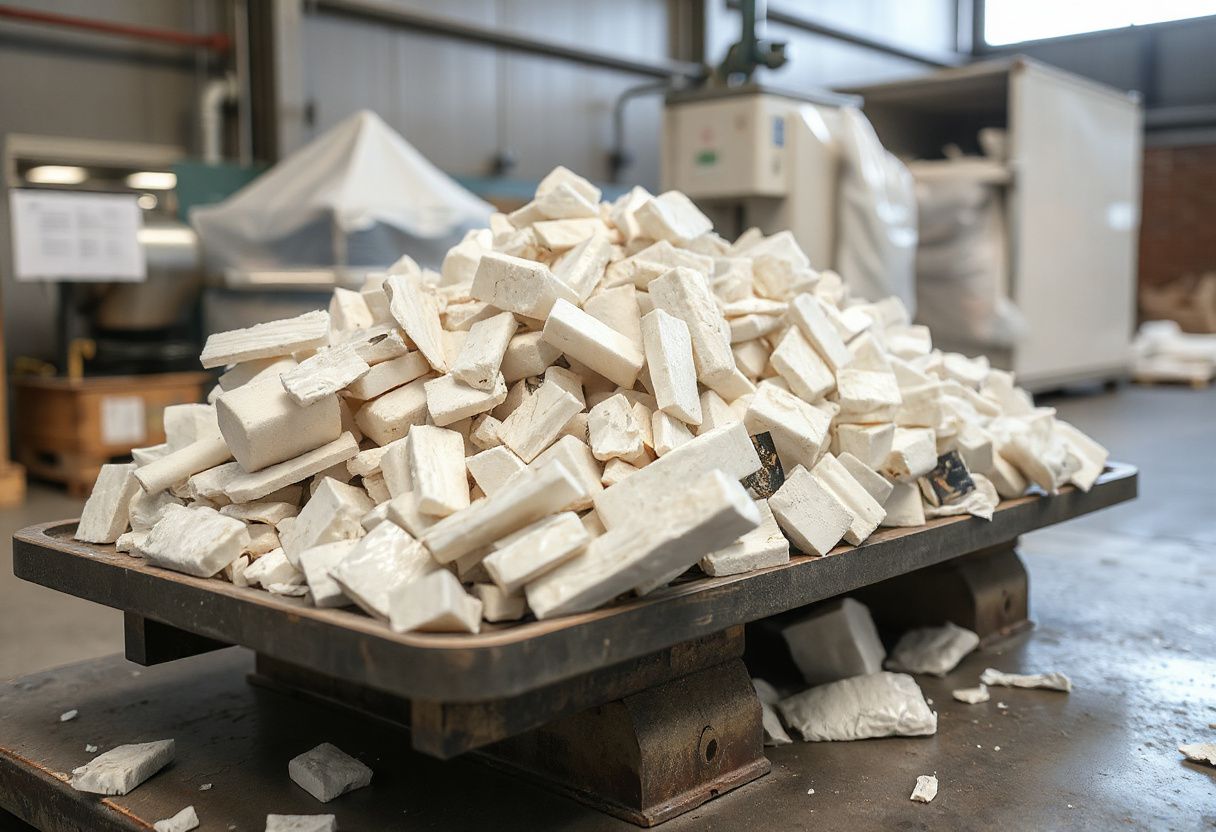
Polyurethane foam trimmings and extruded polystyrene foam residues are sent to specialized waste treatment sites directly from the molding and trimming shops of refrigeration engineering plants. Defective technological material is supplied in the form of large-sized slabs, chips, or foam slices containing residual freons or other gas blowing agents. These substances require hermetic isolation. Without proper neutralization, the light fractions of the porous plastic degas right in open warehouses, poisoning the atmospheric air with toluene, isocyanates, and chlorofluorocarbons.
Structure of polyurethane foam and R141b freon blowing
Thermal insulation masses for refrigerated cabinets consist of rigid polyurethane foam or polyisocyanurate. Due to its closed-cell structure, the material retains the gas filler inside the porous cells. Long-term storage of waste in the sun at temperatures above 30 °C leads to the destruction of the polymer matrix and the release of ozone-depleting R141b freon. More often, technological residues lose their initial density within 60 days of storage. The material easily crumbles into fine dust. Fine-dispersed dust is capable of spontaneous combustion upon contact with open flame sources or sparks from metalworking equipment at an industrial site. Special fire-retardant additives are eventually washed out by precipitation, flowing into groundwater along with toxic organophosphate compounds.
Production of sandwich panels and cold rooms
The bulk of insulating materials is generated during the trimming of sandwich panel contours for industrial freezing warehouses and commercial refrigeration equipment. During the automatic pouring of polyurethane foam into metal skins, edge burrs occur, which are cut off by the milling units of the pouring line. The second source is dismantled insulation joints during the modernization of test climatic chambers. Mostly, such joints contain combined residues of mineral wool, polystyrene, and synthetic adhesives, which complicates their subsequent separation.
Classification under codes 17 06 03* and 17 06 04
According to the National Waste List, thermal insulation materials with hazardous impurities are classified under code 17 06 03*. UtilVtorProm company provides removal and treatment of regular exemptions under code 17 06 04.
Thermal treatment at 1100 °C and pressing
The technology for environmentally safe management of polymer insulators involves primary crushing of slabs in sealed crushers with the capture of released gases. After degassing, the crushed foam is subjected to screw compaction at an increased pressure of 2 bar to reduce the volume of raw materials by 20 times. The resulting dense briquette is transferred to granulation or thermal neutralization in special furnaces. Furnaces deform from overheating without the supply of secondary air, so incineration is carried out at a temperature of 1100 °C with two-stage flue gas cleaning. Gaseous products are cleaned in wet scrubbers using alkaline solutions. The modern algorithm for transferring waste to the site includes the following mandatory stages:
- Inventory of accumulated trimmings and sampling to determine the content of hazardous substances.
- Packaging of raw materials into hermetic big-bags with a fire-retardant liner and labeling.
- Transportation by specialized vehicles to the licensed treatment site.
The enterprise's primary appeal begins with the assessment of the volume of accumulated insulating materials. Technical specialists check the condition of the waste directly in the equipment assembly shops. After approving the waste passports and coordinating the removal schedule, container-type special transport is loaded in compliance with fire safety rules. Next, the cargo is sent to designated storage and processing complexes. The licensed enterprise UtilVtorProm accepts foam residues for further neutralization with the provision of a full set of certificates of completed work for the environmental inspection. The executed package of documents guarantees the plant full compliance with environmental legislation and the absence of penalties during state inspections.