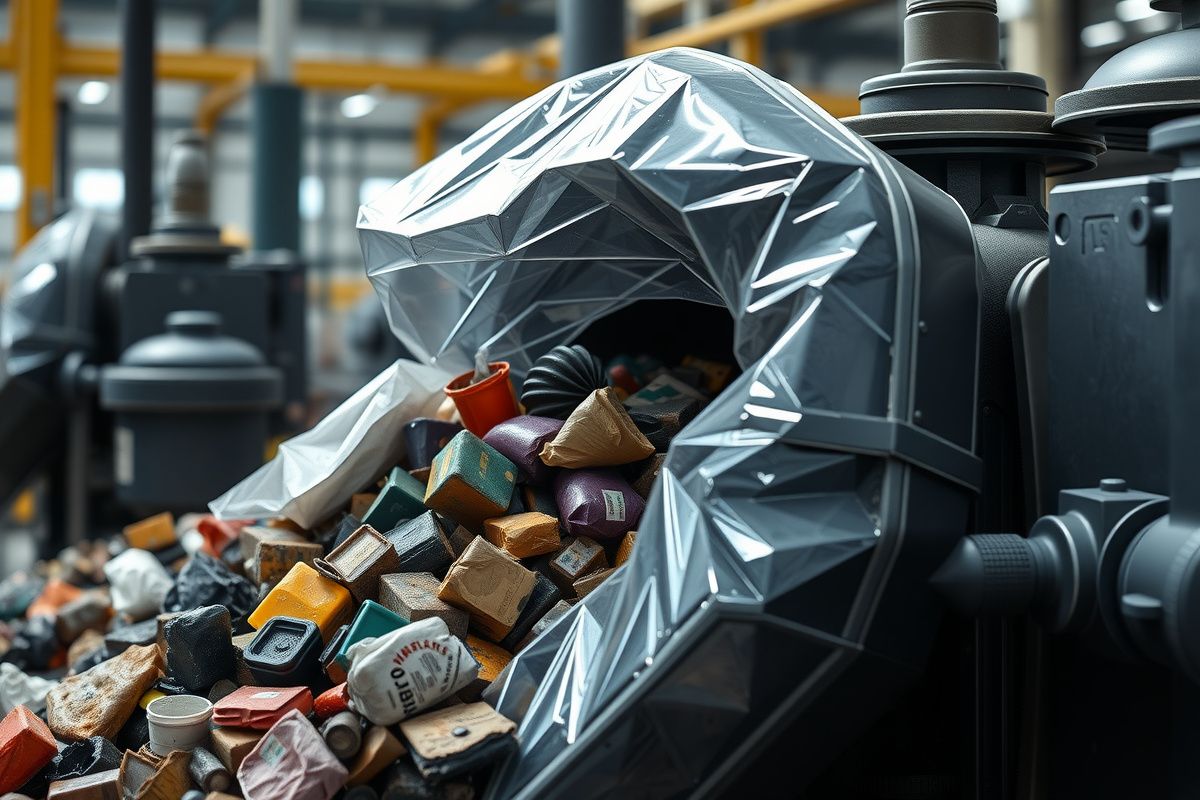
The implementation of artificial intelligence (AI) in industrial waste processing is becoming one of the key directions for achieving sustainable development and increasing the efficiency of production processes. Modern industry generates huge volumes of waste that require complex and expensive processing methods. The application of AI not only optimizes existing technologies but also develops fundamentally new approaches to sorting, processing, and reusing valuable resources. This not only reduces the negative impact on the environment but also opens up new economic opportunities for enterprises striving for a circular economy.
The relevance of this topic for UtilVtorProm, a company specializing in comprehensive environmental services for enterprises, is undeniable. We are constantly looking for innovative solutions to improve the quality of our services and minimize the impact of industrial waste on the environment. Artificial intelligence offers tools for automating complex analytical tasks, forecasting waste volumes, optimizing logistics, and managing processing technologies. This allows us to provide our clients with even more effective and environmentally safe solutions in waste management.
Analytical capabilities of artificial intelligence in waste classification
Artificial intelligence possesses unique capabilities for analyzing and classifying industrial waste, which is a critically important stage in their processing. Computer vision systems, integrated with machine learning algorithms, can identify different types of materials by their appearance, color, shape, and texture. This allows for automated sorting on conveyor lines, significantly increasing speed and accuracy compared to manual sorting. For example, AI can distinguish between different types of plastic, metals, paper, and glass, even if they are contaminated or mixed.
In addition to visual analysis, artificial intelligence is capable of processing data from other sensors, such as spectrometers and X-ray scanners, to determine the chemical composition of waste. This allows for the detection of hazardous components or valuable materials that require special processing methods. The principle of operation of such systems lies in training neural networks on large volumes of data, including images and chemical profiles of various wastes. After training, the system can independently make decisions regarding the optimal method of their processing, minimizing the human factor and increasing the overall efficiency of the process.
Application of AI in increasing the efficiency of processing lines
The application of artificial intelligence is widely implemented in all parts of the industrial waste processing process, from preliminary sorting to the final production of secondary raw materials. Already today, there are AI-controlled robotic systems that perform high-precision separation of waste in flows, which significantly speeds up the process and reduces the amount of waste sent to landfills. These systems can be integrated into existing processing lines, providing flexibility and adaptability to different types of raw materials. For example, in plastic processing plants, AI systems can identify and separate different polymers, such as PET, HDPE, and PP, which is critically important for obtaining high-quality secondary raw materials.
In addition, artificial intelligence is used to optimize the operation of the processing equipment itself. AI algorithms can analyze data from sensors installed on crushers, presses, separators, and other equipment to predict possible malfunctions, optimize operating modes, and reduce energy consumption. This allows for reduced operating costs and increased productivity of processing complexes. For example, AI systems can regulate the material feed rate, crushing intensity, or melting temperature to achieve maximum efficiency and minimize waste in the process. Such approaches are already successfully applied in the metallurgical, chemical, and pulp and paper industries.
Environmental waste management using intelligent systems
Environmental management of industrial waste is a key aspect of the activities of any responsible enterprise, and artificial intelligence offers new opportunities to increase its efficiency and safety. UtilVtorProm provides comprehensive services for environmental maintenance of enterprises, including collection, transportation, storage, and processing of various industrial wastes. AI helps us optimize waste collection logistics by predicting volumes and routes, which minimizes transport costs and emissions. We work with a wide range of wastes, including: 07 01 01* waste aqueous solutions and sludges from industrial waste containing hazardous substances; 19 12 04 plastic and rubber; 10 02 07* solid waste from gas purification containing hazardous substances.
The use of artificial intelligence allows us to more accurately identify hazardous components in waste, which is critically important for their safe storage and further processing. AI systems can analyze data on the chemical composition of waste to determine the best methods for their neutralization or disposal, minimizing risks to the environment and human health. For example, AI can help in determining optimal conditions for processing spent oils (13 01 10* other hydraulic oils containing hazardous substances) or solvents (14 06 03* other solvents and solvent mixtures). UtilVtorProm guarantees full compliance with all environmental norms and standards, ensuring a professional approach to waste management at every stage.
Partnership with UtilVtorProm for the implementation of intelligent solutions
Cooperation with UtilVtorProm opens up access for your enterprise to advanced technologies and expert knowledge in the field of industrial waste management, including innovative solutions based on artificial intelligence. We offer not just services, but a comprehensive approach to solving environmental problems, providing professional support and licensed activities at all stages. Our team constantly improves its working methods, integrating the latest AI developments to increase the efficiency of waste sorting, processing, and disposal. Contact us today to learn how we can help your business become more environmentally responsible and economically efficient.