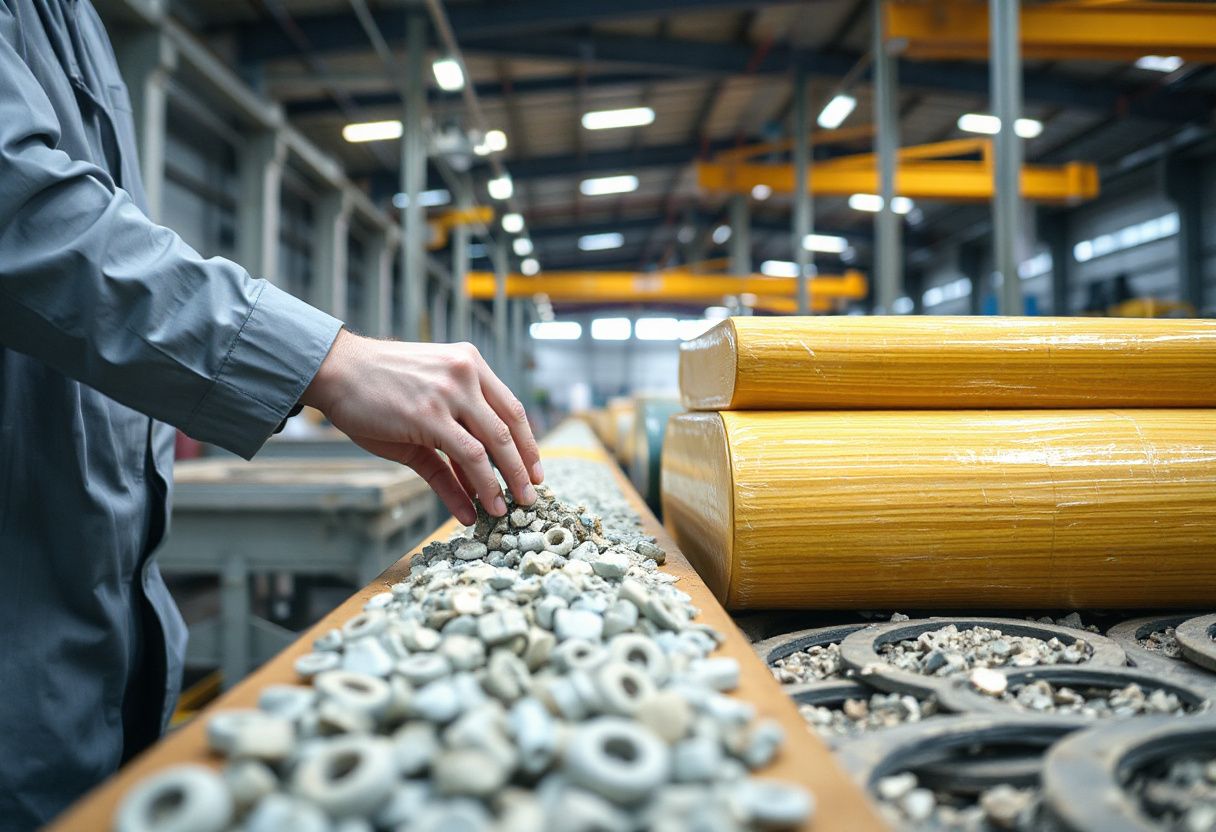
State regulations explicitly require industrial enterprises to transfer rubber products for specialized processing. Each batch of worn parts poses a hazard to the environment due to toxic additives. Plants and factories accumulate tons of specific raw materials during daily production cycles. Worn conveyor belts lose their strength and are subject to mandatory recycling. Licensed enterprises carry out collection using their own vehicles in accordance with strict environmental regulations. Careful compliance with the rules reduces the anthropogenic load on the regions.
Thermal decomposition at 500 °C in a sealed chamber
The composition of the material includes synthetic rubbers, carbon black, plasticizers, and reinforcing steel or textile cords, which, under the influence of oxygen, form persistent carcinogenic compounds during combustion. Thermal destruction without access to air at temperatures from 450 °C to 600 °C breaks down complex polymer chains into useful fractions. The technological process separates the raw material into liquid pyrolysis fuel, gas, and a solid carbon residue with minimal emissions. Rotary kilns and sealed retorts ensure a continuous heating cycle subject to stable pressure control.
Workshop equipment and mechanical tire shredding
Automobile plants, mines, and port terminals generate huge volumes of waste tires and high-pressure hoses daily. Preliminary crushing of the raw material into 50 mm pieces is carried out by high-torque roll-type shredding units. In practice, things can be different if the rubber contains a large amount of metal inclusions, which require additional magnetic separation. Specialized fine-grinding mills prepare the mixture for the subsequent thermal reaction in reactors. The metal cord is separated from the rubber crumb at the preparation stage so that the furnaces deform much more slowly.
Code 16 01 03* and primary enterprise documentation
The execution of accompanying acts for the subsurface and industry requires the strict indication of classification codes in accordance with national catalogs. Used tires and casings are registered under code 16 01 03* along with associated remnants of automotive assemblies. Defective rubber products from production workshops are often marked as hazardous materials of categories such as 07 02 13* due to the content of toxic fillers. Occupational safety engineers generate transport consignment notes, indicating the exact mass of the batches and the hazard class. The legal transparency of operations guarantees the enterprise absence of fines during inspections.
Further actions for production enterprise managers
Specialists of the UtilVtorProm company pick up accumulated residues in accordance with all requirements of environmental legislation. The logistics department prepares transport contracts and closing documents after the completion of all works.
Recycling worn rubber prevents soil contamination and ensures the safe handling of hazardous components at licensed sites. Modern equipment turns complex polymers into secondary energy resources without harming nature. Leave a request on the UtilVtorProm website to coordinate the schedule for the removal of rubber products from your enterprise.