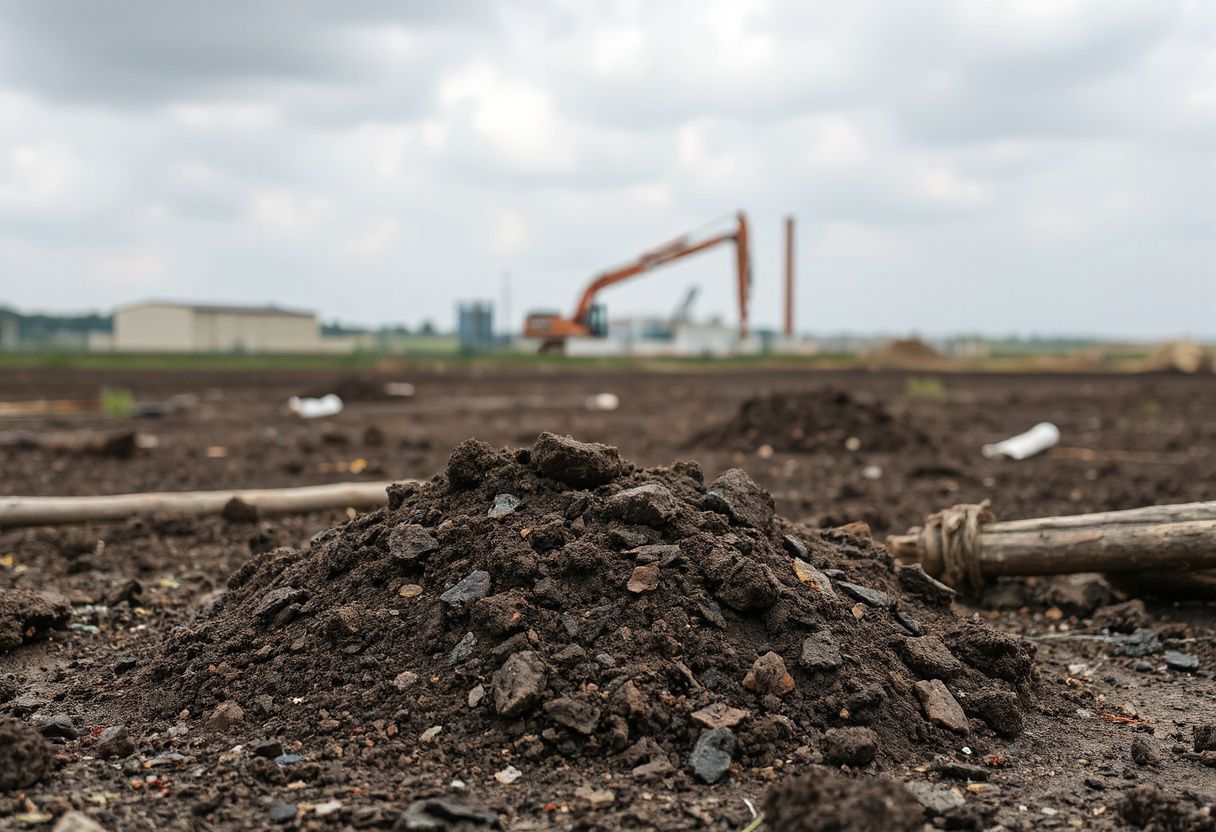
Soil pollution by industrial waste is one of the most acute environmental problems of our time, threatening human health and ecosystem stability. Traditional cleaning methods are often expensive, resource-intensive, and not always environmentally safe. In this context, the application of bioremediation methods for cleaning soils from industrial pollution gains particular relevance. Bioremediation offers an innovative and sustainable approach, using natural biological processes to degrade or neutralize harmful substances that accumulate in the soil due to industrial activity.
This technology allows not only to effectively eliminate pollution but also to restore soil fertility, minimizing the negative impact on the environment. For enterprises striving for responsible environmental stewardship and compliance with strict regulatory requirements, bioremediation becomes a key tool. UtilVtorProm actively supports the implementation of such advanced solutions, providing comprehensive services for environmental support and industrial waste management, thereby contributing to sustainable development and the preservation of natural resources for future generations.
Biological mechanisms of pollutant degradation in soil
Soil bioremediation is based on the use of microorganisms, such as bacteria, fungi, and plants, to break down, transform, or immobilize toxic pollutants. The principle of action of these methods lies in activating the metabolic processes of microorganisms that can use organic and inorganic pollutants as a source of energy or building materials. This process can occur aerobically (in the presence of oxygen) or anaerobically (without oxygen), depending on the type of pollutant and microorganisms. For example, petroleum products are often broken down by aerobic bacteria, while some chlorinated compounds require anaerobic conditions.
The main technical characteristics of bioremediation methods are their high efficiency at low concentrations of pollutants, the possibility of application without significant disturbance of soil structure, and relatively low cost compared to physicochemical methods. The composition of bioremediation mixtures may include specially selected microbial cultures, biostimulants (nutrients for microorganisms, such as nitrogen and phosphorus), and bioaugmenters (additional microorganisms with specific degradation capabilities). The choice of a specific method and composition depends on the nature of the contamination, soil type, and climatic conditions of the site.
Innovative solutions for soil cleaning at industrial facilities
The application of bioremediation methods covers a wide range of industrial pollution and industries. One of the most common areas is the cleaning of soils contaminated with petroleum products resulting from oil spills, leaks from tanks at gas stations, oil refineries, and transport terminals. For such cases, biostimulation methods are used, where nutrients are added to the soil to activate natural oil-degrading bacteria, or bioaugmentation, where specially grown microbial cultures are introduced. Bioremediation is also effective for solid waste landfills, where it promotes accelerated stabilization of organic matter and reduces methane formation.
Other important applications include cleaning soils from heavy metals, pesticides, organochlorine compounds, and polycyclic aromatic hydrocarbons (PAHs). For example, phytoremediation can be used for heavy metals – growing plants that accumulate metals in their tissues, which are then harvested and safely processed. In the chemical industry, where various toxic compounds often cause contamination, bioremediation allows effective restoration of sites after accidents or prolonged operation. Bioremediation equipment ranges from simple aeration and irrigation systems to complex bioreactors for treating excavated soil (ex-situ).
Environmentally safe management of bioremediation waste
After the bioremediation process is completed, especially when using phytoremediation methods or when treating soil ex-situ (away from the contamination site), secondary waste may be generated that requires proper management. Such waste includes plant biomass that has accumulated heavy metals, or spent filter materials from bioreactors. The classification of this waste is carried out in accordance with the National Waste List (NWL). For example, spent absorbents and filter materials containing hazardous substances may have codes 15 02 02* or 19 01 13*, depending on their composition and source. Biological waste containing residues of hazardous substances may be classified as 19 08 13*.
UtilVtorProm provides a full range of environmental services to enterprises, including the collection, transportation, storage, and processing of various industrial wastes generated during bioremediation. Our specialists ensure a professional approach to waste identification and classification, developing optimal waste management schemes in accordance with current legislation and international standards. We guarantee environmentally safe and responsible waste management, minimizing risks to the environment and human health, which is an integral part of our mission to ensure sustainable development.
Partnership with UtilVtorProm for comprehensive soil cleaning solutions
Choosing a reliable partner for implementing projects for cleaning soils from industrial pollution is critically important for success and compliance with environmental standards. UtilVtorProm has many years of experience and the necessary licenses to operate in the field of waste management, including those arising from bioremediation. Our experts provide professional consultations and develop individual solutions adapted to the specific needs of each client and the characteristics of the contaminated site. We provide a full cycle of services: from initial assessment of soil conditions and selection of the optimal bioremediation method to organizing the collection, transportation, and processing of secondary waste generated.
Cooperation with UtilVtorProm guarantees not only effective and environmentally safe soil cleaning but also full compliance with all regulatory requirements, which helps avoid fines and improve your company's reputation as a socially responsible market player. We strive for long-term partnerships, offering transparent terms of cooperation and a high level of service. To learn more about our capabilities and discuss your project, please contact us using the contact details provided on UtilVtorProm.com. We are ready to offer you optimal solutions for a clean future.