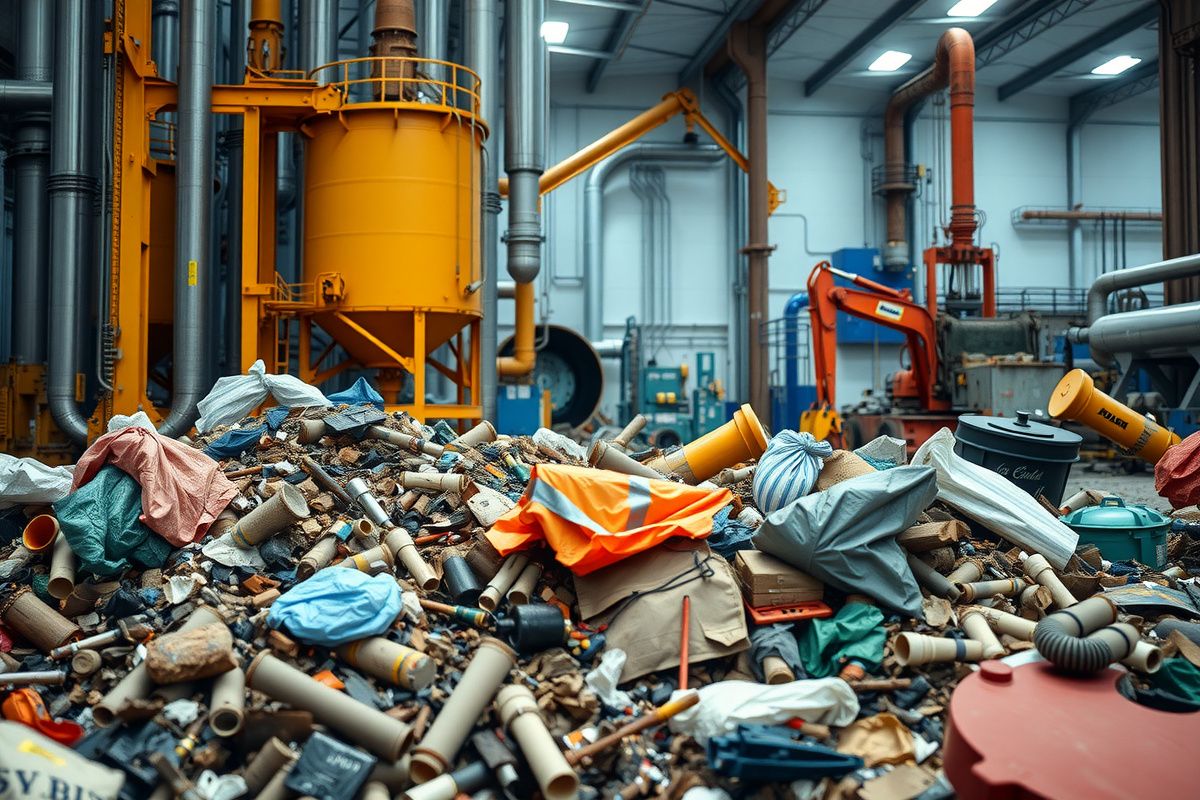
The growth of industrial production in the modern world is inextricably linked with the problem of industrial waste management, which is one of the most pressing environmental challenges. Effective management of this waste requires not only advanced technologies but also strict adherence to legislative requirements and international standards. This ensures not only the protection of the environment and public health but also contributes to the sustainable development of enterprises, reducing their environmental footprint and increasing competitiveness in the global market. Proper waste management is the key to a circular economy, where resources are used as efficiently as possible.
The relevance of this topic for Ukrainian industry is particularly high in the context of European integration processes and the harmonization of national legislation with European Union norms. Enterprises striving to meet international standards must have a deep understanding of the regulatory mechanisms that define the entire life cycle of industrial waste – from its generation to final processing or disposal. A comprehensive approach to this problem allows minimizing risks, optimizing costs, and building a responsible, future-oriented business.
Architecture of Global and National Environmental Regulations
Legislative and international standards in the field of industrial waste management form a complex but vital system that defines rules and norms for all market participants. This architecture includes national laws, by-laws, technical regulations, as well as international conventions and directives that establish unified approaches to the classification, collection, transportation, storage, and processing of waste. The main principles are "polluter pays," waste prevention, minimization, and recycling, as well as the application of best available technologies and management methods. These principles underpin sustainable development and environmental safety.
The structure of these regulatory systems covers various aspects: from requirements for licensing waste management activities to safety standards for employees and the public. They define procedures for environmental assessment, monitoring, and reporting, ensuring transparency and accountability. For example, international standards ISO 14001 establish requirements for environmental management systems, helping enterprises systematize their environmental protection activities. Understanding these technical aspects and their composition is critically important for any industrial enterprise striving to operate responsibly.
Implementation of Environmental Standards in Industrial Sectors
The application of legislative requirements and international standards manifests in the need to obtain permits, develop internal procedures, and implement specialized equipment for industrial waste management. Enterprises in metallurgy, chemical, machine-building, and other industries are obliged to comply with norms regarding the composition of emissions, discharges, and characteristics of generated waste. This includes the use of modern purification, filtration, and waste segregation systems directly at production sites, as stipulated in the requirements for handling "Absorbents, filtering materials, wiping cloths and protective clothing NFW Code 15 02".
Specific examples of standard application include mandatory certification of production processes, regular environmental audits, and inspections. For instance, in the field of handling "Batteries and accumulators as hazardous waste: effective management for environmental protection," strict norms apply to their collection and processing to prevent toxic substances from entering the environment. International agreements, such as the Basel Convention, regulate the transboundary movement of hazardous waste, requiring signatory countries to adhere to strict rules and procedures to minimize risks.
Classification and Management of Industrial Waste According to the National List
Industrial waste management is regulated by national legislation, specifically the National Waste List (NWL), which establishes clear classification and coding. Each type of waste has its unique code, reflecting its origin, composition, and degree of hazard. For example, hazardous waste requiring special handling includes: asbestos-containing waste, such as 17 06 01* (insulation materials containing asbestos), or waste generated from handling hazardous substances, like 15 02 02* (absorbents, filtering materials, wiping cloths and protective clothing contaminated with hazardous substances). This category also includes certain types of waste oils, for instance, 13 01 10* (mineral chlorine-containing hydraulic oils). UtilVtorProm company provides comprehensive environmental services to enterprises, ensuring full compliance with these requirements.
Compliance with these requirements is mandatory for all enterprises that generate or manage industrial waste. This includes proper sorting, labeling, temporary storage in specially equipped areas, and their safe transportation to processing or disposal sites. For example, as in the case of "Asbestos in construction: a hidden threat and proper handling," it is necessary to ensure hermetic packaging and specialized transportation. Our company, UtilVtorProm, specializes in the collection, transportation, storage, and processing of a wide range of industrial waste, guaranteeing compliance with all environmental norms and standards.
Expert Support from UtilVtorProm in Adhering to Environmental Standards
UtilVtorProm company is a reliable partner for enterprises striving to adhere to the highest standards in industrial waste management. We offer a professional approach, licensed activities, and many years of experience in the collection, transportation, storage, and processing of various types of waste. Our specialists ensure full compliance with national legislation and international requirements, helping clients minimize environmental risks and optimize waste management processes. By contacting UtilVtorProm, you receive a guarantee of a safe and responsible solution to all issues related to industrial waste. Contact us today to discuss your needs and find optimal environmental solutions for your business.