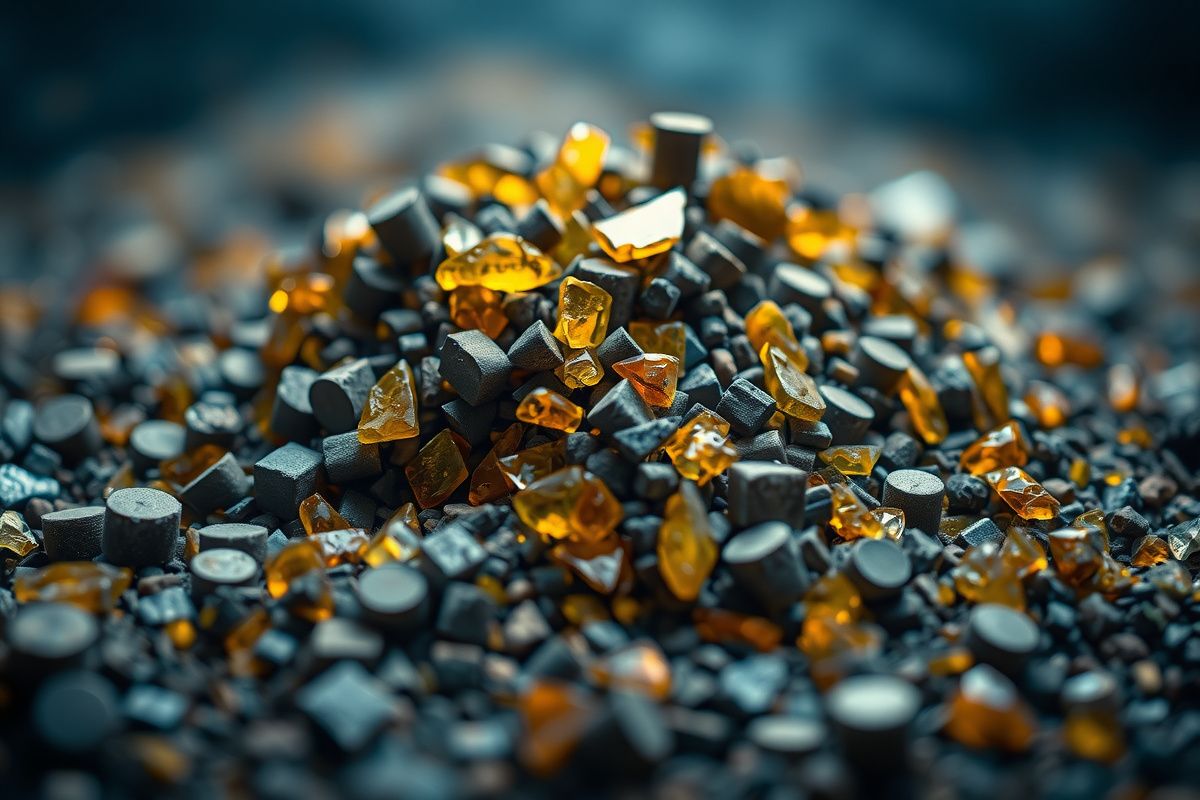
The extraction of rare earth elements (REEs) from industrial waste and secondary raw materials is one of the most pressing topics in modern industry and ecology. The growing demand for REEs in high-tech industries, such as electronics, renewable energy, electric vehicle manufacturing, and the defense industry, places a significant burden on primary sources of their extraction. This leads to the depletion of natural deposits, environmental degradation in mining areas, and geopolitical dependence on supplier countries.
That is why the development and implementation of effective rare earth element recycling technologies are gaining strategic importance. Processing spent products and industrial waste containing REEs not only reduces the negative impact on the environment but also ensures a stable supply of these critically important materials for domestic industry. UtilVtorProm actively promotes the development of a circular economy by providing professional services for managing waste containing valuable components, including rare earth elements.
Technologies for extracting rare earth elements from waste
Extracting rare earth elements from industrial waste and secondary raw materials is a complex, multi-stage process that requires the application of specialized technologies. The main methods include pyrometallurgical, hydrometallurgical, and biometallurgical approaches. Pyrometallurgical methods involve high-temperature treatment of waste to extract metals, often in combination with fluxes. Hydrometallurgical processes are based on dissolving REEs in aqueous solutions of acids or alkalis, followed by extraction using methods such as solvent extraction, ion exchange, or precipitation. Biometallurgical technologies, although in early stages of development, promise an environmentally friendly and economically viable way to extract REEs using microorganisms.
Each of these methods has its advantages and disadvantages, and the choice of a specific technology depends on the type of raw material, REE concentration, economic feasibility, and environmental requirements. For example, from magnets used in hard drives or electric motors, REEs can be extracted using a combination of mechanical crushing, magnetic separation, and subsequent hydrometallurgical processing. For phosphors from energy-saving lamps, acid leaching processes are used. The development of integrated systems combining different approaches is a key direction for increasing the efficiency of REE extraction from various sources.
Application areas of rare earth element recycling
Rare earth element recycling has wide application in many high-tech industries where these metals are critically important components. One of the main consumers of REEs is the electronics industry, where they are used in the production of smartphones, tablets, computers, televisions, and other household appliances. For example, neodymium and praseodymium are key elements for manufacturing powerful permanent magnets used in hard drives, speakers, and vibration motors.
The energy sector also actively uses REEs. They are indispensable in the production of wind turbines (for generators), electric vehicles, and hybrid cars (in motors and batteries). Europium and terbium are used in phosphors for LED lighting and energy-saving lamps. The defense industry uses REEs in guidance systems, lasers, and other high-tech military developments. The development of technologies for extracting REEs from waste helps reduce import dependence and ensure stable supply for these strategically important sectors of the economy.
Environmental management of waste containing rare earth elements
Waste containing rare earth elements is often classified as hazardous, as it may contain other toxic substances or radioactive impurities depending on its origin. Proper management of such waste is critically important for environmental protection and human health. Such waste may include spent electronic components, magnets, phosphors, catalysts, as well as sludges and solutions generated during production and processing. According to the National Waste List (NWL), waste containing rare earth elements or their compounds may have the following codes: 16 02 13* (waste equipment containing hazardous components), 16 02 14 (waste equipment not containing hazardous components), 10 02 07* (solid waste from metal treatment containing hazardous substances) and others, depending on the specific composition. UtilVtorProm provides environmental services to enterprises, ensuring safe collection, transportation, storage, and processing of waste containing REEs, in compliance with all regulatory requirements.
Improper handling of waste containing rare earth elements can lead to soil, water, and air pollution with heavy metals and radioactive substances, posing a serious threat to ecosystems and public health. Therefore, it is extremely important to entrust the handling of such waste only to licensed companies that have the appropriate permits and technologies for their safe and effective processing. UtilVtorProm guarantees compliance with all environmental standards and norms, providing a full cycle of waste management containing REEs, from their identification to final processing or disposal.
Comprehensive services of UtilVtorProm in REE waste management
UtilVtorProm offers a professional approach to managing waste containing rare earth elements, providing a full range of services from consultation to actual processing. We have all the necessary licenses and permits to operate in the field of hazardous waste management, which guarantees the legality and environmental safety of all operations. Our specialists possess deep knowledge and practical experience in extracting valuable components from industrial waste, including REEs. We develop individual solutions for each client, considering the specifics of their production and the type of waste. By contacting UtilVtorProm, you gain a reliable partner who will help you effectively manage waste, reduce environmental risks, and contribute to the development of a circular economy. Contact us to learn more about our services and receive qualified assistance.