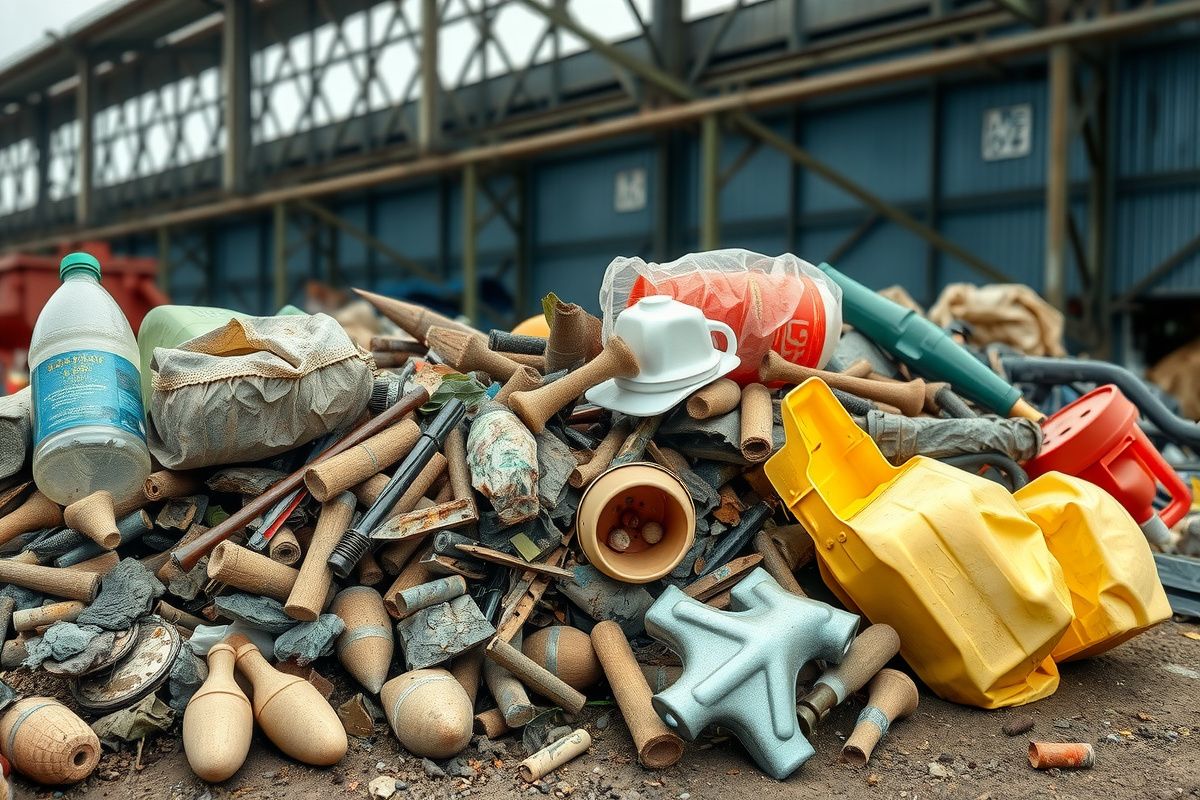
In today's world, where environmental pollution and natural resource depletion are becoming increasingly acute problems, effective waste management is critical. Traditional recycling methods often face challenges such as high operating costs, low sorting efficiency, and the difficulty of processing diverse types of waste. This is where artificial intelligence (AI) comes to the rescue, offering innovative solutions to optimize all stages of the recycling cycle. The use of AI not only increases productivity and reduces costs but also ensures greater environmental safety, minimizing negative environmental impact.
As a leader in environmental services for businesses, UtilVtorProm actively researches and implements advanced technologies, including artificial intelligence capabilities, to improve its services. We understand that the future of industrial waste recycling is inextricably linked to the integration of digital tools. Intelligent systems can analyze vast amounts of data, predict trends, automate routine processes, and make optimal decisions, ultimately leading to significant improvements in environmental and economic indicators. This article is dedicated to a detailed review of AI's potential in optimizing waste recycling processes.
Intelligent Systems for Automated Waste Sorting
The basis of effective waste recycling is high-quality sorting, which is traditionally a labor-intensive and often inefficient process. Artificial intelligence systems, equipped with computer vision and machine learning, are capable of recognizing and classifying various types of waste with high accuracy and speed. These systems use high-resolution cameras and specialized algorithms to analyze the visual characteristics of objects, such as shape, size, color, and texture. Training takes place on large datasets containing images of various materials, allowing AI to continuously improve its recognition capabilities.
The principle of operation of such systems is that waste moving on a conveyor belt is scanned, and AI instantly identifies each object. After identification, robotic manipulators or pneumatic systems direct the sorted materials into appropriate containers for further processing. This significantly reduces the need for manual labor, minimizes sorting errors, and improves the quality of secondary raw materials. In addition, AI can analyze the composition of the waste stream in real-time, optimizing sorting parameters and adapting to changes in the composition of incoming materials.
AI Application for Waste Logistics Prediction and Optimization
Efficient logistics is a key factor in reducing costs and increasing environmental sustainability in waste management. Artificial intelligence plays a crucial role in predicting waste generation volumes and optimizing collection routes. Using machine learning algorithms, AI can analyze historical data, weather conditions, demographic changes, and other factors to accurately predict when and how much waste will be generated in specific areas. This allows companies like UtilVtorProm to plan collection schedules more effectively, avoiding overflowing containers or, conversely, empty runs.
In addition, AI systems can optimize vehicle routes, taking into account parameters such as road congestion, fuel consumption, garbage truck capacity, and the number of collection points. This not only reduces collection time and fuel costs but also decreases carbon dioxide emissions, contributing to improved air quality. Examples of applications include intelligent waste container management systems equipped with fill-level sensors. These sensors transmit data to a central AI-controlled system, which adjusts collection routes in real-time, directing vehicles only to containers that need emptying.
Waste Management and Handling of Intelligent Systems
While artificial intelligence itself is software and does not generate physical waste in the traditional sense, the equipment used for its functioning (servers, sensors, robotic systems) eventually becomes waste. This waste, known as electronic waste or waste electrical and electronic equipment (WEEE), requires special handling due to the presence of hazardous components. Such components may include heavy metals such as lead, cadmium, mercury, as well as brominated flame retardants and other toxic substances that pose a threat to the environment and human health.
UtilVtorProm provides a full range of environmental services for businesses, including the collection, transportation, storage, and processing of electronic waste that may be generated as a result of using AI systems. We have the necessary licenses and permits to work with such categories of waste, ensuring their safe and responsible handling. Such waste may include: 16 02 13* (discarded equipment containing hazardous components other than those mentioned in 16 02 09 to 16 02 12), 16 02 14 (discarded equipment other than that mentioned in 16 02 09 to 16 02 13), 20 01 35* (discarded electrical and electronic equipment other than that mentioned in 20 01 21 and 20 01 23, containing hazardous components). Our specialists ensure a professional approach to each stage of waste management, guaranteeing compliance with all environmental norms and standards.
A Reliable Partner in Waste Management: UtilVtorProm
UtilVtorProm is a reliable and responsible partner for businesses seeking to optimize their waste management processes and minimize environmental impact. Our professional approach is based on many years of experience, advanced technologies, and strict adherence to legal norms. We possess all the necessary licenses for collecting, transporting, storing, processing, and disposing of various types of waste, including hazardous ones. By contacting us, you receive a guarantee of high-quality and safe service, allowing your business to focus on its core activities without worrying about environmental aspects. We invite you to contact us for a detailed consultation and the development of individual solutions that meet your business needs.