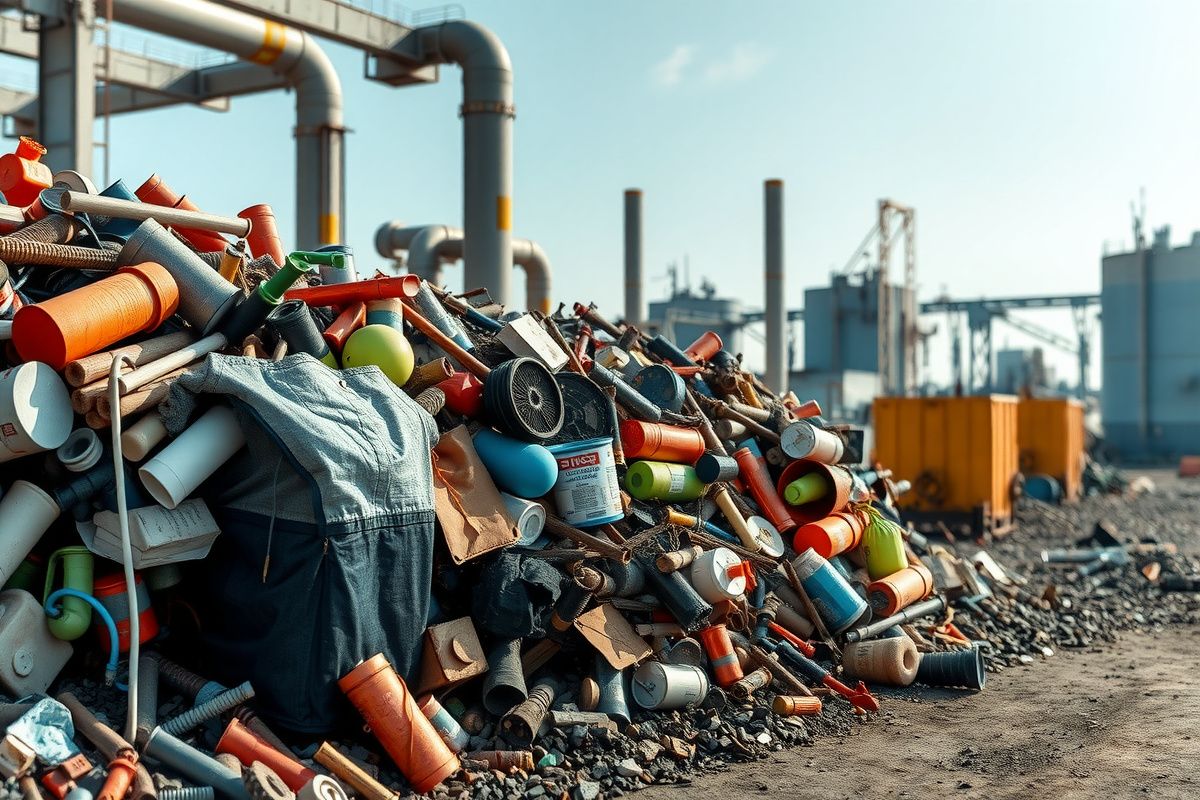
Modern industry generates huge volumes of waste, which pose a serious environmental and economic problem. Population growth and urbanization increase the demand for building materials, which, in turn, leads to the depletion of natural resources. In this context, the use of industrial waste for the production of building materials becomes not just desirable, but a critically important direction of development. This allows not only to reduce the burden on landfills and minimize environmental pollution, but also to create new, economically viable products with high performance characteristics. UtilVtorProm actively supports and promotes the implementation of such innovative solutions, offering comprehensive services for the management of industrial waste that can be used as secondary raw materials.
This strategy is consistent with the principles of a circular economy, where waste from one production becomes a resource for another. Instead of simply accumulating waste, we can transform it into valuable components that contribute to sustainable development. For example, metallurgical production residues, ash from coal combustion, spent mining rocks, and even some types of plastic waste can be effectively integrated into the production of concrete, bricks, road pavement, and insulation materials. Such an approach not only solves the problem of waste accumulation, but also reduces the cost of the final product, making it more competitive in the market. This is especially relevant in the conditions of constant growth of prices for primary raw materials and increasing environmental requirements for industrial enterprises.
Technologies for processing industrial waste into building raw materials
Technologies for processing industrial waste for their further use in the production of building materials are extremely diverse and are constantly being improved. Depending on the chemical composition and physical properties of the waste, various processing methods are used: mechanical grinding, thermal treatment, chemical stabilization, agglomeration, and others. For example, metallurgical slags, which are a by-product of metal smelting, can be used as aggregates for concrete, road construction, or for the production of mineral wool. Their chemical composition, which includes calcium, silicon, aluminum, and iron oxides, gives them high strength and durability, making them an excellent alternative to natural aggregates. Similarly, as in the case of handling lead-acid batteries, where it is important to consider the chemical composition for safe recycling, here too, a detailed analysis of the waste components is key to their effective application.
Another example is the use of fly ash and slags from the combustion of solid fuels at thermal power plants. These materials, consisting mainly of silicon, aluminum, and iron oxides, are excellent pozzolanic additives for cement, improving its strength and durability, as well as reducing water demand. They can also be used in the production of lightweight concrete, expanded clay, bricks, and even asphalt concrete. Modern technologies allow not only to effectively process this waste, but also to control its quality composition, ensuring that building materials comply with all safety and reliability standards. This indicates the significant potential of industrial waste as secondary raw materials, which helps reduce dependence on natural resources.
Examples of secondary raw materials application in the construction industry
The use of industrial waste in the construction industry is extremely wide and covers various fields. One of the most common areas is the production of cement and concrete. Fly ash, metallurgical slags, and spent gypsum can be added to cement clinker or directly to the concrete mixture, improving its properties and reducing raw material costs. For example, adding fly ash allows to reduce the amount of cement in the mixture without losing strength, and also to increase the resistance of concrete to aggressive environments. This allows to create more environmentally friendly and economically viable building mortars and structures. Similar to the problem of handling asbestos-containing building materials, where proper and safe use is important, here too, careful quality control of secondary raw materials is key.
In addition, industrial waste is actively used in road construction. Metallurgical slags, crushed concrete, spent asphalt concrete mixtures can be used as aggregates for road pavement, road bases, and drainage systems. This not only saves natural materials such as crushed stone and sand, but also improves the performance characteristics of roads, increasing their strength and durability. In the production of bricks and ceramic products, various types of waste are also used, such as clay waste, sand from foundry production, and even some types of wastewater sludge. These materials can be added to the main raw materials, improving the physical and mechanical properties of finished products and reducing energy consumption for their production.
Ecological handling of industrial waste for secondary use
Environmentally safe handling of industrial waste intended for secondary use is a fundamental aspect of sustainable development. Before waste can be used in the production of building materials, it must undergo thorough analysis and appropriate treatment to exclude the presence of hazardous substances. For example, waste containing heavy metals, toxic compounds, or radioactive elements requires special attention and specialized disposal methods. Waste codes according to the National Waste List (NWL) that may be suitable for processing into building materials include, but are not limited to: 10 01 01 (slags, ashes and dust from coal combustion), 10 02 02 (untreated slags and ashes from iron and steel production), 10 03 04 (other slags from aluminum production), 10 09 03 (slags from ferrous metal casting), 10 12 08* (spent ceramic products, bricks, tiles and building materials). UtilVtorProm provides a full range of services for the environmental maintenance of enterprises, including collection, transportation, storage and primary processing of industrial waste, ensuring their safe and efficient use.
Proper waste management also includes their classification, sorting, and, if necessary, neutralization of potentially harmful components. This ensures that the final building material will be safe for human health and the environment. UtilVtorProm has all the necessary licenses and permits to work with various categories of industrial waste, guaranteeing compliance of all processes with the highest environmental standards. We understand that each type of waste has its unique characteristics, and we develop individual solutions for each client, ensuring maximum efficiency and environmental responsibility. Our services help enterprises not only comply with legal requirements, but also implement the principles of a circular economy, transforming waste into valuable resources.
Professional partnership with UtilVtorProm in the field of industrial waste management
UtilVtorProm is a reliable partner for enterprises that strive to manage industrial waste efficiently and environmentally responsibly. We offer comprehensive solutions covering all stages of waste management – from consultation and development of individual plans to their collection, transportation, storage, and preparation for further use. Our activities are fully licensed, which guarantees high quality of services and compliance with all regulatory requirements. We have many years of experience working with various types of waste, including those that can be used for the production of building materials. By contacting UtilVtorProm, you get not only a professional approach and expert knowledge, but also a reliable partner who will help your enterprise become more environmentally responsible and economically efficient. We invite you to contact our specialists for a detailed consultation and development of optimal solutions for your business.