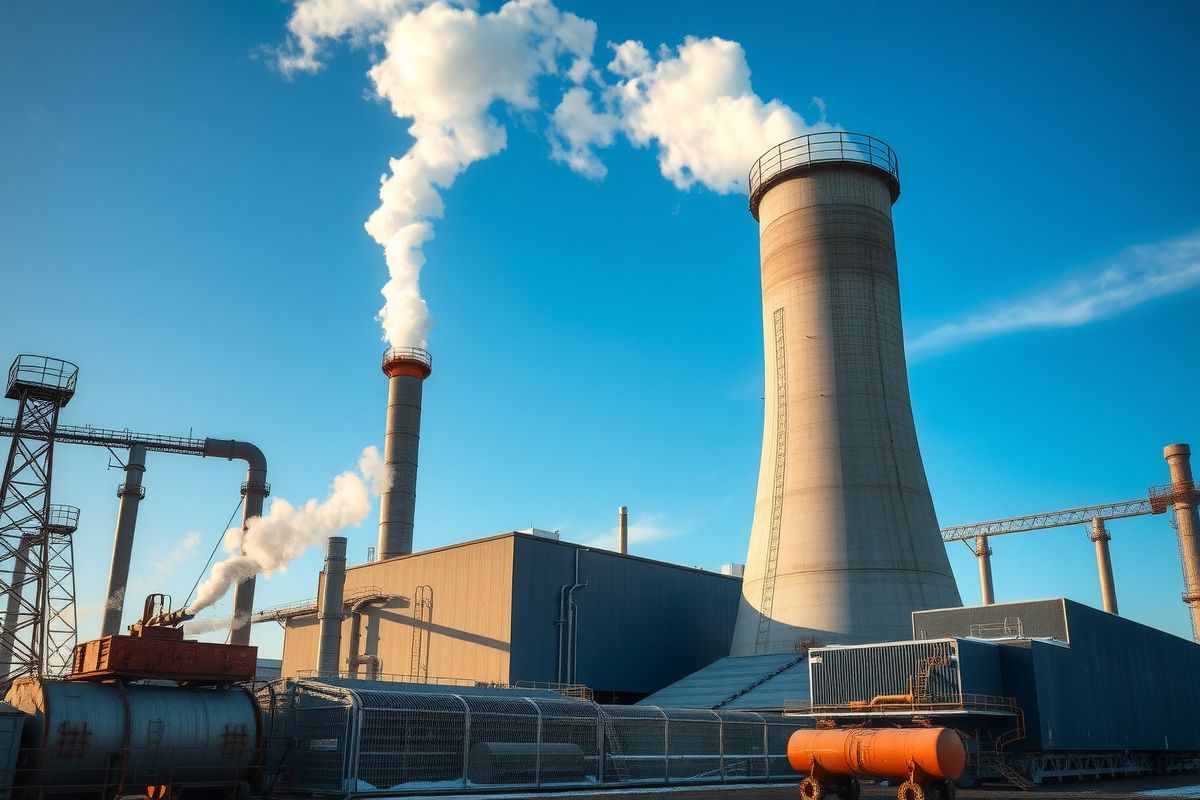
The utilization of industrial waste heat is one of the most pressing topics in modern industry, striving for increased energy efficiency and sustainable development. Every year, enterprises from various sectors release vast amounts of thermal energy into the atmosphere, which could be reused for heating, electricity generation, or in technological processes. This irrational approach not only leads to significant economic losses due to high energy costs but also exacerbates the negative impact on the environment, contributing to the growth of greenhouse gas emissions. The effective implementation of heat recovery systems can significantly reduce energy consumption, lower operating costs, and improve the environmental footprint of production. Modern technologies offer a wide range of solutions for converting lost heat into a valuable resource, opening up new opportunities for innovation and competitiveness of industrial enterprises. This issue is critically important for ensuring energy security and reducing dependence on traditional energy sources, which is especially relevant in the context of global climate change and rising energy prices.
The potential for utilizing industrial waste heat is enormous and covers virtually all sectors of the economy, from heavy industry to the agro-industrial complex. Every enterprise that uses energy-intensive processes faces the problem of heat dissipation, whether it be exhaust gases, hot water, or steam. The implementation of innovative solutions in this area allows not only to optimize production processes but also to create additional revenue streams through electricity generation or the sale of thermal energy to external consumers. The application of advanced heat recovery technologies aligns with global trends towards a circular economy, where every resource is used as efficiently as possible. This enables enterprises not only to comply with strict environmental regulations but also to demonstrate their social responsibility by investing in environmentally friendly and energy-efficient technologies. Thus, transforming waste heat from a byproduct into a valuable resource is a key element of a sustainable industrial development strategy.
Technological Solutions for Effective Industrial Heat Recovery
The technical characteristics of heat recovery systems vary depending on the heat source, its temperature, and the required capacity. The main principle of operation is the transfer of thermal energy from a hot medium (e.g., exhaust gases, hot water, or steam) to a cold medium (e.g., air, water for heating, or fluid for electricity generation) using specialized equipment. Key elements of such systems include various types of heat exchangers: recuperative, regenerative, plate, shell-and-tube, and others. The choice of a specific heat exchanger type depends on the aggressiveness of the medium, temperature regime, and pressure. Modern systems also include heat pumps, which allow increasing the temperature of low-potential heat to the level required for further use. This is especially important for heat sources with temperatures below 100°C, which were previously considered unsuitable for recovery.
Innovative technologies also include Organic Rankine Cycles (ORC), which allow generating electricity from low-temperature heat sources. These systems use organic working fluids with low boiling points, making them effective for converting heat with temperatures from 80°C to 300°C into electrical energy. Absorption chillers are also gaining widespread use, utilizing waste heat to produce cold, which is relevant for many industrial processes such as product cooling or air conditioning systems. The development of materials science allows for the creation of heat exchangers with increased efficiency and resistance to aggressive environments, significantly expanding the possibilities for implementing heat recovery in enterprises with various technological processes. The integration of these technologies into production cycles requires detailed analysis and professional design to ensure maximum economic and environmental benefits.
Application of Recovered Heat in Industrial Processes
The recovery of industrial waste heat finds wide application in various industries. In the metallurgical industry, where furnaces and melting units generate huge volumes of high-temperature exhaust gases, this heat can be used for preheating combustion air, significantly increasing furnace efficiency. Similarly, in the chemical industry, waste heat from exothermic reactions or cooling systems can be directed to heat raw materials, distillation, or steam generation. Examples of equipment include recuperators in calcining kilns, regenerators in open-hearth furnaces, and waste heat boilers that produce steam or hot water from exhaust gases, as can be seen in production dealing with the processing of "Alternative fractions containing hazardous substances," where efficient energy consumption is required.
In the food industry, where sterilization, drying, and cooling processes are frequently used, recovered heat can be utilized for heating water for equipment washing or for space heating. Energy companies actively implement cogeneration units, which simultaneously produce electricity and heat from a single fuel source, as well as trigeneration systems, which also add cold production. This allows achieving high overall efficiency rates of up to 90%. Even in agriculture, for example, in greenhouse complexes or livestock farms, waste heat from ventilation systems or biogas plants can be used for heating. This ensures significant savings in energy resources and a reduction in production costs, and also contributes to the development of "Alternative power sources" through the efficient use of biomass and waste.
Waste Management Associated with Heat Recovery Systems
The implementation and operation of industrial waste heat utilization systems, while environmentally beneficial, can still generate certain types of waste that require responsible management. This may include contaminated heat transfer fluids, spent filters for gas or liquid purification, and residues of insulation materials during equipment installation or dismantling. For example, in exhaust gas treatment systems that may contain harmful impurities, filter materials are used, which over time exhaust their resource and become waste. This can be related to the handling of "Absorbents, filter materials, wiping cloths and protective clothing Code NPW 15 02," which are often contaminated with hazardous substances. Improper handling of such waste can negate all environmental benefits of implementing heat recovery.
Typical wastes arising from the operation and maintenance of heat recovery systems include spent oils and emulsions from pumps and compressors, which can be classified under codes 13 01 10* (mineral hydraulic oils, non-halogenated), 13 02 05* (mineral engine, gear and lubricating oils, non-halogenated) or 15 02 02* (absorbents, filter materials, wiping cloths and protective clothing, contaminated with hazardous substances). Residues from descaling and cleaning heat exchangers can also be formed, which may contain heavy metals or other dangerous components. The company UtilVtorProm provides comprehensive services for environmental maintenance of enterprises, including collection, transportation, storage, and processing of these wastes, ensuring their safe and environmentally responsible handling in accordance with all regulatory requirements.
Professional Partnership with UtilVtorProm for Environmental Services
Successful implementation and subsequent operation of industrial waste heat utilization systems require not only advanced technologies but also a reliable partner in matters of environmental waste management. UtilVtorProm is a leader in the environmental services market, offering a professional approach to the collection, transportation, storage, and processing of various industrial wastes. Our activities are fully licensed, which guarantees compliance with all environmental standards and regulations of Ukraine. We understand that every industrial process is unique, so we offer individual solutions adapted to the specific needs of your enterprise. By contacting UtilVtorProm, you receive not just a service, but a reliable partner who will help you minimize environmental risks and optimize costs associated with waste management. Contact us today to learn more about our services and discuss how we can help your business become more environmentally responsible and energy-efficient.