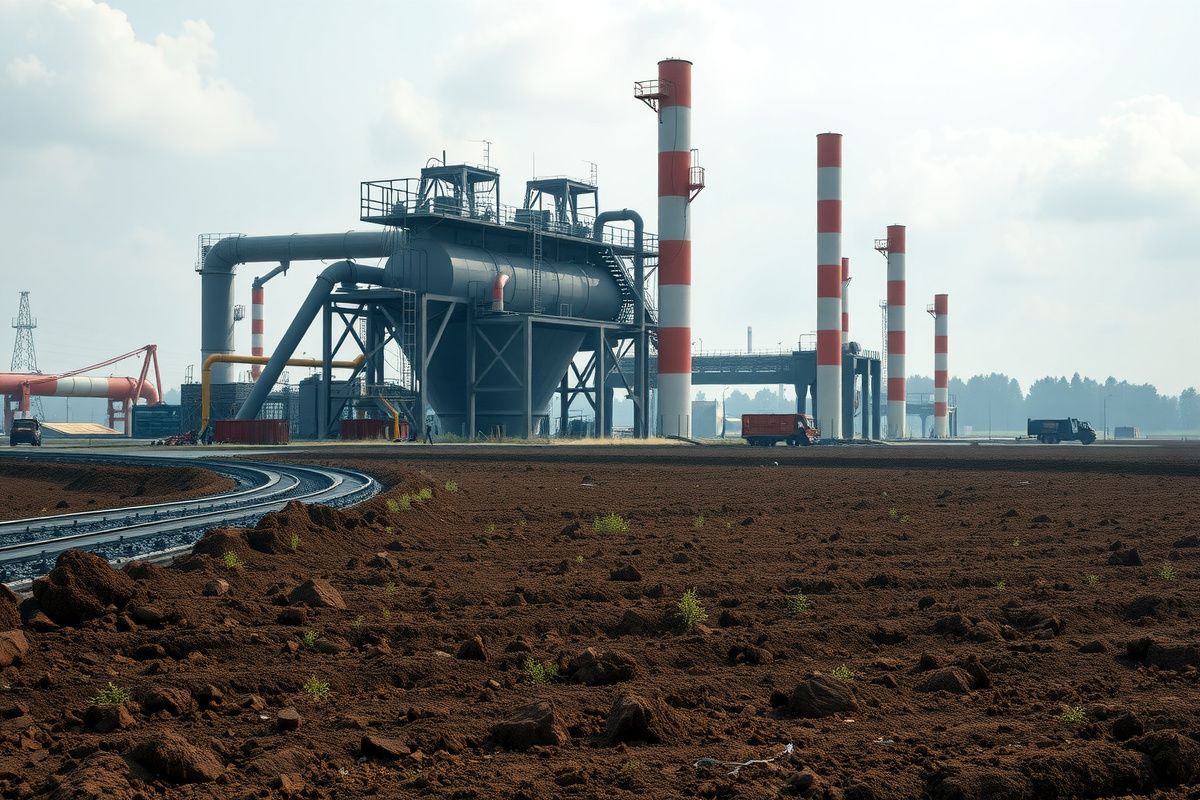
Industrial soil pollution is one of the most acute environmental problems of our time, with serious consequences for the environment and human health. Industrial activities, especially in the metallurgical, chemical, and oil refining industries, often lead to the accumulation of heavy metals, petroleum products, organic solvents, and other toxic substances in the soil. These pollutants can migrate into groundwater, enter food chains, and negatively affect biodiversity. Therefore, the development and implementation of effective methods for restoring contaminated areas is a critical task for ensuring sustainable development and preserving natural resources.
In this context, bioremediation emerges as a promising and environmentally safe technology that uses natural biological processes to degrade or neutralize pollutants. It offers effective solutions for soil restoration without the need for complete removal and replacement, which is an economically viable and less invasive approach. UtilVtorProm, as a leader in the field of environmental maintenance for enterprises, actively researches and implements advanced bioremediation methods, helping industrial facilities minimize their environmental footprint and comply with the highest standards of environmental legislation. Our goal is to provide comprehensive solutions for effective management of industrial waste and restoration of contaminated areas, ensuring a safe future for generations to come.
Mechanisms of Bioremediation in Soil Restoration
Bioremediation is a complex process based on the ability of microorganisms (bacteria, fungi) and plants (phytoremediation) to decompose or transform harmful substances into less toxic or non-toxic compounds. The main principle of action is to stimulate natural degradation processes by optimizing environmental conditions, such as oxygen availability, nutrients, moisture, and pH. Microorganisms use organic pollutants as a source of carbon and energy, converting them into biomass, carbon dioxide, and water. This process can occur in both aerobic (with oxygen) and anaerobic (without oxygen) conditions, depending on the type of pollutant and microorganisms.
There are various bioremediation techniques that are adapted to specific conditions and types of contamination. Biostimulation involves adding nutrients (nitrogen, phosphorus) and oxygen to enhance the activity of indigenous microorganisms. Bioaugmentation is the introduction of specially selected or genetically modified microorganisms that have an increased ability to degrade certain pollutants. Phytoremediation uses plants that absorb, accumulate, or transform pollutants from the soil. These methods are effective for a wide range of contaminants, including petroleum products, polycyclic aromatic hydrocarbons, chlorinated solvents, and some heavy metals. The choice of a specific method depends on the depth and degree of contamination, soil type, and climatic conditions.
Practical Application of Bioremediation Technologies at Industrial Facilities
Bioremediation is widely used in various industries for soil restoration contaminated with various substances. For example, oil refineries, gas stations, and fuel storage facilities often face oil spills. In such cases, bioremediation effectively decomposes hydrocarbons using specialized bacteria, significantly reducing the concentration of pollutants. In the metallurgical industry, where soils can be contaminated with heavy metals, phytoremediation using hyperaccumulator plants helps extract toxic elements from the soil, transferring them into plant biomass, which is then safely processed.
Chemical enterprises that produce pesticides, solvents, or other organic compounds are also potential sources of pollution. For such cases, biodegradation is applied, allowing microorganisms to destroy complex chemical structures into safe components. Examples of equipment used in bioremediation include aeration systems to provide oxygen, irrigation systems to maintain optimal moisture, and bioreactors for growing and supplying microorganisms. The application of these technologies allows not only to clean contaminated areas but also to restore the natural structure and fertility of the soil, which is important for the further use of these territories.
Waste Management from Bioremediation Processes
While bioremediation is an environmentally friendly technology, it also generates certain wastes that need to be properly managed. Such wastes may include biomass of microorganisms that have accumulated pollutants, plant biomass from phytoremediation containing heavy metals, and soil residues that have not been completely purified. It is important to understand that these wastes, depending on the concentration and type of pollutants, can be classified as hazardous. For example, soils containing hazardous substances may have the code 17 05 03*, and wastewater treatment residues containing hazardous substances – 19 08 07*. Biomass that has accumulated heavy metals may fall under the category of waste with code 19 08 13*.
Proper management of such wastes is key to ensuring environmental safety. UtilVtorProm provides a full range of environmental maintenance services for enterprises, including collection, transportation, storage, and processing of waste generated during bioremediation. We ensure that all waste is processed in accordance with current legislation and the highest environmental standards, minimizing any negative impact on the environment. Our specialists develop individual solutions for each client, taking into account the specifics of contamination and the requirements for further waste processing.
Comprehensive Environmental Maintenance Solutions from UtilVtorProm
Choosing a reliable partner for implementing bioremediation technologies and managing industrial waste is critically important for any enterprise. UtilVtorProm offers a professional approach and licensed activities in the field of environmental maintenance, guaranteeing high quality of services and compliance with all regulatory requirements. We have many years of experience in working with various types of industrial waste, including those generated during the restoration of contaminated soils. Our specialists develop individual strategies that include a comprehensive analysis of contamination, selection of optimal bioremediation methods, and organization of safe handling of all associated wastes. By contacting UtilVtorProm, you receive not just a service, but a reliable partnership aimed at achieving your environmental goals and ensuring sustainable development. Contact us today to learn more about our solutions and get a personalized consultation.