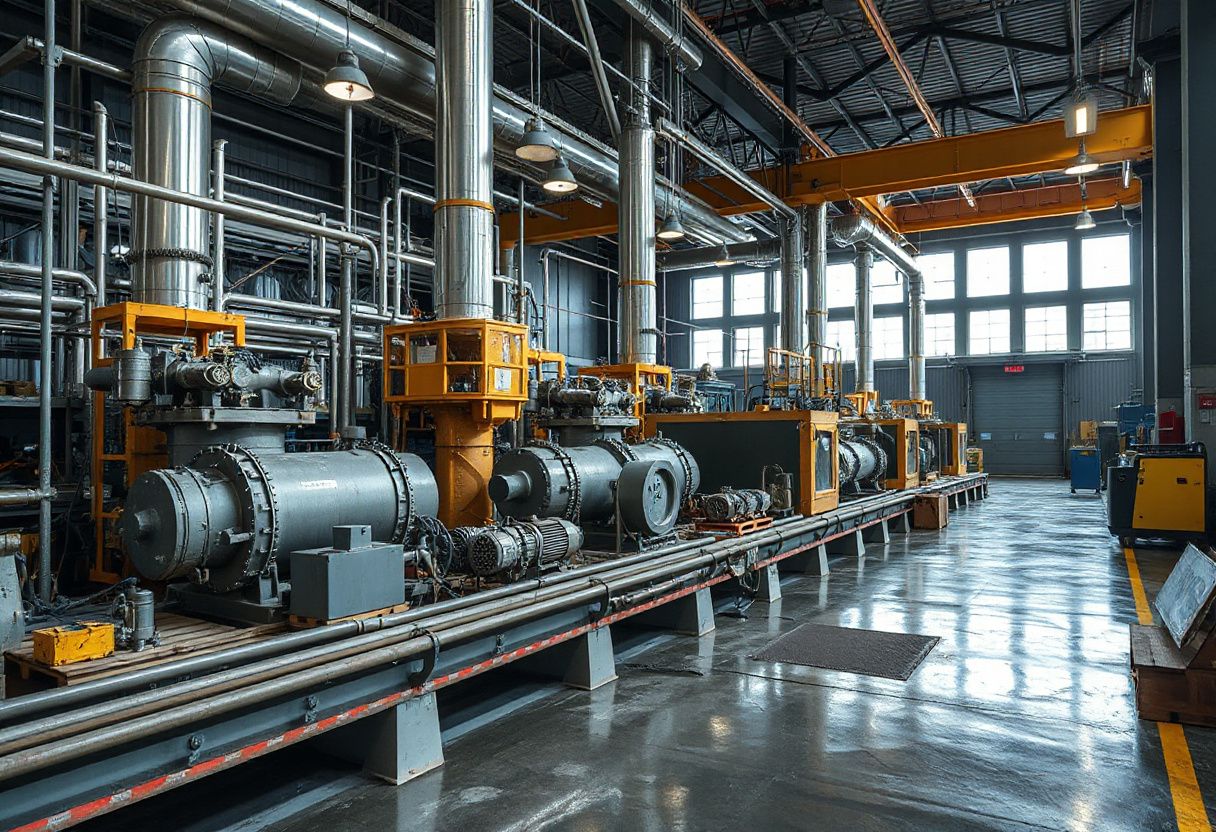
The implementation of a circular economy in industrial enterprises in Ukraine is not just a fashionable trend, but an urgent need and a strategic necessity in the context of modern environmental challenges and limited resources. This concept provides for a transition from a linear "production-consumption-disposal" model to a closed loop, where the waste of one process becomes resources for another. For Ukrainian industry, which has inherited a significant amount of material and energy waste, the circular economy opens up new opportunities to increase competitiveness, reduce production costs and minimize negative environmental impact.
The relevance of this topic is also enhanced by Ukraine's integration into the European space, where the principles of the circular economy have long been the cornerstone of environmental and industrial policy. Ukrainian enterprises that seek to enter international markets or cooperate with European partners must adapt their production processes to these standards. This is not only a matter of compliance with regulatory requirements, but also of forming a positive image, attracting investments and ensuring sustainable development in the long term. UtilVtorProm actively supports these initiatives by offering comprehensive waste management solutions.
Key principles and technological aspects of the circular economy
The implementation of the circular economy is based on three main principles: reducing resource consumption, reusing materials and recycling waste. This requires a deep re-evaluation of the entire product life cycle – from design and production to consumption and end of life. Technically, this means introducing innovative technologies, such as industrial symbiosis, where the waste of one enterprise is used as raw material by another, or developing materials with the possibility of multiple use cycles. An important aspect is also the optimization of energy consumption and the use of renewable energy sources, which reduces the carbon footprint of production.
Among the technical characteristics that contribute to the circular economy, we can highlight the modular design of products, which allows easy replacement of individual components instead of the entire product, as well as the development of biodegradable materials that can safely return to the natural cycle. The principle of the circular economy is to create closed material cycles, reduce waste volumes and maximize the preservation of resource value throughout their life cycle. This requires significant investment in research and development, as well as in the modernization of production facilities for the introduction of new, more environmentally friendly technologies.
Application of circular models in industrial sectors of Ukraine
The concept of a circular economy is finding its application in many industrial sectors of Ukraine, demonstrating the potential for significant environmental and economic benefits. For example, in the metallurgical industry, this can be the use of metal scrap as a secondary raw material for the production of new steel or aluminum, which can significantly reduce the extraction of primary ores and energy consumption. In the chemical industry, this involves the regeneration of solvents, the processing of polymer waste to create new plastic products or the use of production by-products as raw materials for other chemical processes. Examples of equipment include waste sorting and crushing plants, pyrolysis reactors for processing organic materials, and systems for heat and energy recovery.
In the agricultural sector, the circular economy is manifested in the processing of organic waste (manure, plant residues) into biogas and organic fertilizers, which not only solves the problem of waste disposal, but also creates additional energy sources and improves soil fertility. In the textile industry, this can be the collection and processing of used clothing into new fibers or technical materials. Such approaches not only reduce the burden on landfills, but also create new jobs and develop innovative production. UtilVtorProm provides services that help enterprises integrate these models, ensuring effective management of various types of waste.
Effective waste management in the context of the circular economy
The transition to a circular economy is impossible without effective waste management generated by industrial enterprises. This includes their sorting, collection, transportation and subsequent processing or safe storage. It is important to understand that each type of waste requires a specific approach. For example, used oils and lubricants, which are common industrial waste, can be recycled to obtain base oils or used as fuel. Waste codes according to the National Waste List (NWL) help classify these materials. For used oils, these are, for example, 13 01 10* (mineral hydraulic oils not containing halogens), 13 02 05* (mineral engine, gear and lubricating oils not containing halogens) or 13 03 07* (mineral insulating and heat transfer oils not containing halogens). Waste filters and absorbents containing hazardous substances are classified as 15 02 02*.
UtilVtorProm provides a full range of environmental services for enterprises, including the collection, transportation, storage and processing of a wide range of industrial waste. Our activities cover not only used oils, but also other hazardous and non-hazardous waste generated in the production process. This includes, for example, waste paints and varnishes containing hazardous substances (08 01 11*), waste adhesives and sealants containing hazardous substances (08 04 09*), as well as waste chemicals consisting of or containing hazardous substances (16 05 08*). Proper handling of this waste is critically important for minimizing negative environmental impact and ensuring compliance with environmental regulations.
Professional partnership with UtilVtorProm for sustainable development
UtilVtorProm offers a professional and comprehensive approach to solving problems related to the implementation of a circular economy in enterprises. We have all the necessary licenses and permits to carry out activities related to the management of hazardous and non-hazardous waste, guaranteeing full compliance with legal requirements. Our specialists develop individual solutions for each client, taking into account the specifics of production and the type of waste generated. We do not just collect and process waste, but help enterprises integrate the principles of the circular economy into their business processes, optimizing resource use and reducing their environmental footprint. For a detailed consultation and discussion of cooperation opportunities, please contact our experts.