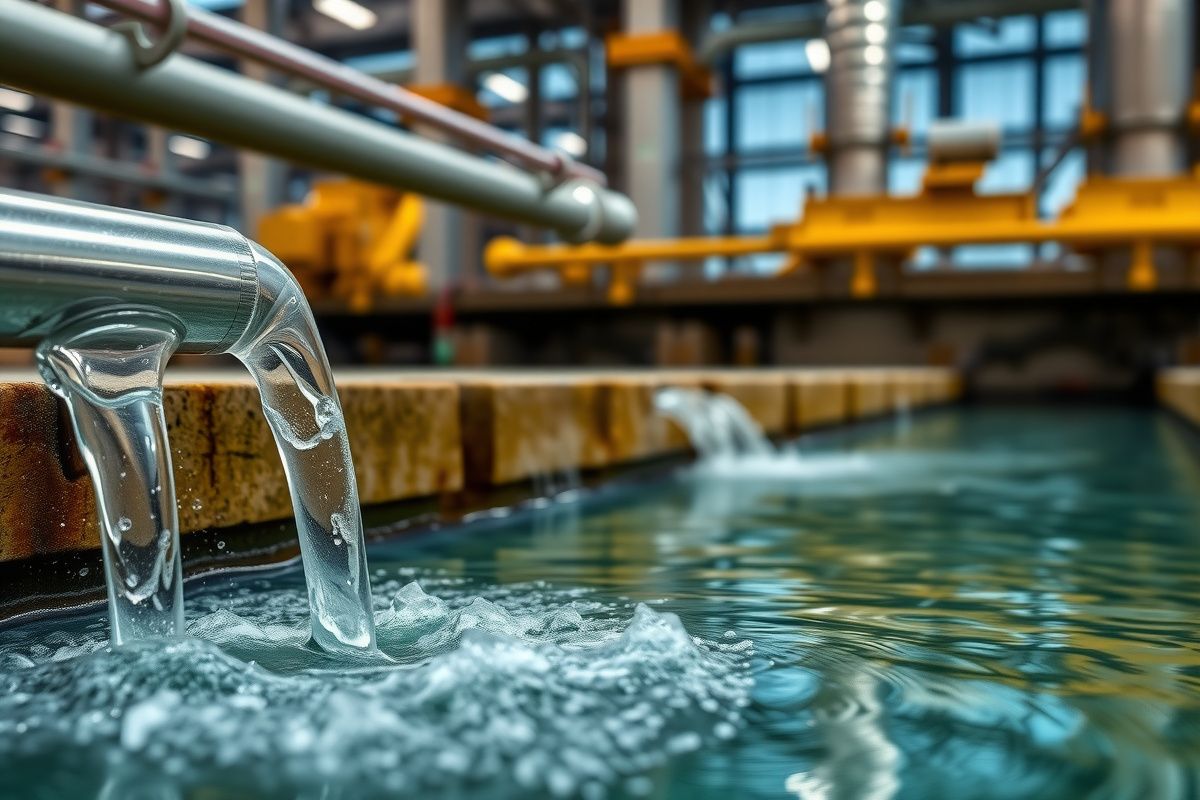
Industrial wastewater is one of the most serious challenges in modern ecology, as it contains a wide range of pollutants, from heavy metals to organic compounds, which can cause irreparable harm to aquatic ecosystems and human health. Traditional physico-chemical treatment methods are often energy-intensive, expensive, and can generate secondary waste that also requires special handling. Growing awareness of the need for sustainable development and stricter environmental regulations encourage enterprises to seek more effective and environmentally safe solutions for industrial wastewater treatment.
It is in this context that biotechnologies come to the forefront as a powerful tool for developing innovative and ecological treatment methods. The use of biological processes involving microorganisms, enzymes, and plants allows not only for effective pollutant removal but also for minimizing the formation of hazardous by-products. These approaches offer significant advantages in terms of cost-effectiveness, resource conservation, and environmental safety, opening new perspectives for industrial enterprises striving to meet the highest environmental protection standards.
Biological Degradation of Pollutants: Key Mechanisms and Principles
At the core of biotechnological methods for industrial wastewater treatment lies the ability of microorganisms, such as bacteria, fungi, and algae, to break down complex organic and inorganic compounds into simpler, less toxic, or completely harmless substances. This process, known as biodegradation, can occur under aerobic conditions (with oxygen access) or anaerobic conditions (without oxygen). Aerobic processes are effective for removing biodegradable organic substances, while anaerobic processes are ideal for treating highly concentrated wastewater containing toxic compounds, as well as for biogas production, as observed in the treatment of anaerobic liquids from biowaste processing.
The operating principle of biotechnological systems is based on creating optimal conditions for the life activity of microorganisms, which ensures their maximum activity in pollutant degradation. This includes controlling temperature, pH, oxygen concentration, and nutrients. Modern bioreactors and biofilters are equipped with special carriers for microorganism immobilization, which significantly enhances treatment efficiency and system stability. These innovations allow for achieving a high degree of purification even for wastewater with complex compositions that were previously considered difficult to treat.
Innovative Biotechnological Systems for Industrial Wastewater Treatment
Biotechnological methods are widely used in various industries, including food, pharmaceutical, chemical, textile, and metallurgical. For example, in the food industry, bioreactors with activated sludge successfully remove organic pollutants with high fat and protein content. In pharmaceuticals, biotechnologies allow for effective treatment of wastewater from drug residues and antibiotics, preventing their release into the environment. The development of membrane bioreactors (MBRs) combines biological treatment with membrane filtration, ensuring exceptionally high quality of treated water suitable for reuse in production processes.
Examples of equipment include biofilters that use microorganism biofilms for air and water purification, as well as anaerobic installations that not only treat wastewater but also produce biogas, which can be used as an energy source. These systems are significantly more environmentally friendly than traditional methods, which may use, for example, activated carbon, a product of chlorine production, which itself requires specific handling after use. The implementation of such comprehensive solutions allows enterprises not only to comply with environmental standards but also to gain economic benefits through energy saving and water recycling.
Ecological Waste Management from Biological Wastewater Treatment
Even the most environmentally friendly biotechnological methods for industrial wastewater treatment generate certain wastes, mainly in the form of excess biological sludge (activated sludge). This sludge consists of microorganism biomass, as well as residues of pollutants that have not been fully degraded. Although biological sludge is less toxic compared to chemical sludges, it still requires proper handling to avoid secondary pollution. Depending on its composition and potential hazard, sludge can be classified under various codes of the National Waste List Waste (NWL), for example, 19 08 06* for sludges from wastewater treatment containing hazardous substances, or 19 08 07 for sludges not containing hazardous substances. Responsible management of these wastes is critically important to ensure the sustainability of the entire treatment process.
UtilVtorProm company specializes in comprehensive environmental services for enterprises, providing a full range of services for the management of biological treatment waste. This includes collection, transportation, temporary storage, and subsequent processing of biological sludge, as well as other wastes generated during the water purification process. We guarantee compliance with all environmental norms and legislative requirements, ensuring safe and effective waste management, minimizing their impact on the environment. Our approach allows enterprises to focus on their core activities, being confident in the compliance of their environmental processes with the highest standards.
Partnership with UtilVtorProm: A Reliable Solution for Environmental Safety
By choosing UtilVtorProm as your partner, you gain access to professional expertise and licensed activities in the field of industrial waste management, including those generated as a result of applying biotechnological wastewater treatment methods. Our company holds all necessary permits and licenses for the collection, transportation, storage, and processing of a wide range of wastes, ensuring full compliance of your processes with environmental standards. We understand the unique needs of each client and offer individual solutions that help optimize costs and ensure the environmental safety of your production. Contact UtilVtorProm today to discuss your needs and find the best solutions for sustainable and responsible waste management.