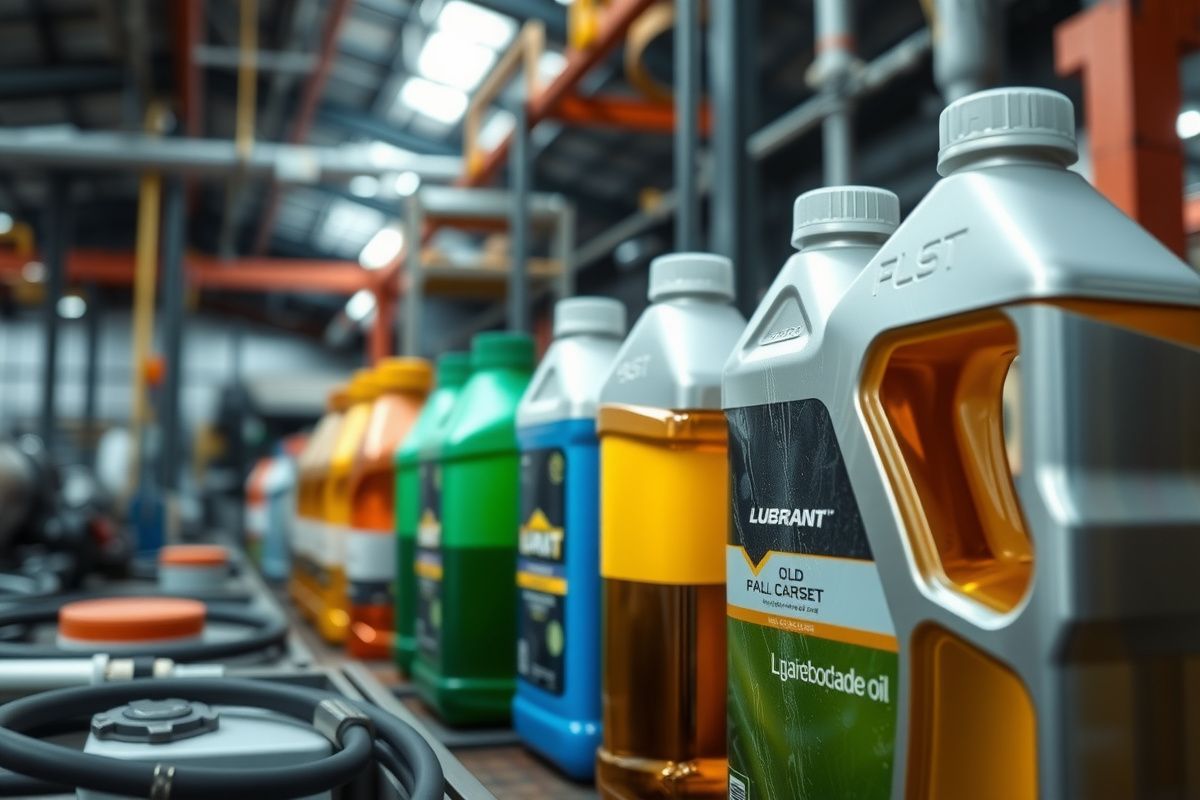
Spent industrial lubricants and oils are an integral part of the functioning of any production enterprise. Their use covers a wide range of equipment – from heavy machine-building machinery to high-precision machine tools. Over time, under the influence of operating conditions such as high temperatures, mechanical loads, oxidation, and contamination, these substances lose their primary operational properties. The accumulation of impurities, changes in viscosity, and a decrease in anti-corrosion and anti-wear characteristics make them unsuitable for further use. This creates a serious environmental and economic problem for industrial enterprises.
The relevance of the recovery and regeneration of spent lubricants and oils is growing every year. Firstly, it significantly reduces the cost of purchasing new lubricants, which is a significant expense for many enterprises. Secondly, it is a key element of responsible environmental management. Uncontrolled disposal of spent oils causes irreparable damage to soils, water resources, and the atmosphere. Therefore, the implementation of effective recovery and regeneration technologies is not only economically beneficial but also an environmentally necessary step that complies with the principles of sustainable development and the requirements of modern legislation regarding industrial waste management.
Technologies for restoring the operational properties of industrial oils
The recovery and regeneration of spent industrial lubricants and oils is a complex process aimed at restoring their initial physical and chemical properties. The main contaminants affecting oil quality are mechanical impurities, water, oxidation products, acids, metals, and other organic and inorganic compounds. Recovery technologies are divided into physical, chemical, and physicochemical methods. Physical methods, such as settling, filtration, centrifugation, and vacuum degassing, allow the removal of solid particles, water, and light fractions. These methods are relatively simple and economical, but not always effective enough to fully restore properties.
Chemical methods include the use of reagents to neutralize acids, remove resins, and other decomposition products. These include coagulation, adsorption, and ion-exchange purification. Physicochemical methods combine the advantages of both approaches. For example, adsorption purification using activated carbon or zeolites allows the removal of a wide range of impurities, including oxidation products, resins, and acids, restoring the color and transparency of the oil. Hydrogenation and hydrotreating are used for deep regeneration, which allows the restoration of base oils to a state close to the primary product, with minimal losses. The choice of a specific technology depends on the degree of oil contamination, its type, and the requirements for the final product.
Application of regenerated lubricants in industry
Regenerated industrial lubricants and oils are widely used in various industries, demonstrating high efficiency and reliability. After a successful recovery process, they can be used as hydraulic oils in presses, lifting mechanisms, and other hydraulic systems, ensuring stable equipment operation. Regenerated materials are also suitable for use as transmission oils in gearboxes, transmissions, and other units where reliable lubrication and wear protection are required. They work effectively in compressors, providing optimal conditions for gas compression, and in vacuum pumps, maintaining the necessary vacuum level.
In addition, recovered oils can be used as cutting fluids (coolant-lubricants) in metalworking, where they provide effective cooling of the tool and workpiece, reduce friction, and improve the quality of the processed surface. They are used in lubrication systems for machine tools, conveyors, bearings, and other industrial equipment. It is important to note that the quality of regenerated oils, provided all technological processes are followed, meets the standards for new products, which allows enterprises to significantly reduce operating costs without compromising the reliability and safety of production processes. This contributes to increased economic efficiency and reduced environmental impact.
Environmental management of spent industrial lubricants and oils
Spent industrial lubricants and oils belong to the category of hazardous waste that requires special handling. Improper storage or disposal can lead to soil, water, and air pollution, causing irreparable damage to the ecosystem and human health. According to the National Waste List (NWL), spent mineral oils that do not contain halogens are classified as 13 02 05*, and spent synthetic engine, gear, and lubricating oils as 13 02 06*. Spent oils containing halogens are classified under code 13 02 04*. These codes indicate their hazardousness and the need for specialized handling methods.
UtilVtorProm company provides a full range of environmental services to enterprises, including the collection, transportation, storage, and processing of spent industrial lubricants and oils. We operate in accordance with current legislation and international standards, ensuring safe and responsible handling of this waste. Our activities are aimed at minimizing negative environmental impact and maximizing the recovery of valuable resources. We use modern technologies and equipment for processing, which allows not only to avoid pollution but also to obtain secondary raw materials for further industrial use. This is an important step towards the formation of a circular economy and sustainable development.
UtilVtorProm's professional approach to oil processing
UtilVtorProm is a leader in industrial waste management, offering comprehensive and licensed services for the processing of spent industrial lubricants and oils. We possess all the necessary permits and licenses to carry out our activities, which guarantees our clients full compliance with environmental norms and legal requirements. Our team of highly qualified specialists applies an individual approach to each order, developing optimal solutions for the collection, transportation, and processing of waste of any volume and degree of hazard. We use modern equipment and advanced technologies, which allows us to achieve maximum efficiency and minimize environmental impact. By contacting UtilVtorProm, you get a reliable partner who will ensure professional and environmentally responsible handling of your waste, allowing your enterprise to focus on its core activities. Contact us today to discuss your needs and receive a personalized offer.