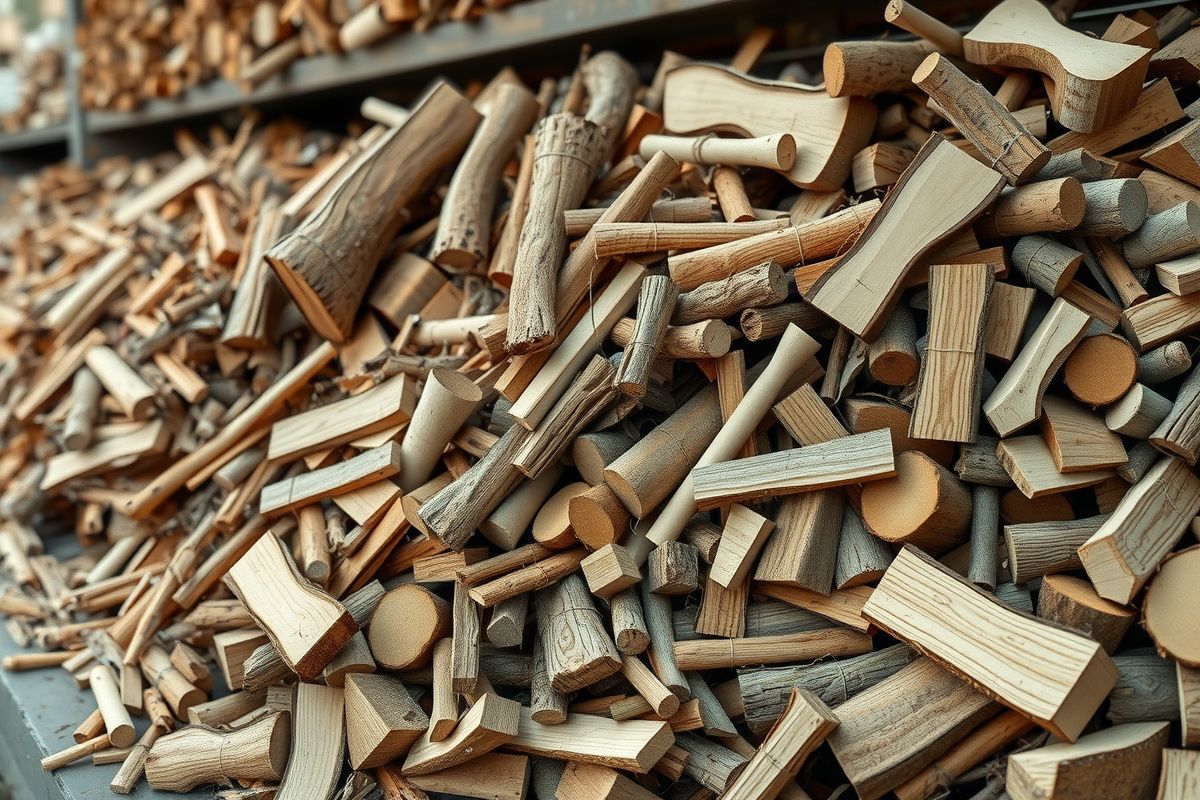
Wood processing waste is a significant environmental and economic problem for modern industry, but at the same time, it holds immense potential for recycling and reuse. Annually, thousands of tons of sawdust, chips, trimmings, and bark accumulate at woodworking enterprises, creating challenges for their proper handling and storage. Uncontrolled accumulation of these materials leads to environmental pollution, increased fire risks, and the loss of valuable secondary resources. Effective management of wood waste becomes an integral part of sustainable development and responsible business.
The relevance of wood waste management is growing amidst a global focus on the circular economy and reducing the carbon footprint of industrial enterprises. Every enterprise working with wood faces the need to implement modern and environmentally safe methods for processing these wastes. This allows for compliance with strict environmental regulations, optimization of production processes, cost reduction, and generation of additional profit. UtilVtorProm company offers comprehensive solutions for effective and responsible management of these specific wastes, helping enterprises transition to a new level of environmental safety and economic efficiency.
Morphological Composition of Wood Waste and Its Energy Potential
Wood processing waste represents a heterogeneous mixture of organic materials formed at various stages of production. These include sawdust, chips, bark, wood chips, trimmings, veneer, as well as waste from plywood and particleboard production. The main components are cellulose, hemicellulose, and lignin, which make up over 90% of the dry mass. The moisture content of the waste can vary significantly, affecting its calorific value and suitability for processing. The presence of impurities such as sand, metal particles, or residues of glues and paints can affect the quality of the secondary raw material and require preliminary cleaning.
The technical characteristics of wood waste make it a valuable resource for energy and the production of building materials. The high content of organic substances provides significant energy potential, similar to traditional types of fuel. The principle of operation of many processing technologies is based on using their flammability or ability for mechanical compression. For the production of fuel briquettes or pellets, waste is crushed, dried, and pressed under high pressure. This approach is an ecological alternative to the use of fossil fuels, as observed in the case of alternative fuel types: gasoil, boiler, and diesel, reducing greenhouse gas emissions.