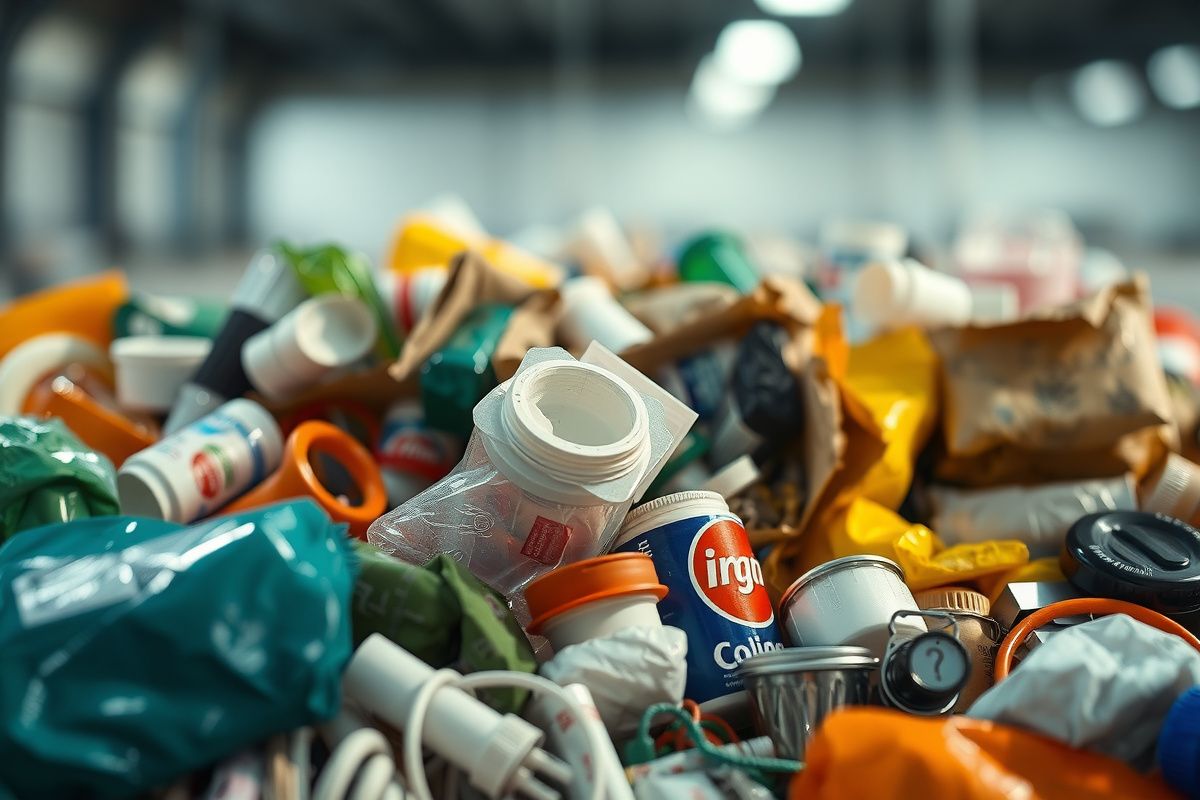
The growing volume of packaging waste is one of the most pressing environmental problems of our time, demanding immediate and effective solutions from businesses. Companies across various industries face challenges related to managing packaging materials after use, which includes both logistical and regulatory aspects. The necessity of transitioning to a circular economy and reducing the ecological footprint is becoming an integral part of corporate social responsibility and strategic planning. This is why the search for and implementation of ecological solutions for packaging waste is critically important for the sustainable development of any enterprise.
Effective management of packaging waste not only contributes to the preservation of natural resources and the reduction of environmental pollution but also opens new opportunities for cost optimization and enhancement of a company's reputation. Consumers increasingly prefer brands that demonstrate their commitment to ecological principles, making sustainable practices not just a requirement but a competitive advantage. Legislative norms are also strengthening, forcing enterprises to seek innovative approaches to the collection, transportation, and recycling of packaging materials to avoid fines and ensure compliance with international standards.
Diversity of Packaging Materials and Recycling Challenges
Packaging waste represents a complex conglomerate of heterogeneous materials, each with unique physicochemical properties that affect their recycling processes. This category includes plastic containers, polymer films, cardboard boxes, glass bottles, metal cans, and multi-layer composite materials. Plastics such as PET, HDPE, PVC, PP, and PS differ in density, melting temperature, and chemical resistance, requiring separate sorting and recycling technologies. For example, transparent PET bottles are easily recycled into new fibers or containers, while multi-layer packaging with foil and polymers is significantly more difficult to separate into components.
The complexity lies not only in the variety of materials but also in the presence of contaminants such as food residues, labels, adhesives, and dyes, which can reduce the quality of secondary raw materials and complicate the recycling process. Successful recycling requires effective sorting at the collection stage, which often necessitates the use of modern optical scanners and automated lines. Furthermore, some materials, such as contaminated paper packaging or packaging with hazardous substances, may require special handling, similar to how other specific wastes like alternative filter materials and used absorbents, also require specialized approaches.
Innovative Packaging Recycling Technologies for Reducing the Ecological Footprint
Modern ecological solutions for packaging waste cover a wide range of innovative technologies aimed at maximizing their value and minimizing negative environmental impact. One of the key directions is mechanical recycling, which includes sorting, shredding, washing, and granulating plastic, or processing paper and cardboard into cellulose fibers for the production of new products. Glass packaging, after crushing, can be used to create new glass products or as an additive to building materials. Metal cans made of aluminum and steel are melted down, returning to the production cycle with virtually no loss of properties.
In addition to mechanical recycling, chemical methods are actively developing, allowing polymers to be broken down into their monomeric components, which can then be used to synthesize new plastic. This is particularly relevant for mixed or heavily contaminated plastic waste that is difficult to recycle mechanically. Other solutions include composting biodegradable packaging, which converts it into organic fertilizers, and energy recovery for those wastes that cannot be subjected to other types of recycling. These approaches significantly reduce the volume of waste entering landfills and contribute to the formation of more sustainable production.
Classification and Safe Handling of Packaging Waste Materials According to the NPL
Proper handling of packaging waste begins with its accurate classification in accordance with the National Waste List (NPL), which is a mandatory requirement for all enterprises. Packaging waste materials have specific codes that reflect their composition and potential hazard. For example, paper and cardboard packaging may have code 15 01 01*, plastic packaging – 15 01 02*, wooden packaging – 15 01 03*, metal packaging – 15 01 04*, and composite packaging – 15 01 05*. Glass packaging is classified as 15 01 07*. It is important to distinguish packaging containing residues of hazardous substances or contaminated by them, for example, 15 01 10* (packaging containing residues of hazardous substances or contaminated by them), which requires particularly careful handling, similar to how effective management of batteries and accumulators as hazardous waste is carried out.
UtilVtorProm company provides comprehensive services for the ecological maintenance of enterprises, ensuring professional collection, transportation, storage, and recycling of packaging waste in accordance with all regulatory requirements. Our specialists assist in the correct identification and classification of waste, develop optimal waste management schemes, minimizing environmental risks and ensuring compliance with legislation. We guarantee that every stage of packaging waste handling will be performed with maximum responsibility and efficiency, contributing to the implementation of circular economy principles at your enterprise.
Comprehensive Services of UtilVtorProm in Packaging Waste Management
UtilVtorProm company is a reliable partner for businesses in the field of professional packaging waste management, offering licensed and effective solutions. Our activity is based on many years of experience and a deep understanding of environmental standards, which allows us to provide high-quality services. We ensure a full cycle of waste management, from consultations and the development of individual plans to collection, safe transportation, temporary storage, and further processing of packaging materials. By contacting UtilVtorProm, you receive a guarantee that your waste will be handled in compliance with all environmental norms and requirements.