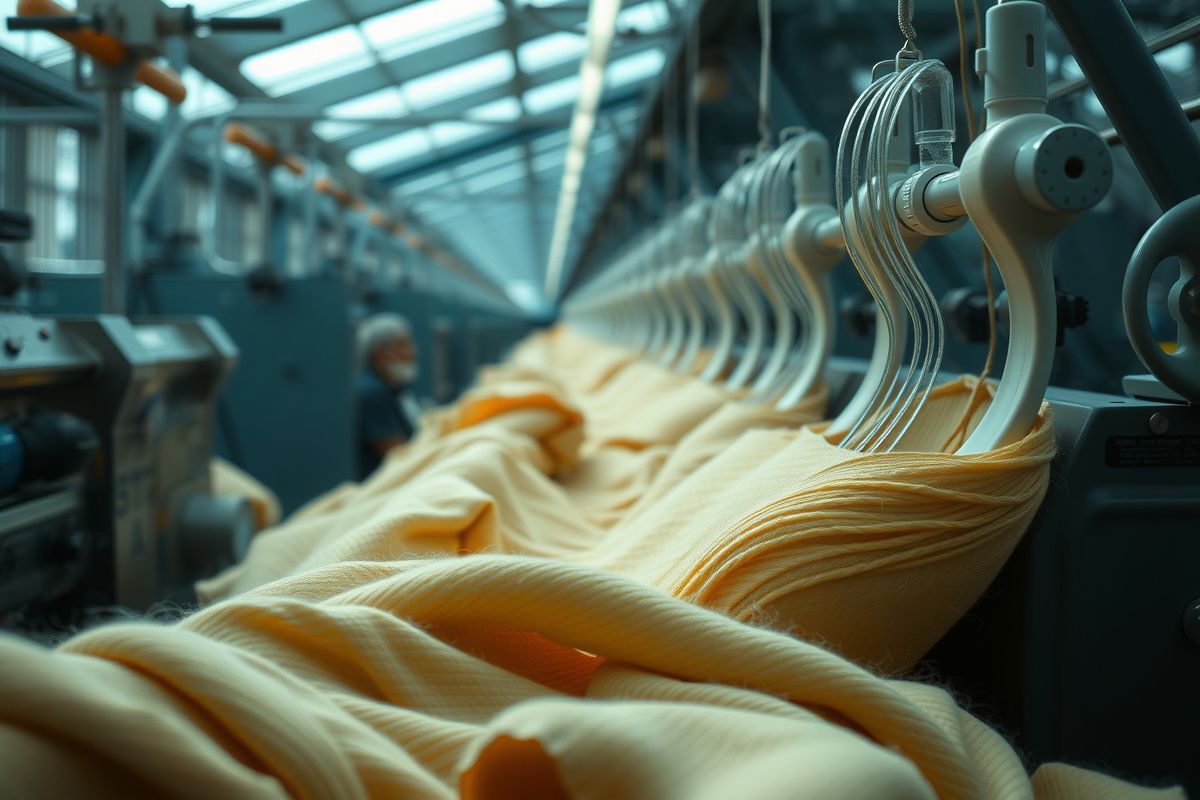
The textile industry is one of the oldest and largest sectors of the global economy, yet its rapid development is accompanied by significant environmental challenges. Annually, millions of tons of textile waste, including production residues, fabric scraps, as well as worn-out clothing and household textiles, end up in landfills, creating an enormous burden on the environment. These wastes decompose for decades, emitting greenhouse gases, polluting soils and water resources with hazardous chemicals from dyes and treatments. The need for effective textile waste management becomes critically important for sustainable development and the preservation of the planet's natural resources.
The urgency of the problem is exacerbated by growing consumption and "fast fashion," which leads to a constant increase in waste volumes. According to environmental organizations, less than 1% of textiles are recycled into new fibers, making this industry one of the most resource-intensive and polluting. The implementation of innovative approaches to the collection, sorting, and processing of textile waste is a key task for the industry and society as a whole. This not only reduces the negative impact on the environment but also opens up new opportunities for creating a circular economy where waste becomes a valuable resource.
Diversity of Textile Waste and its Recycling Potential
Textile waste is extremely diverse in its composition, which complicates its processing. It can include natural fibers such as cotton, linen, wool, as well as synthetic materials – polyester, nylon, acrylic, elastane, and their numerous blends. Each type of fiber has its unique physicochemical properties, requiring an individual approach to recycling. For example, cotton can be relatively easily recycled mechanically, while blended fabrics containing polyester and cotton pose a much more complex challenge due to the need to separate different polymers. This requires the development of new technologies and infrastructure for effective sorting and processing.
In addition to primary fibers, textile waste often contains various impurities: buttons, zippers, metal elements, synthetic threads and appliques, as well as residues of dyes and chemical treatments. These components can be hazardous and require special handling. Technical characteristics of waste, such as fiber length, strength, moisture content, and degree of contamination, directly influence the choice of the optimal recycling method. The operating principle of modern recycling complexes is based on a combination of mechanical, chemical, and biological processes aimed at maximizing the extraction of valuable materials and minimizing residues subject to landfilling.
Innovative Technologies for Converting Textile Waste into New Products
Modern innovations in textile waste management are focused on the development and implementation of effective methods that allow converting spent materials into new valuable resources. Mechanical recycling, which involves shredding textiles into fibers and then spinning them, is the most common method. However, it often leads to a reduction in fiber length and a decrease in material quality, limiting its application. To overcome these limitations, advanced chemical recycling methods are being developed, such as depolymerization, which allows synthetic fibers to be broken down into their monomeric components, from which new high-quality polymers are then synthesized. This, for example, allows polyester from used clothing to be restored to virgin fiber quality, similar to processes applied to recycle some types of plastic, as occurs with "Alternative emulsions" or "Alternative fractions containing hazardous substances" in other industries.
The application of recycled textile fibers is widespread in various industries. They are used to produce new fabrics for clothing, technical textiles for the automotive industry (e.g., sound insulation materials, interior upholstery), building materials (insulation, fillers), and geotextiles. Furthermore, textile waste can be used for manufacturing furniture fillers, wiping rags, which is an effective method of reuse, similar to how "Absorbents, filtering materials, wiping cloths and protective clothing NWL Code 15 02" find their application after use. Innovative approaches also include the development of biological methods for decomposing natural fibers and the use of textile waste for producing biofuels or compost, which expands the range of their sustainable application.
Comprehensive Textile Waste Management and Classification
Effective management of textile industry waste requires careful planning and adherence to environmental standards at all stages, from collection to processing. The main challenge is sorting, as blended fabrics and the presence of accessories significantly complicate the process. Industrial textile waste generated in factories during cutting and sewing is usually more homogeneous and easier to recycle. In contrast, consumer waste – old clothing and household textiles – requires much more intensive sorting by fiber type, color, and degree of contamination. A crucial component is the correct classification of waste according to the National Waste List (NWL).
Depending on their composition and potential hazard, textile wastes can be classified under various NWL codes. For example, clean textile waste not containing hazardous substances can be assigned code 04 02 10. Waste from composite materials or impregnated textile materials containing hazardous substances is classified as 04 02 09*, and finishing waste containing hazardous dyes or chemicals may have code 04 02 14*. UtilVtorProm company provides a full range of environmental services for enterprises, including the collection, transportation, storage, and processing of all categories of textile waste, ensuring their safe and responsible handling in accordance with current legislation.
Professional Partnership with UtilVtorProm for Environmental Waste Management
For textile industry enterprises striving for sustainable development and responsible waste management, cooperation with a reliable partner is key. UtilVtorProm offers a professional approach to solving the most complex tasks in the field of industrial waste management. Our company holds all necessary licenses and permits for carrying out activities related to the collection, transportation, storage, and processing of various wastes, including textiles. We guarantee full compliance with environmental norms and standards, providing clients with confidence that their waste is handled with maximum responsibility and minimal impact on the environment. Contact UtilVtorProm today to discuss individual solutions for your enterprise and take a step towards a more ecological future.