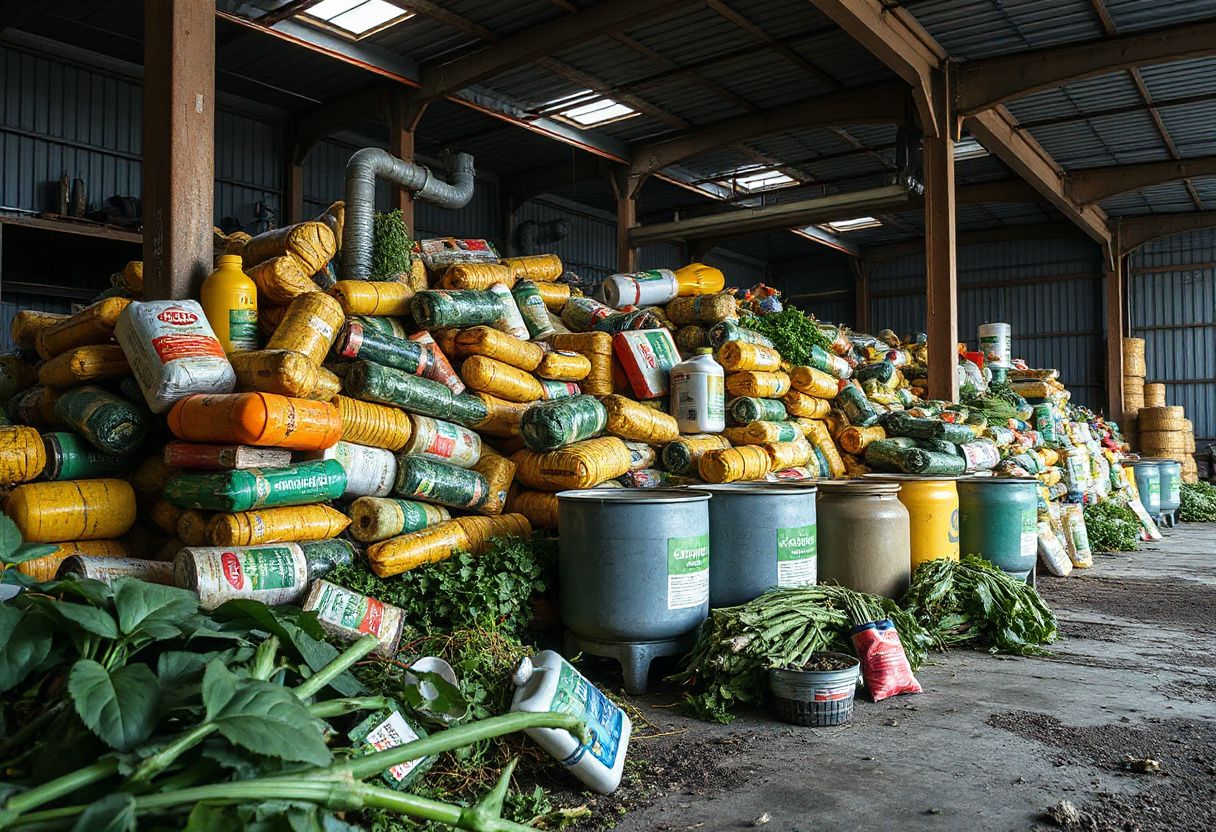
Over 8,500 tons of unsuitable pesticides have accumulated in agricultural storage facilities in Ukraine over the past decades. The choice of technology for treating these hazardous substances determines the final environmental safety of the entire agricultural region. High-temperature incineration guarantees the complete destruction of toxic compounds, but requires the use of complex two-stage wet flue gas cleaning systems. Reagent hydrolysis works differently. This chemical method neutralizes organochlorine and organophosphorus pesticides directly in the liquid phase by binding active toluene groups. Both methods prevent the filtration of toxic substances into aquifers, but have different energy intensity and residual sludge volume indicators.
Thermal destruction at 1200 °C in rotary kilns
Incineration of the agrochemical mixture in a drum furnace at a temperature of 1200 °C ensures the breakdown of the most persistent symmetrical triazine molecules. After the afterburning chamber, the gas stream enters an absorber where a sodium hydroxide solution completely neutralizes hydrogen chloride and sulfur oxides. Unlike thermal decomposition in stationary furnaces, the rotary design uniformly mixes pasty waste. The formation of highly toxic dioxins is prevented by emergency cooling of gases from 800 °C to 200 °C within 0.2 seconds. The ash residue after incineration contains only inert aluminosilicates and soda ash.
Chemical neutralization hydrolysis and solvent extraction
Alkaline hydrolysis of residual organophosphorus substances with a potassium hydroxide solution takes place at a temperature of 90 °C. This method requires significantly less electricity compared to thermal processing. Where incineration is impossible due to the presence of heavy metals, liquid extraction allows the separation of toxic elements in the form of insoluble sulfide precipitates. The method is limited by the high sensitivity of chemical reagents to the moisture of the initial raw material. The use of BAU-A grade activated carbon at the final sorption stage ensures the purification of wash water to sanitary indicators.
- Preliminary laboratory analytics of the composition of chemical compounds
- Sorting and packaging of residues into hermetic containers
- Removal of volatile hydrocarbons in vacuum evaporators
- Fixation of heavy metals in a cement stone matrix
Waste classification by codes 02 01 08* and 15 01 10*
Laboratory testing of residual batches of toxic chemicals allows for a more precise selection of the technological regulations for treating substances and associated packaging. According to the National Waste List, agrochemical residues are classified under code 02 01 08*, and contaminated plastic or metal packaging under code 15 01 10*.
Organization of extraction and transfer for processing to UtilVtorProm
The presence of expired pesticides in unadapted storage facilities creates a constant threat of poison infiltration into the soil. The leakage of toxins poisons underground sources. Which technological method guarantees complete environmental safety during the transportation of such substances? The specialized company UtilVtorProm performs a full range of works involving specialized transport. The licensed enterprise uses hermetic containers made of corrosion-resistant steel 12X18H10T to prevent contact of hazardous compounds with the environment.
Safe transfer of agrochemicals for licensed processing
Work on the neutralization of toxic residues requires precise adherence to temperature and reagent regimes at each stage of the technological cycle. Agricultural enterprises should start the procedure by conducting a complete inventory and laboratory chemical analysis of residues in existing storage facilities. Next, a comprehensive service is ordered. You can place an order for the processing and removal of agrochemicals on the official website of UtilVtorProm for subsequent performance of work.