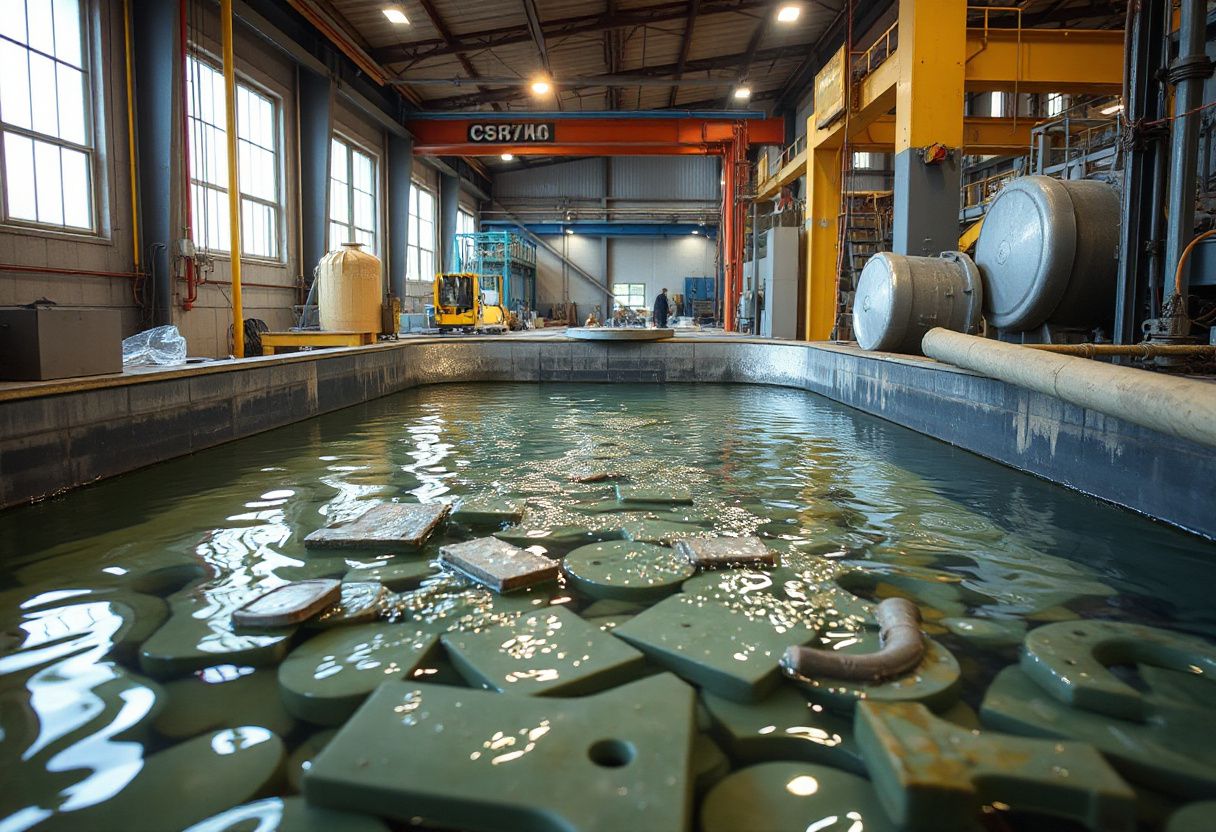
At the electroplating department of a machine-building plant, after zinc plating of parts in baths, more than forty cubic meters of rinse water stably accumulates monthly. The concentration of zinc ions in this liquid reaches eighteen milligrams per liter, which makes direct discharge into the city sewage system impossible. How to treat this stream before environmentalists do?
Reagent Precipitation
The classical method is based on the conversion of dissolved compounds into sparingly soluble hydroxides by changing the pH of the medium. A solution of sodium hydroxide or lime milk is dosed into the liquid medium until a pH value of nine and eight tenths is reached, which initiates the formation of flocs. To accelerate the sedimentation of heavy fractions, a polymeric flocculant with a mass of one gram per one cubic meter of liquid is additionally introduced. Subsequently, a dense pulp with a moisture content of ninety-six percent is formed in conical-type settlers. Is this really enough for complete environmental safety?
Membrane Filtration
An alternative approach relies on baromembrane processes, using a reverse osmosis unit with spiral-wound polyamide elements. The operating pressure in such a system ranges from twenty to forty atmospheres, which allows trapping up to ninety-nine percent of dissolved heavy metal salts. The concentrate remaining after filtration is subject to mandatory removal from the enterprise and subsequent neutralization. The resulting permeate is returned back to the technological cycle of part rinsing.
The formation of toxic sediments and concentrated liquid residues requires their clear classification in accordance with regulatory documents. Sludge after reagent treatment and spent solutions are classified under waste code 11 01 09* due to the presence of hazardous heavy metals. Concentrated liquid media from membrane units most often fall under category 11 01 11* as aqueous rinsing liquids containing harmful impurities. Accumulation of such materials on the plant's territory without transfer for processing is punishable by fines in accordance with the current environmental legislation of Ukraine.
Successful resolution of the environmental problems of the electroplating shop is based on clear interaction with the company UtilVtorProm, which carries out the collection, transportation, and subsequent treatment of hazardous substances. The presence of a waste management license guarantees compliance with technological regulations during transportation by special transport. The end consumer of the service receives a full package of primary accounting documentation and acts of acceptance and transfer of hazardous materials for presentation to regulatory authorities.