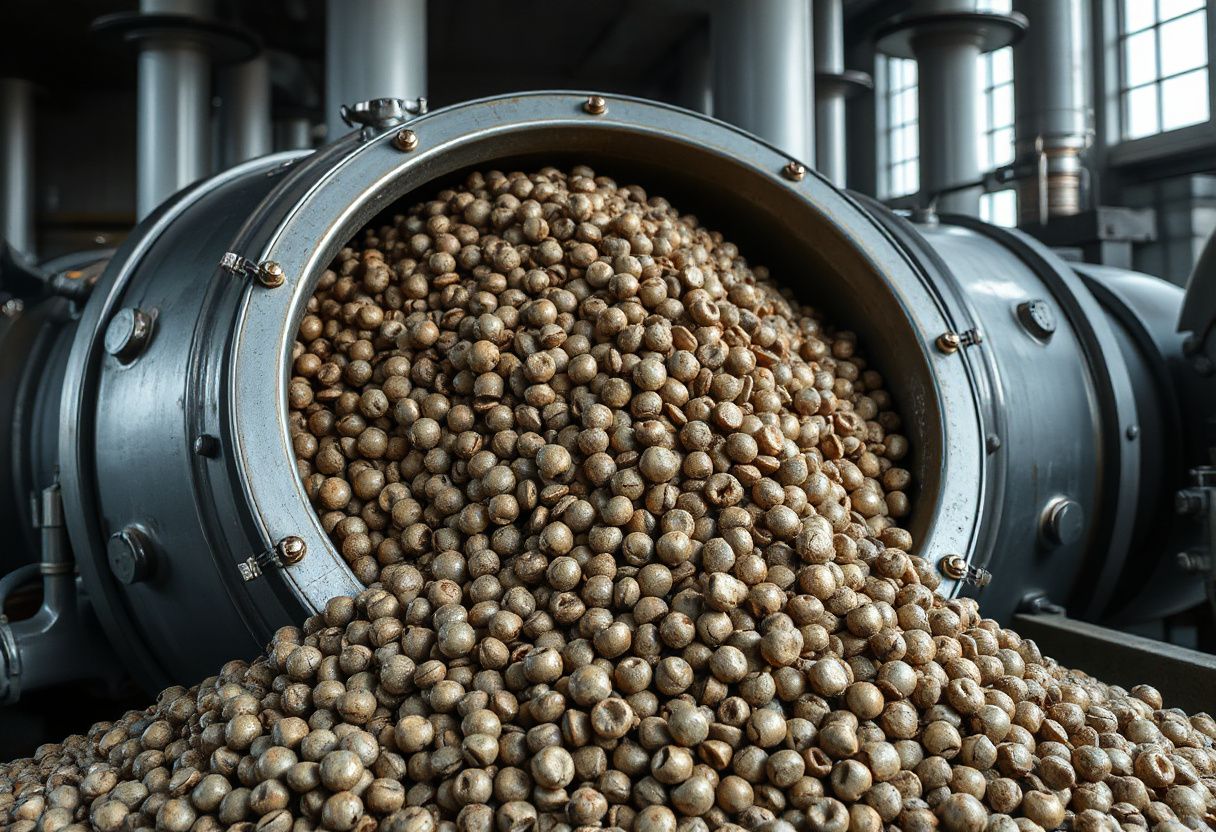
Spent metal-containing pellets are thoroughly unloaded from reforming and hydrotreating reactors into special sealed containers. Based on the residual activity of such substrates, chemical plants determine the feasibility of their regeneration or transfer for incineration. The dust fraction and sintered lumps of aluminum oxide with impurities of molybdenum or nickel compounds require immediate isolation from atmospheric oxygen due to the risk of spontaneous combustion of pyrophoric iron sulfides.
Thermal Degassing and Molybdenum Recovery at 800 °C
Long-term operation of γ-Al2O3-based matrices leads to coking of the porous structure and a decrease in the specific surface area of the carrier below 100 m²/g. The coked material loses its selective capacity. Unlike spinel systems, platinum and palladium contact masses are subjected to multi-stage acid leaching with solutions of hydrochloric acid and hydrogen peroxide. Hard-to-dissolve precipitation complexes convert cobalt sulfides into soluble sulfates via high-temperature oxidative roasting in fluidized bed furnaces at a temperature of 800 °C. Concentrated toxic compounds of hazard class 1 remain in the furnace slag.
Dismantling of Isomerization and Cracking Reactors for Incineration Units
The main volumes of such toxic residues accumulate in catalytic cracking and fuel oil cracking workshops. During the maintenance of hydrodesulfurization columns, pneumatic dust extraction through bagged metal filters is performed. The specialized enterprise UtilVtorProm engages vacuum units with a capacity of 4000 m³/h for the safe unloading of the toxic sludge phase without depressurization of the process unit.
Classification under Codes 16 08 01* and 16 08 02* According to the National List of Wastes
According to the National List of Wastes, spent residual matrices of precious metals are registered under the official code 16 08 01*. Substrates with an increased content of vanadium or cobalt compounds are classified in a separate category under code 16 08 02* for transportation. Strict requirements for the carriage of Class 9 substances apply to such cargoes. The transfer act must contain laboratory confirmation of the mass fraction of sulfur residues and heavy aromatics to pass environmental control.
Neutralization of Toxic Residues in Furnaces at 1100 °C
Physicochemical treatment of process residues ensures the complete binding of toxic compounds into stable mineral matrices. Where this cannot be done by leaching, high-temperature incineration at 1100 °C is applied. The resulting glassy slag melt is subjected to phase granulation to prevent the migration of heavy metals into underground soil horizons during long-term storage. Furnace gas emissions undergo two-stage purification in wet scrubbers. After filter presses, the dry sludge is mixed with a cement-sand mixture for subsequent disposal at a specialized landfill for hazardous industrial substances. The sludge after alkaline gas washing contains sodium sulfate and sodium metavanadate in concentrations exceeding 15 grams per liter.
Legal Execution of Hazardous Substance Transfer Acts
The transfer of spent contact masses to a specialized operator allows the enterprise to completely close its environmental report and avoid fines. By providing services, UtilVtorProm ensures a full cycle of hazardous waste management for the chemical unit, complete with the issuance of a waste passport and an acceptance certificate. This activity fully complies with environmental licenses. The production site receives verified data on the transfer of toxic substances for special processing and extraction of valuable metal components. Thanks to the technological regulations, the release of dust into the atmospheric air during reloading is prevented. The issuance of final transfer orders guarantees the absence of any claims from the State Environmental Inspection.