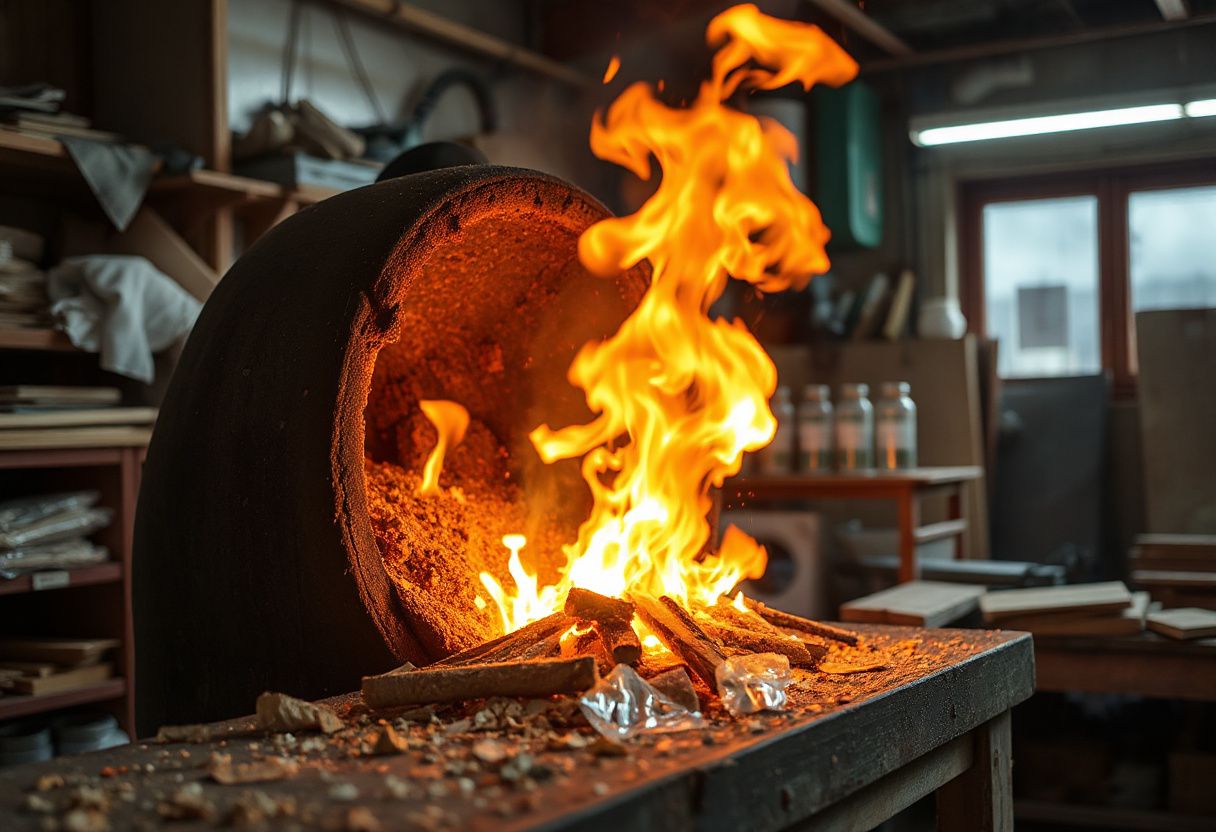
The accumulation of phenol-formaldehyde resin residues in woodworking shop collectors causes rapid self-ignition of liquid fractions and uncontrolled emission of toxic formaldehyde vapors. Systematic dumping of liquid adhesives into the general production sewage system tightly blocks pipelines with solid polymer plugs and leads to prolonged shutdowns of lamination lines. Residual phenol in liquid sludge easily penetrates through the concrete floors of the shops into the soil.
Classification of sludges by codes 08 04 09* and 08 04 11*
The classification of binder residues is based on their chemical composition and the presence of volatile organic solvents. Adhesive wastes containing hazardous compounds are classified under code 08 04 09*. Hardened masses do not pose a threat to the environment. Liquid waste from adhesive units containing solvents requires collection in sealed metal drums.
Fire risks and toxicity of methanol at 180 °C
Heating urea-formaldehyde resins in press units above 180 °C provokes rapid thermal decomposition with the release of toxic carbon monoxide and free methanol. Long-term storage of liquid sludges in open containers leads to the evaporation of flammable components and creates an explosive concentration of vapors in the shop premises. The hardened polymer crust forms a persistent layer that prevents the normal circulation of washing solutions. The ingress of MDI-brand isocyanate hardeners into the work area provokes severe damage to the respiratory tract of personnel and causes irreversible corrosion of steel equipment parts.
Removal of sludge from roller mixers and adhesive vats
The technological regulation for cleaning adhesive rollers begins with the mechanical collection of viscous residual masses. Operators remove the uncured mixture using special scrapers made of 12Kh18N10T corrosion-resistant steel. The collected paste-like sludge is immediately pumped by pneumatic diaphragm pumps into steel drums with an anti-corrosion coating to prevent contact with air. The polymerization rate of the residues depends on the ambient temperature and the operating concentration of the hardener. Resin-containing wash water is directed to local storage tanks, where primary settling and neutralization of alkaline fractions are performed.
Coagulation and thermal treatment at 1200 °C
Mineral coagulants based on aluminum salts are used to separate the liquid phase, binding dispersed resin particles into large flakes. The resulting dehydrated sludge with a moisture content of up to 45% is sent for thermal treatment in high-temperature furnaces with an afterburning gas chamber. The incineration of organic substances at 1200 °C ensures the complete destruction of toxic compounds. The efficiency of thermal decomposition of resins depends on the operating pressure in the combustion chamber and the residence time of gases in the high-temperature zone.
The collection of dry droplets of hardened adhesive at furniture factories is carried out using pneumatic shaking tools. Solid waste is crushed in rotary crushers to a fraction size of 5 millimeters. The resulting granulated mass is added as a filler in the production of dense building briquettes or sent for repeated technological use.
Requirements for containers and transportation under code 08 04 11*
The storage of adhesive waste containing hazardous substances under code 08 04 11* is permitted exclusively in special containers with hermetically locking lids. The transportation of batch shipments of liquid and paste-like sludges is carried out using specialized freight transport equipped with pallets for collecting potential accidental spills. Each container must be labeled with warning signs indicating the hazard class. The duration of temporary accumulation of resin residues on the enterprise's storage area depends on the total capacity of the site and approved generation limits.
Organization of resin waste transfer to UtilVtorProm company
Timely removal of adhesive residues reduces environmental risks and eliminates fines during inspections. The first step to streamline operations is to conduct an inventory of all accumulated sludges. Next, a service request is submitted. Specialists select the optimal type of sealed packaging in accordance with production volumes. UtilVtorProm company provides services for the collection, transportation, long-term storage, and subsequent processing of any types of hazardous liquid or solid polymer residues. The services provided are carried out on the basis of a corresponding state license with full documentary support for each transferred batch of polymer mass. Ordering waste removal guarantees full compliance of production with environmental requirements.