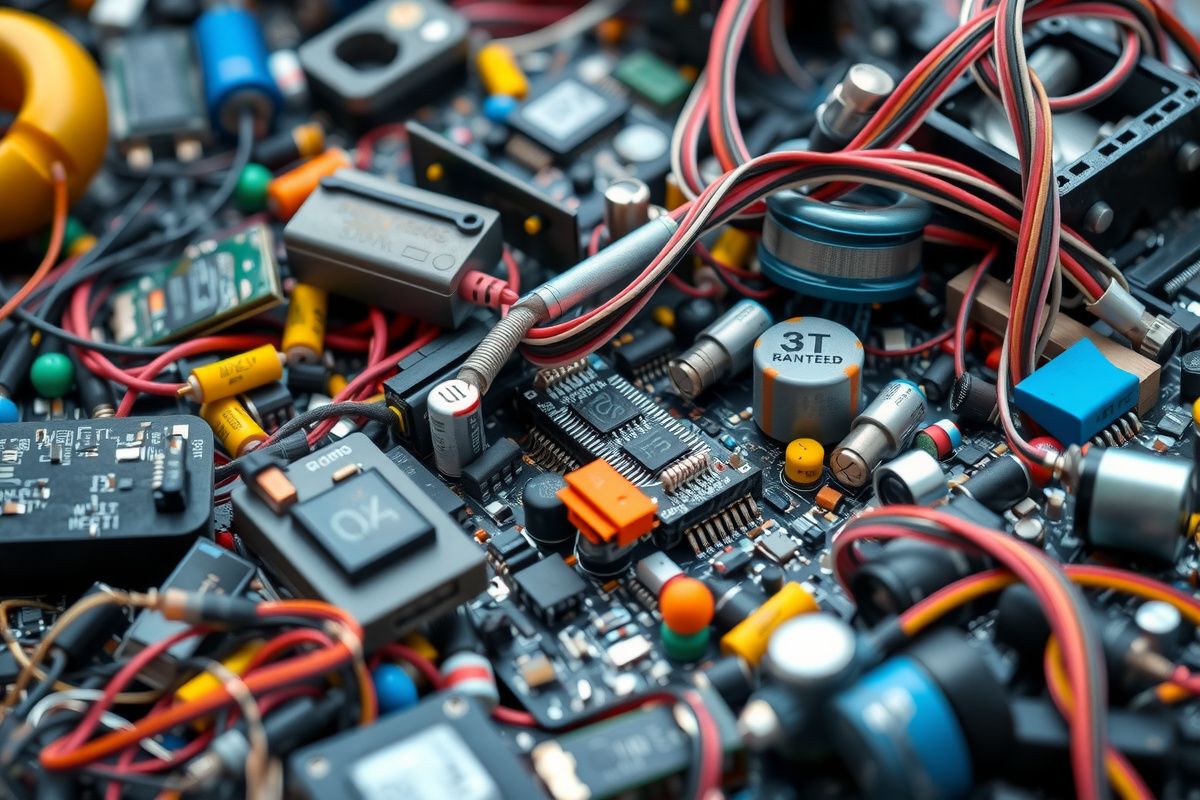
Modern electronic industry is one of the most dynamic sectors of the global economy, but at the same time, it generates huge volumes of waste containing valuable and often hazardous components. The growing consumption of electronics and the rapid renewal of technologies lead to the accumulation of electronic scrap, which poses a serious challenge for the environment and the economy. Extracting valuable components from electronic industry waste not only reduces the environmental burden but also allows for the reuse of rare and expensive metals such as gold, silver, platinum, palladium, as well as copper, nickel, and others. This process is critically important for ensuring the sustainability of production and reducing dependence on primary raw material sources. The development of efficient electronic waste processing technologies is becoming a priority for many countries and companies, including UtilVtorProm, which actively implements innovative approaches in this area.
The relevance of this topic is also enhanced by the growing global attention to the circular economy, where waste is viewed as a resource, not a problem. Electronic waste, or e-waste, contains a complex mixture of materials, from plastic and glass to metals and semiconductors. Traditional methods of dealing with such waste, such as landfilling or incineration, are inefficient and harmful to the environment, as they lead to the release of toxic substances and the loss of valuable resources. Therefore, the development and implementation of advanced technologies for extracting valuable components are becoming an integral part of a sustainable development strategy. UtilVtorProm understands the importance of this direction and provides comprehensive services for electronic waste management, ensuring its safe and effective recycling.
Modern Approaches to Extracting Precious Metals from Electronic Scrap
Technologies for extracting valuable components from electronic industry waste are based on a combination of mechanical, thermal, and chemical processes aimed at separating and purifying various materials. The initial stage involves mechanical processing, which includes crushing, sorting, and separating components by size, shape, and density. This can be done using shredders, crushers, vibrating screens, and magnetic separators. After mechanical preparation, the materials undergo further processing, which may include pyrometallurgical or hydrometallurgical methods. Pyrometallurgy involves melting electronic scrap at high temperatures, which allows metals to be separated from non-metallic fractions, but this method is energy-intensive and can be accompanied by emissions of harmful substances. Hydrometallurgical processes, on the other hand, use chemical solutions to dissolve metals, which are then extracted from the solution using electrochemical or precipitation methods. This allows for a high degree of purity of the extracted metals.
Special attention is paid to the extraction of precious metals such as gold, silver, platinum, and palladium, which are contained in printed circuit boards, connectors, and other components. Specialized reagents are used for this, ensuring selective dissolution of these metals. For example, for gold, solutions based on cyanides or thiourea are often used, which allow for its effective extraction from crushed raw materials. After dissolution, metals are extracted by electrolysis, ion exchange, or precipitation. Innovative approaches also include the use of biotechnologies, where microorganisms are used for bioleaching of metals, which is a more environmentally friendly method. Each of these methods has its advantages and disadvantages, and the choice of a specific technology depends on the type of electronic waste, the content of valuable components, and economic feasibility.
Innovative Solutions for Electronic Waste Recycling
The application of technologies for extracting valuable components from electronic industry waste covers a wide range of equipment and industries. In the field of computer equipment and mobile phone recycling, automated lines are used that allow for the efficient separation of plastic cases, printed circuit boards, batteries, and other components. For example, specialized shredders can crush entire devices, after which magnetic and eddy current separators separate metals from non-metals. For extracting precious metals from printed circuit boards, hydrometallurgical plants are used, which employ acids or alkalis to dissolve metals, and then electrochemical precipitators for their extraction. Such installations allow for obtaining high-purity metals that can be reused in the production of new electronics or in other industries.
In addition, these technologies are used in the recycling of large household appliances such as refrigerators, washing machines, and televisions. Here, the focus is on extracting ferrous and non-ferrous metals, as well as on the safe handling of hazardous components, such as freons in refrigerators or mercury in old televisions. Modern electronic waste recycling plants are equipped with complex air filtration and water purification systems to minimize environmental impact. For example, special lines have been developed for recycling old CRT televisions that allow for the safe separation of screen glass, which contains lead, from other components. This not only provides economic benefits from extracting valuable materials but also significantly reduces environmental risks associated with improper handling of electronic waste.
Proper Handling of Electronic Industry Waste
Electronic industry waste is classified as hazardous because it contains a number of toxic substances such as lead, mercury, cadmium, chromium, and brominated flame retardants. Improper handling can lead to soil, water, and air pollution, posing a threat to human health and ecosystems. According to the National Waste List, electronic waste can have different codes, depending on its composition and source. For example, waste electrical and electronic equipment containing hazardous components is often classified under codes 16 02 13* (spent equipment containing hazardous components), 20 01 35* (spent electrical and electronic equipment containing hazardous components). Waste that does not contain hazardous components may have codes 16 02 14 or 20 01 36. It is important to understand that each type of electronic waste requires an individual approach to collection, transportation, and processing. UtilVtorProm provides comprehensive environmental services to enterprises, ensuring a full cycle of electronic industry waste management in accordance with all regulatory requirements.
Effective electronic waste management begins with proper collection and sorting at the point of generation. This helps prevent the mixing of hazardous components with safe ones and simplifies further processing. UtilVtorProm offers professional solutions for the collection, transportation, and temporary storage of electronic waste, using specialized transport and containers that comply with environmental standards. Our specialists develop individual waste management plans for each client, taking into account the specifics of their production and the type of waste generated. We ensure full transparency of all processing stages, providing clients with the necessary documentation and reports. Our goal is not only to extract valuable components but also to minimize the negative impact on the environment, contributing to the sustainable development of Ukrainian industry.
Reliable Partner in Electronic Waste Management: UtilVtorProm
UtilVtorProm is a recognized leader in the environmental services market in Ukraine, offering a professional and responsible approach to electronic industry waste management. Our activities are licensed and comply with the highest quality and safety standards. We have the necessary resources, technologies, and experience for efficient collection, transportation, storage, and processing of electronic waste of any complexity. Our specialists constantly improve their knowledge and skills to offer clients the most modern and effective solutions. Cooperating with UtilVtorProm, you can be confident in complying with all environmental norms and legislative requirements, as well as in the fact that your waste will be processed with maximum benefit for the environment and the economy. We encourage all enterprises that generate electronic waste to contact us for consultation and development of an individual waste management plan. Your responsibility today is a clean environment tomorrow.