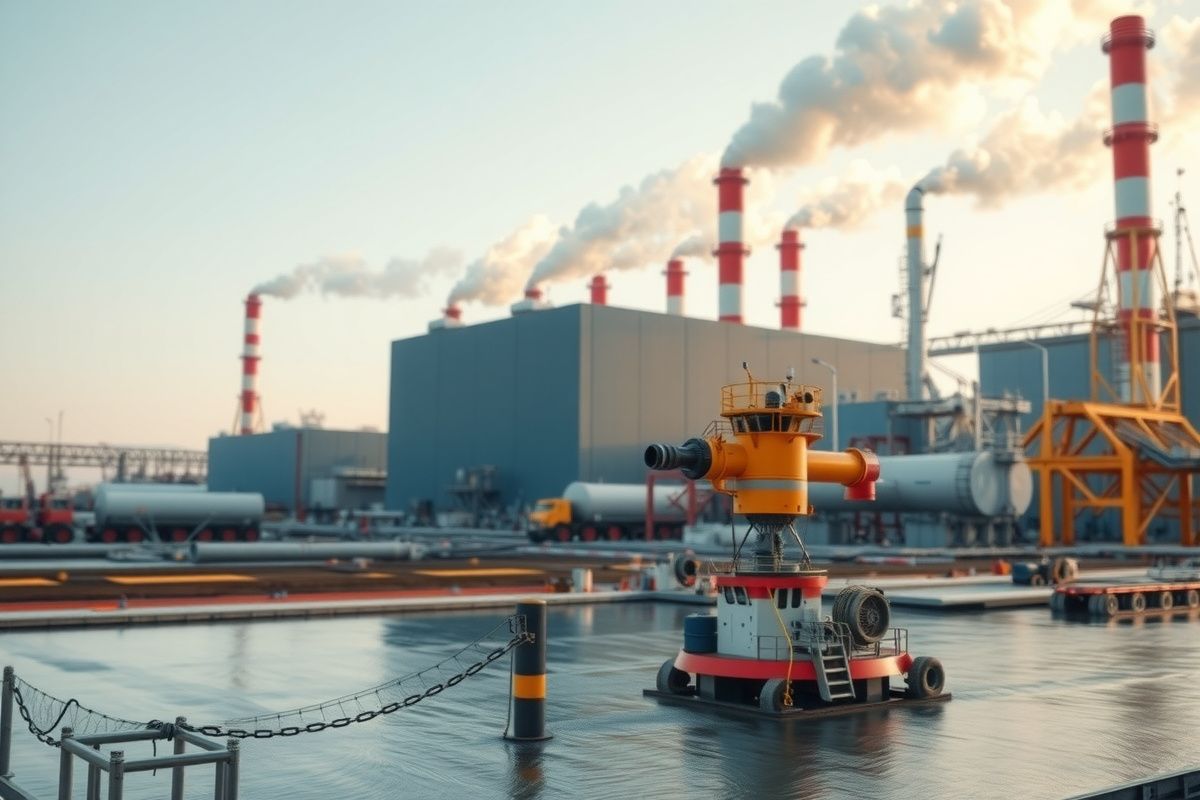
Modern industry faces a global challenge of reducing greenhouse gas emissions, the key of which is carbon dioxide (CO2). Carbon Capture and Utilization (CCU) and Carbon Capture and Storage (CCS) technologies play a critically important role in achieving climate goals and ensuring sustainable development. These innovative approaches allow not only to reduce the volume of CO2 entering the atmosphere but also to convert it into valuable products, creating new economic opportunities for enterprises. The implementation of such technologies is a necessary step for modernizing production processes, increasing environmental responsibility, and improving the competitiveness of industrial giants in Ukraine and worldwide.
The relevance of the topic is enhanced by the growing pressure of international environmental standards and requirements for industrial decarbonization. Companies implementing CCU/CCS not only demonstrate their commitment to the principles of a green economy but also gain significant advantages in the form of reduced environmental payments, increased investment attractiveness, and improved reputation. The development and integration of these technologies into existing production cycles are a priority for many industries, from energy and metallurgy to the chemical industry, striving to minimize their carbon footprint and optimize resource utilization.
Methods for capturing carbon dioxide from industrial emissions
Carbon capture technologies are based on several key principles that allow for the effective separation of CO2 from other gases. One of the most common methods is chemical absorption, where flue gas is passed through an absorbent solution that selectively binds CO2. Amine solutions are often used for this purpose, which, under certain conditions, release carbon dioxide that can then be compressed and utilized or stored. Other approaches include adsorption on solid materials such as zeolites or specially designed polymers, and membrane technologies that use semi-permeable membranes to separate gas mixtures.
In addition to post-combustion capture, applied to exhaust gases after fuel combustion, there are also pre-combustion and oxy-fuel methods. Pre-combustion capture involves the gasification of fuel before combustion, which allows for the separation of CO2 from a mixture of hydrogen and carbon before the combustion process. Oxy-fuel combustion, in turn, uses pure oxygen instead of air, resulting in flue gases with a high concentration of CO2, which significantly simplifies its subsequent capture. The effectiveness of these methods depends on the composition of the gas mixture, temperature, and pressure, as well as on the properties of the reagents used, particularly, as in the case of "Activated carbon: a product of chlorine production," which can act as an effective adsorbent.
Innovative directions for using captured carbon
The utilization of captured carbon (CCU) opens up broad prospects for industry, transforming emissions into a valuable resource. Captured CO2 can be used in the production of synthetic fuels, such as methanol or biofuels, contributing to reduced dependence on fossil resources. It is also a key component for the chemical industry, where it is used in the synthesis of urea, polycarbonates, and other chemical products. In the food industry, purified CO2 is used for carbonating beverages, and in agriculture — to increase yields in greenhouses, creating a closed-loop resource utilization cycle.
In addition to the chemical and food industries, captured carbon finds application in construction and the oil and gas sector. For example, CO2 can be injected into oil fields to enhance oil recovery, which is an economically viable solution. In the construction industry, captured carbon dioxide is used for the production of carbonated concrete, which allows CO2 to be bound within the material, improving its strength and reducing its carbon footprint. This demonstrates how CCU technologies can be integrated into the production of materials such as "Concrete, brick, facing tiles and ceramics NPW Code 17 01," which is an important aspect of sustainable construction.
Environmental management of waste from carbon capture processes
Despite significant environmental benefits, carbon capture and utilization processes can also generate specific waste that requires responsible management. Such waste includes spent absorbents, which may contain hazardous chemical compounds, spent filter materials contaminated with impurities, as well as reagent residues and condensate. It is important to ensure their proper collection, transportation, and processing to avoid secondary environmental pollution and minimize risks to human health. Effective management of this waste is an integral part of any successful CCU/CCS strategy.
The management of waste generated as a result of the operation of carbon capture and utilization systems requires strict adherence to environmental norms and rules. Spent absorbents and filter materials containing hazardous substances are classified according to the National Waste List and may have a code, for example, 15 02 02*. The company UtilVtorProm provides a full range of services for the environmental maintenance of enterprises, including the collection, transportation, storage, and processing of such specific waste, ensuring safe and environmentally responsible handling. This helps enterprises comply with legislation and maintain high standards of environmental safety.
Comprehensive solutions from UtilVtorProm for environmental safety of enterprises
UtilVtorProm is a reliable partner for industrial enterprises striving to implement advanced environmental technologies and ensure proper waste management. Our company holds all necessary licenses and permits for activities in the field of hazardous and industrial waste management, including those arising from the operation of carbon capture and utilization systems. We offer a professional approach, guarantee compliance with all environmental standards and legal requirements, and provide consulting support at all stages of cooperation. We invite you to contact us to discuss individual solutions and ensure the environmental safety of your production.