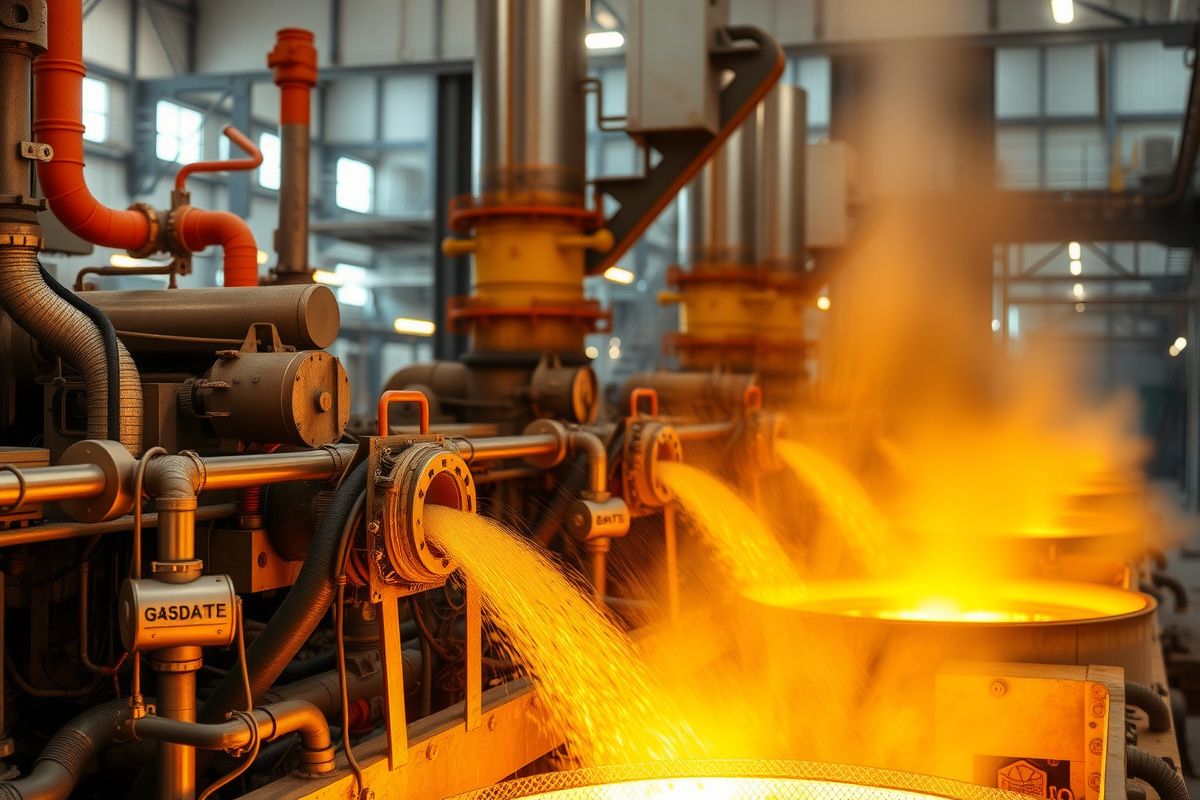
The modern metallurgical industry faces a global challenge – the need for a significant reduction in greenhouse gas emissions, particularly carbon dioxide (CO2), which is a key factor in climate change. This problem gains particular relevance against the backdrop of strengthening environmental regulations and international obligations, such as the Paris Agreement, which prompts enterprises to seek innovative and effective solutions. Carbon Capture, Utilization, and Storage (CCUS) technologies open up new prospects for the decarbonization of metallurgy, transforming a potential pollutant into a valuable resource.
The implementation of CCUS technologies is not only a step towards environmental responsibility but also a strategic investment in sustainable development, allowing for the optimization of production processes and increased energy efficiency. Metallurgical companies that successfully integrate these approaches gain competitive advantages, enhance their image, and contribute to environmental preservation for future generations. This complex task requires a deep technical understanding and a professional approach to each stage – from capture to the safe handling of by-products.
Methods and Principles of Carbon Dioxide Capture in Metallurgy
Carbon dioxide capture in the metallurgical industry is based on several key technologies, each with its technical characteristics and areas of application. One of the most common is the post-combustion method, where CO2 is extracted from flue gases after the combustion process using chemical absorption, typically with amine solutions. These solutions selectively bind carbon dioxide, after which it can be released by heating and compression, and the absorbent regenerated for reuse. It is important to note that various absorbents and filter materials are actively used in such processes, which subsequently require professional handling, similar to how other industrial materials are handled, as described in the article "Absorbents, filter materials, wiping rags, and protective clothing Waste Code 15 02".
Another method – pre-combustion – involves the conversion of fuel (e.g., coal or natural gas) into synthesis gas, from which CO2 is removed before direct combustion. This allows for a concentrated stream of carbon dioxide to be obtained, simplifying further processing or storage. Oxyfuel technology, in turn, involves burning fuel in pure oxygen instead of air, which leads to the formation of flue gases with a high concentration of CO2 and minimal nitrogen content, significantly facilitating its capture. Each of these approaches requires individual design and integration into existing metallurgical processes to achieve maximum efficiency and minimize energy consumption.
Transforming Carbon Dioxide into a Valuable Resource: Examples of Use
Captured carbon dioxide is no longer considered merely a waste product but is actively being transformed into a valuable resource for various industries. One promising direction is its use in the chemical industry for the synthesis of methanol, urea, polycarbonates, and other organic compounds, which are key components in the production of plastics, fertilizers, and solvents. This approach not only reduces emissions but also creates new value chains, contributing to a circular economy. Specifically, technologies are being developed for converting CO2 into alternative fuels, which is an important step in reducing dependence on traditional hydrocarbons, as discussed in the context of "Alternative fuel types: gasoil, fuel oil, and diesel".
In addition to chemical synthesis, carbon dioxide finds application in agriculture for enriching the atmosphere in greenhouses, which stimulates plant growth and increases yields. In the construction industry, CO2 can be used for the production of environmentally friendly building materials, for example, by carbonating concrete or converting industrial waste into inert materials. Long-term storage of captured CO2 in geological formations (CCUS) is also an important element of the decarbonization strategy, allowing it to be reliably isolated from the atmosphere. These innovative approaches demonstrate the potential of CO2 as a versatile raw material capable of transforming various economic sectors.
Waste Management of CO2 Capture Processes: Environmental Standards
The implementation of carbon dioxide capture and utilization technologies is inextricably linked to the need for effective management of by-products and waste generated in these processes. Such waste may include spent absorbent solutions, contaminated filter materials, sludge, and other components that require special handling. For example, spent absorbents containing hazardous substances are classified as waste under Waste Code 15 02 02*. Solid waste from gas treatment containing hazardous substances may also be generated under Waste Code 10 01 05*, or solid waste from gas treatment not containing hazardous substances under Waste Code 10 01 07. Professional analysis and classification of these wastes are critically important for adhering to environmental standards and preventing negative impacts on the environment.
The company UtilVtorProm provides comprehensive environmental services to enterprises, including the management of waste generated in CO2 capture and utilization processes. Our experts ensure qualified collection, transportation, storage, and processing of various types of industrial waste, guaranteeing compliance with all regulatory requirements. This allows enterprises to focus on their core activities, being confident in the safety and environmental compliance of their production cycles. We understand that each type of waste, including complex industrial residues, such as anode waste containing carbon not listed under code 10 03 17, requires an individual approach and strict control.
Comprehensive Solutions from UtilVtorProm for Environmental Safety of Enterprises
UtilVtorProm is a reliable partner for metallurgical and other industrial enterprises that strive to implement environmentally responsible technologies and effectively manage their waste. We offer a professional approach to handling waste generated in carbon dioxide capture and utilization processes, as well as other industrial residues. Our activities are licensed, which guarantees high quality of services and full compliance with all legislative and environmental norms. By contacting UtilVtorProm, you receive not just services, but comprehensive solutions aimed at increasing the environmental safety of your production and promoting sustainable development. Contact us to discuss the individual needs of your enterprise and find optimal ways for effective and responsible waste management.