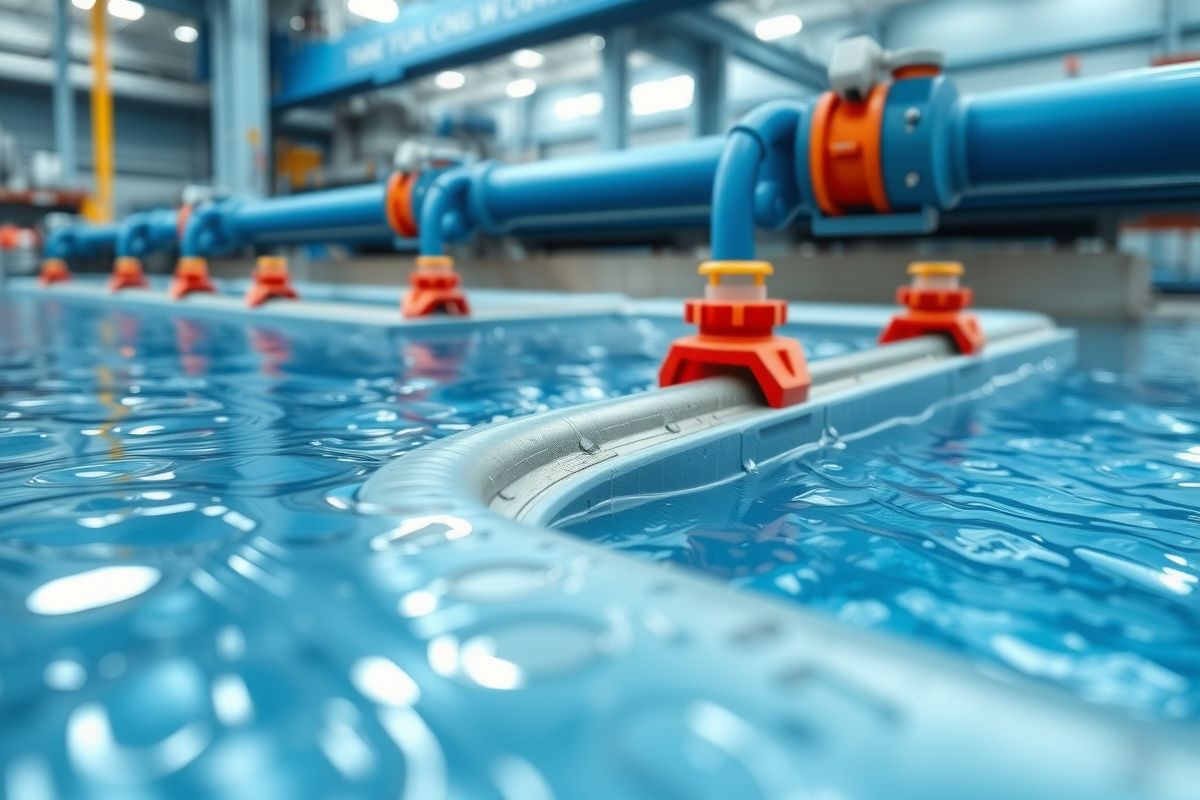
The growing scarcity of water resources, as well as stricter environmental regulations, challenge industrial enterprises to find effective solutions for rational water use. Water regeneration and reuse technologies in industrial cycles are a key tool for achieving sustainable development, reducing operating costs, and minimizing negative environmental impact. These innovative approaches not only significantly reduce the volume of fresh water consumption but also decrease the discharge of wastewater containing pollutants. The implementation of such systems is not just a requirement of the times but also a strategic advantage for any modern production striving for efficiency and environmental responsibility.
The relevance of this topic is further enhanced by the rising prices for water and its purification services, making investments in regeneration systems economically viable. Industrial enterprises that implement advanced water treatment and reuse technologies not only improve their environmental image but also gain significant competitive advantages. This allows them to meet the highest international standards, attract investments, and demonstrate their commitment to the principles of a circular economy. UtilVtorProm actively supports such initiatives by providing comprehensive environmental services, including professional waste management generated during water treatment processes.
Principles and Mechanisms of Industrial Water Regeneration
Industrial water regeneration technologies are based on complex physicochemical and biological processes aimed at removing pollutants and returning water to the production cycle. The main methods include mechanical filtration, reverse osmosis, ultrafiltration, nanofiltration, ion exchange, electrodeionization, as well as adsorption and biological treatment. Mechanical filtration removes suspended particles, while reverse osmosis and ultrafiltration effectively eliminate dissolved salts, organic substances, and microorganisms, allowing for high-quality water suitable for reuse in various technological processes. Ion exchange is used to remove metal ions and hardness salts, and biological treatment is used for the degradation of organic pollutants.
The operating principle of these systems involves the sequential application of several purification stages, each aimed at eliminating a specific type of pollution. For example, in the metallurgical industry, where water is used for cooling, slag quenching, and washing, regeneration systems allow for the removal of metal oxides, oils, and mechanical impurities. This significantly reduces the need for fresh water and the volume of discharges containing heavy metals and other hazardous substances. Thanks to the high efficiency of modern membrane technologies, a degree of purification can be achieved that allows regenerated water to be used even in critically important processes where ultrapure water is required.
Application of Water Reuse Technologies in Industry
Water regeneration and reuse technologies are widely used in various industries, demonstrating their effectiveness and economic feasibility. In the chemical industry, where water serves as both a solvent and a reaction medium, purification systems allow for the reuse of process water, reducing fresh water consumption and minimizing discharges containing aggressive chemical compounds. For example, in the production of fertilizers or polymers, regenerated water can be used for equipment washing, reagent dissolution, or as a cooling fluid, significantly reducing environmental impact and operating costs.
In the food industry, where water quality requirements are extremely high, reverse osmosis and ultrafiltration technologies allow for the purification of water from organic impurities, bacteria, and viruses, making it suitable for reuse in washing, sterilization, or product preparation processes. In the textile industry, where dyeing and bleaching processes consume huge volumes of water, regeneration systems allow for the purification of wastewater from dyes, salts, and other chemicals, returning them to the production cycle. This not only saves water resources but also significantly reduces the volume of polluted effluents entering the environment. Examples of equipment include comprehensive water treatment systems that incorporate coagulation, flocculation, filtration, membrane technologies, and ultraviolet disinfection.
Waste Management from Water Regeneration Systems
Water regeneration and reuse processes inevitably generate certain types of waste that require professional and environmentally safe handling. Such waste includes spent filter elements, concentrated solutions from reverse osmosis, sludge from settling tanks, and contaminated reagents used for ion exchange resin regeneration. These wastes can contain various pollutants, including heavy metals, organic compounds, salts, and microorganisms, and are classified as hazardous. For example, spent ion exchange resins can contain adsorbed metal ions, and reverse osmosis concentrates can contain high concentrations of salts and organic pollutants.
Waste codes according to the National Waste List (NWL) for such materials may include: 19 02 05* (sludges from physicochemical treatment containing hazardous substances), 19 08 06* (sludges from wastewater treatment containing hazardous substances), 15 02 02* (absorbents, filter materials, wiping cloths and protective clothing contaminated with hazardous substances), 16 01 14* (antifreezes containing hazardous substances not covered by 16 01 14). UtilVtorProm provides a full range of environmental services to enterprises, including the collection, transportation, storage, and processing of these specific wastes, ensuring their safe and responsible handling in accordance with current legislation and international standards.
Partnership with UtilVtorProm for Sustainable Water Use
Choosing a reliable partner for managing waste generated during water regeneration and reuse is critically important for the successful implementation of an enterprise's environmental strategy. UtilVtorProm offers a professional approach to solving all issues related to environmental services, possessing all necessary licenses and permits for activities in the field of hazardous waste management. Our team of experts provides qualified support at all stages – from waste identification and classification to their transportation and processing. We guarantee compliance with all environmental norms and standards, allowing our clients to focus on their core activities, confident in the complete environmental safety of their production. Contact us to discuss individual solutions for your enterprise and ensure responsible waste management.