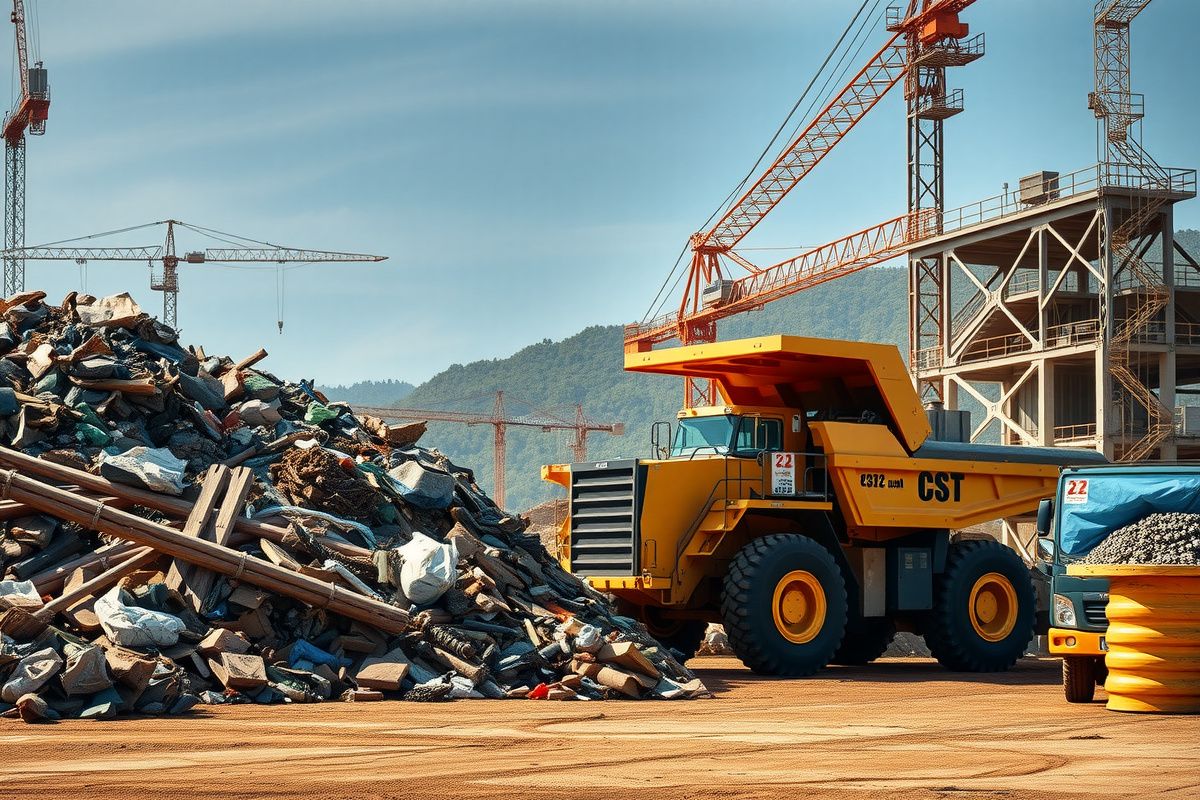
The construction industry is one of the most dynamic in the world, yet it also generates significant volumes of waste, posing serious environmental and economic challenges. Every year, millions of tons of construction and demolition waste end up in landfills, occupying valuable land resources and polluting the environment. This situation underscores the urgent need to implement innovative recycling technologies that will transform this waste into valuable secondary resources, contributing to the principles of a circular economy and sustainable development. Modern approaches to construction waste management require a comprehensive solution that includes sorting, processing, and reuse of materials.
The relevance of this topic grows every year, as society increasingly recognizes the finiteness of natural resources and the importance of minimizing negative impact on ecosystems. Waste recycling in construction not only reduces the burden on landfills but also decreases the need for primary raw material extraction, which is an energy-intensive process. The implementation of advanced technologies allows not only to solve the problem of waste accumulation but also to create new business opportunities, expanding the range of building materials and reducing their cost. This opens up significant prospects for innovation and sustainable development of the industry.
Modern Methods of Construction Waste Processing
Waste processing technologies in construction encompass a wide range of methods aimed at restoring the useful properties of materials. The main ones include mechanical, thermal, and chemical processing, each applied to specific types of waste. Mechanical processing, which is the most common, involves crushing, sorting, and grinding materials such as concrete, bricks, asphalt, and glass. Its principle of operation is the physical separation of waste into fractions of different sizes and compositions, allowing for the production of secondary crushed stone, sand, or fillers for new building mixtures. This significantly reduces the volume of waste going to landfills and ensures the saving of natural resources.
Thermal processing is applied to organic waste, such as wood, plastic, or insulation materials, that are not suitable for mechanical treatment. It can include pyrolysis or gasification, converting waste into energy or chemical components. Chemical processing, though more complex, allows for the extraction of valuable substances from certain types of waste, such as metals or polymers. These technologies not only reduce the volume of waste but also yield high-quality secondary raw materials that can be used for the production of new building materials, demonstrating significant potential for a circular economy. Ensuring the effectiveness of these processes requires specialized equipment and expert knowledge, similar to how it occurs with the processing of **Activated carbon: a product of chlorine production**.
Innovative Applications of Recycled Building Materials
The use of recycled building materials is becoming increasingly common in modern construction practice, offering significant economic and environmental benefits. One of the most striking examples is the use of secondary crushed stone, obtained from crushed concrete and bricks, in road construction. This material is excellent for creating road bases, filling trenches, and backfilling, replacing primary crushed stone and reducing transportation costs. Furthermore, recycled concrete can be used to produce new building blocks, paving slabs, and landscaping elements, demonstrating high strength and durability.
Modern equipment, such as mobile crushing and sorting complexes, allows for processing directly on construction sites, minimizing logistical costs and carbon footprint. This equipment effectively works with materials like **Concrete, bricks, facing tiles, and ceramics Waste Code 17 01**, transforming them into useful fractions. Wood waste is also processed and can be used to produce fuel briquettes, chipboard, or compost. Metal waste generated during demolition is collected and re-melted, returning to the industrial cycle. Plastic waste is converted into granules for the production of new products, including decorative elements or insulation materials. The widespread implementation of such solutions indicates a paradigm shift from a linear to a circular economy in construction.
Optimal Construction Waste Management and Waste Codes
Effective waste management in construction is a key aspect of sustainable development, requiring clear classification and appropriate processing methods. The company UtilVtorProm provides professional environmental services to enterprises, ensuring the proper collection, transportation, storage, and processing of construction waste. To ensure transparency and compliance with environmental standards, it is important to classify waste according to the National Waste List (NWL). Among typical construction wastes, one can distinguish: concrete and reinforced concrete waste 17 01 01*, brick waste 17 01 02*, tile and ceramic waste 17 01 03*, as well as mixed construction waste 17 09 04* containing hazardous components. Correct identification of these codes allows for the application of the most effective and safe handling methods.
In addition, there are specific wastes that require special attention, such as wood, glass, and plastic waste 17 02 01*, 17 02 02*, 17 02 03* respectively, as well as metal waste 17 04 01* – 17 04 07*, which are subject to recycling for reuse. Particularly important is the handling of **Asbestos-containing building materials**, which have the code **17 06 01*** and require strict adherence to safety rules during demolition and specialized processing. UtilVtorProm company guarantees that all waste management processes are carried out in accordance with current legislation, using modern technologies that minimize environmental impact and ensure maximum return of materials to economic circulation. We help enterprises comply with environmental standards, providing a full range of services from consultation to actual processing.
Professional Cooperation with UtilVtorProm for Sustainable Development
By choosing UtilVtorProm as your partner for construction waste management, you receive a guarantee of a professional approach and licensed operations. Our company possesses all necessary permits and certificates for the collection, transportation, storage, and processing of various types of waste, including construction waste. We understand the complexity and responsibility associated with waste management, which is why we offer individual solutions tailored to the needs of each client. Our experience and modern equipment allow us to effectively solve the most complex tasks, contributing to sustainable development and environmental preservation. Contact UtilVtorProm to ensure environmentally responsible and economically beneficial management of your construction waste.