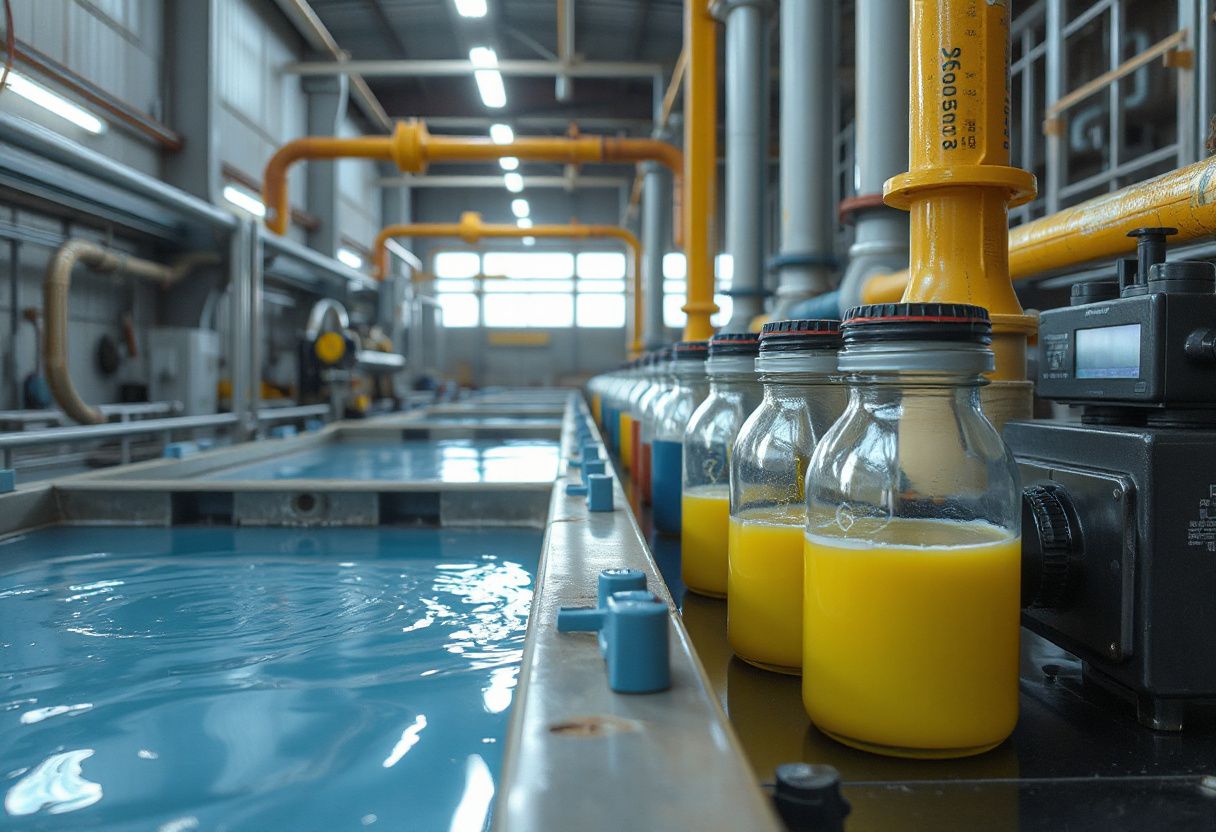
Wastewater treatment at textile factories requires the use of specialized physicochemical methods, as synthetic dyes have a complex cyclic structure and high resistance to natural biodegradation. Liquid residues from dyeing processes often contain toxic heavy metal compounds, active chlorine, and surfactants, which disrupt the oxygen balance of water bodies upon uncontrolled discharge. Specialists at UtilVtorProm note that the composition of such wastewater typically varies depending on the state of the batch. For the effective decolorization of industrial solutions, technologists use a combination of reagent precipitation, sorption on BAU-A grade activated carbon, and membrane filtration.
Classification of liquid wastes by codes 04 02 16* and 19 08 11*
According to their hazard level, industrial pollutants in the textile sector are divided into several categories. Concentrated solutions of dyes and pigments are marked as hazardous under code 04 02 16*. In contrast, the solid sludge from biological treatment plants formed after the neutralization of toxic substances is assigned the state code 19 08 11*. These mixtures differ significantly. The liquid phase mainly contains soluble sulfonated azo dyes, whereas the sludges accumulate insoluble metal hydroxides and activated sludge residues.
Environmental risks when anionic dye concentrations exceed 50 mg/L
As a result of untreated wastewater entering natural water bodies, the penetration of sunlight is completely blocked, which halts the natural photosynthesis of plants. Chemical compounds decompose with the release of carcinogenic aromatic amines, which accumulate in river fish and threaten the health of local residents. Such consequences occur at least in practice with prolonged ignoring of environmental standards. The accumulation of sludge in unauthorized locations leads to the leaching of toxicants into underground aquifers, making drinking water unfit for consumption. In addition, the aggressive environment rapidly destroys the concrete collectors of municipal sewage networks.
Application of destructive cavitation and ozonation at pH 7.5
To destroy persistent chromophoric groups, modern industrial installations for generating active ozone are used. The oxidation of dye molecules occurs most rapidly when a neutral acidity level of the aqueous medium is maintained. Thanks to gas dosing at the level of 15 mg/L, the complete rupture of the double bonds of carbon atoms is ensured, which leads to the rapid decolorization of industrial wastewater.
Use of AS-100 series coagulants for pigment precipitation
The reagent method involves the initial introduction of mineral salts of iron or aluminum for the rapid aggregation of fine particles of the existing pollutant. After the formation of flocs, heavy metal-containing compounds settle to the bottom of the sump, where they are thickened before further mechanical sludge dewatering. Such sludge is usually compacted using modern chamber filter presses. The wet mixture dries quickly. The next stage involves the mandatory transfer of the dewatered cake to temporary safe storage sites. The treated water is directed to final polishing through sand and gravel filter beds. Specialized enterprises often introduce closed-loop industrial water supply cycles, which significantly reduces the overall consumption of fresh water from natural sources.
Procedure for factories according to DSTU EN 12255-1
Every textile enterprise must strictly follow the approved regulations for handling industrial waste. The initial step is to conduct a detailed chemical analysis of each generated batch of liquid waste. The obtained laboratory results help determine the exact concentration of active substances and select the optimal dose of neutralizing reagents for the treatment plant. The accumulated sludge is subject to mandatory transfer to specialized licensed organizations for further safe treatment.
- Primary mechanical screening of wastewater on screens with a 2 mm clearance.
- Correction of the pH level to neutral values in the equalization tank.
- Introduction of flocculants and coagulants for floc formation.
- Filtration through activated carbon and removal of the generated sludge.
Environmental requirements of Resolution No. 1120 regarding hazardous waste
Ensuring constant state control over the wastewater of textile factories always involves regular inspections and the imposition of significant financial sanctions. Local factory managers must ensure the proper arrangement of temporary storage sites for filtered sludge to prevent its direct contact with open soil. Violations of safety rules detected by environmental inspectors entail the forced shutdown of the industrial workshop. Timely conclusion of contracts for the removal and disposal of hazardous substances helps avoid penalties and maintain the stability of the entire industrial facility. Proper state document flow confirms the environmental responsibility of private business to modern society.
Organization of waste removal under the UtilVtorProm license
UtilVtorProm provides professional services for the management of hazardous liquid waste. Our qualified specialists ensure prompt collection, safe transportation, and subsequent treatment. All our activities are based on a valid state license using certified equipment and advanced physicochemical decolorization technologies. Clients receive a full package of accompanying environmental documentation upon completion of each stage of work. Reliable partnership helps textile factories operate stably without the risk of fines for violating the strict environmental legislation of our country.