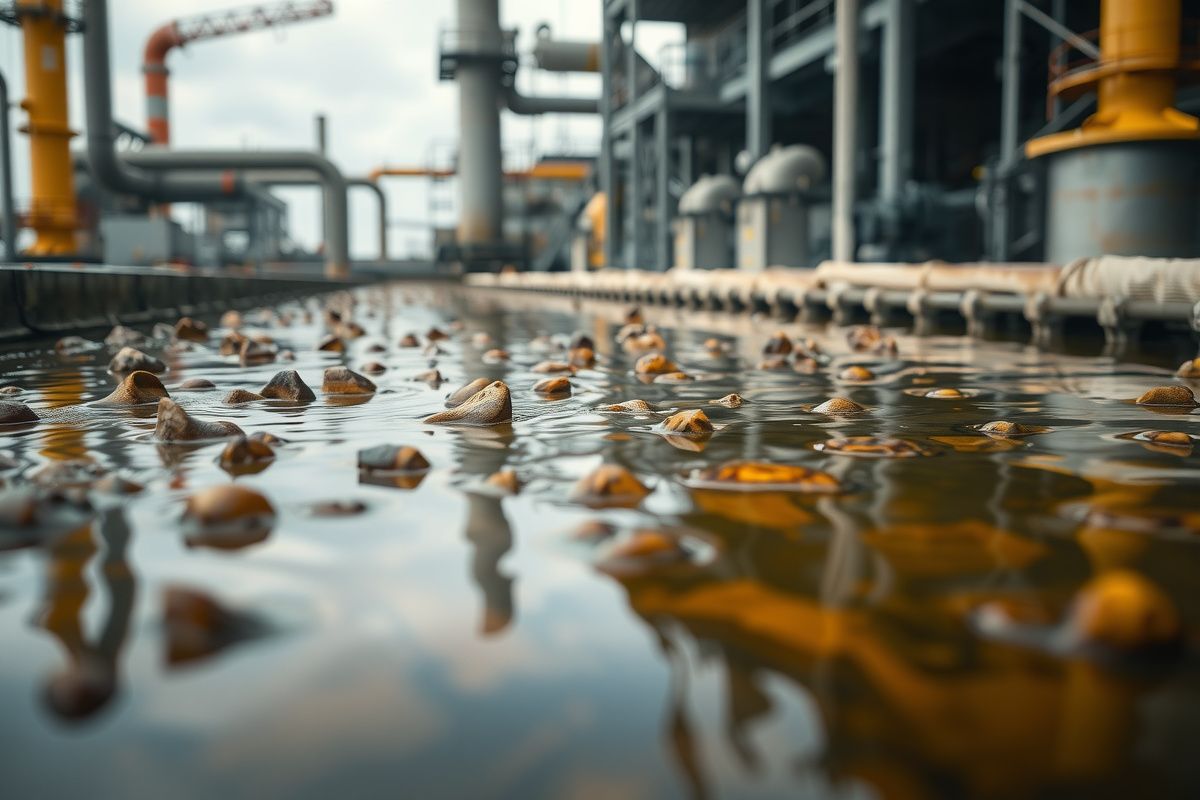
Industrial wastewater containing heavy metals is one of the most serious environmental problems of our time. These substances, such as lead, mercury, cadmium, chromium, and others, are extremely toxic, do not decompose under natural conditions, and tend to accumulate in the environment and living organisms. This poses a direct threat to human health, biodiversity, and ecosystems. Therefore, the development and implementation of effective technologies for wastewater treatment for such wastewater is a critically important task for any industrial enterprise striving to comply with modern environmental standards and principles of sustainable development.
UtilVtorProm company, being a leading expert in industrial waste management, pays special attention to innovative solutions for minimizing the negative impact of industry on the environment. Effective treatment of wastewater from heavy metals not only reduces environmental risk but also contributes to the conservation of valuable resources and ensures enterprises' compliance with strict legislative requirements. In this article, we will consider the key aspects of modern technologies for treating industrial wastewater from heavy metals, their principles of operation, and applications.
Modern approaches to detoxification of industrial wastewater from heavy metals
Technologies for treating industrial wastewater from heavy metals are based on various physico-chemical and biological principles that allow effective removal of these pollutants. The main methods include chemical precipitation, ion exchange, membrane processes (reverse osmosis, ultrafiltration, nanofiltration), adsorption, and electrochemical methods. Each of these approaches has its unique technical characteristics and advantages, allowing the selection of the optimal solution depending on the composition of the wastewater, the concentration of pollutants, and the desired degree of purification. For example, chemical precipitation is one of the most common methods due to its simplicity and relative cost-effectiveness, while membrane technologies provide a high degree of purification but require higher capital investments.
The principle of chemical precipitation involves adding reagents that convert soluble heavy metal ions into insoluble compounds, which can then be removed from the water by sedimentation and filtration. Ion exchange uses special resins that selectively absorb metal ions from the solution, replacing them with other, less harmful ions. Membrane technologies, in turn, use semi-permeable membranes that allow water molecules to pass through while retaining heavy metal ions. Adsorption is based on the ability of certain materials (e.g., activated carbon) to absorb pollutants on their surface. Electrochemical methods, such as electrocoagulation or electroflotation, use electric current to initiate metal precipitation or flotation processes.
Innovative solutions for heavy metal removal in various industries
The application of wastewater treatment technologies for heavy metals is extremely broad and covers almost all industries where these substances are used or formed. These industries include metallurgy, electroplating, chemical industry, mining industry, mechanical engineering, textile industry, as well as electronics and battery manufacturing. For example, in electroplating shops, where solutions of heavy metal salts are used for coating, wastewater treatment systems are a mandatory element of the technological process. Combined schemes are often used here, including chemical precipitation followed by post-treatment using ion exchange or membrane technologies.
Equipment for wastewater treatment from heavy metals can be diverse: from compact modular units for small enterprises to large-scale complexes for large industrial giants. Examples of such equipment include reactors for chemical precipitation, clarifiers, filtration units (sand, membrane), ion-exchange columns, adsorption filters, and electrochemical reactors. The choice of specific equipment and technological scheme depends on many factors, including the volume of wastewater, its composition, requirements for the quality of treated water, and the economic capabilities of the enterprise. UtilVtorProm company provides comprehensive consulting services for the selection and implementation of the most effective solutions for each specific case.
Environmentally sound management of heavy metal-containing waste
The process of wastewater treatment from heavy metals does not end only with the removal of pollutants from the water. An important stage is the subsequent environmentally safe management of the generated waste, which is usually presented in the form of sediments, sludges, or spent filtering materials. These wastes contain concentrated heavy metals and are hazardous, therefore requiring special handling. Waste codes containing heavy metals can vary depending on their origin and chemical composition, for example, 11 01 09* (sludges containing hazardous substances from wastewater treatment in metalworking enterprises), 19 02 05* (sludges containing hazardous substances from physico-chemical treatment of waste) or 10 03 27* (waste from the treatment of salts and sludge from non-ferrous metal treatment). UtilVtorProm company specializes in comprehensive environmental services for enterprises, including collection, transportation, storage, processing, and safe disposal of such hazardous waste.
Waste containing heavy metals is not subject to ordinary landfilling, as this can lead to secondary pollution of soil and groundwater. Instead, it requires special processing, which may include stabilization, solidification, or even the extraction of valuable metals for reuse. Stabilization and solidification are aimed at converting metals into a less mobile and bioavailable form, preventing their release into the environment. UtilVtorProm has all the necessary licenses and permits for carrying out these types of activities, guaranteeing full compliance with environmental standards and legislation. Our specialists develop individual solutions for each client, ensuring maximum safety and efficiency of hazardous waste management processes.
Professional partnership with UtilVtorProm for environmental safety of enterprises
UtilVtorProm company is a reliable partner for enterprises that strive to ensure a high level of environmental safety and effectively manage their waste, particularly those containing heavy metals. We offer a full range of services, from consultations and development of individual solutions to direct collection, transportation, processing, and disposal of hazardous waste. Our activities are licensed, which confirms our professionalism and compliance with the highest standards. We understand that each enterprise has unique needs, so our approach is always individual, aimed at achieving optimal results taking into account the specifics of production and environmental requirements. Contact UtilVtorProm to get qualified help in solving complex tasks related to wastewater treatment from heavy metals and managing relevant waste. We are ready to offer you effective and responsible solutions that will contribute to the sustainable development of your business and environmental protection.