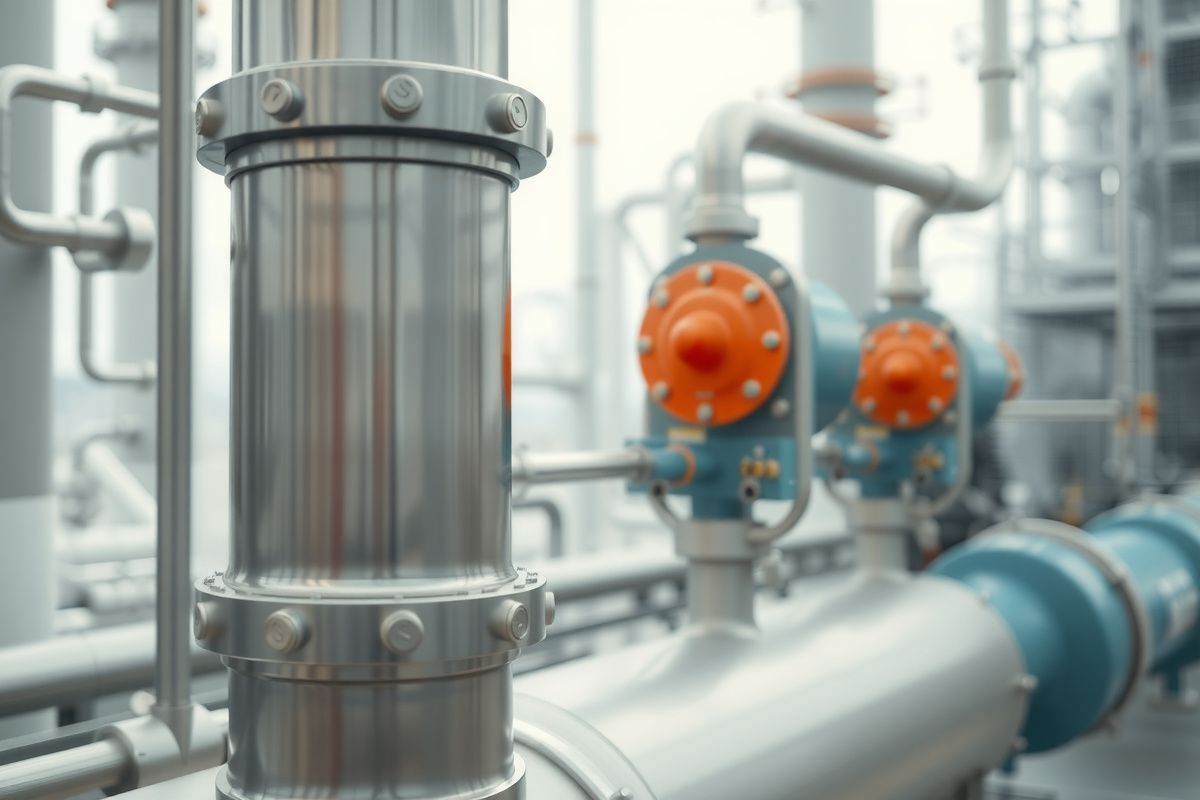
In the modern industrial landscape, the issue of gas emission purification is becoming increasingly relevant, transforming into a key element of sustainable development strategies for enterprises. Growing attention to environmental safety and stricter emission standards are forcing industry to seek innovative and effective solutions to minimize negative environmental impact. The problem of purifying specific pollutants, which are often highly toxic and resistant to traditional neutralization methods, is particularly acute. These substances, such as heavy metals, dioxins, furans, volatile organic compounds, and acid gases, require the application of advanced technologies capable of ensuring a high degree of purification and compliance with the strictest environmental standards. UtilVtorProm, as a leading expert in environmental services, constantly monitors and implements the latest achievements in this field, helping enterprises effectively manage their emissions.
Effective purification of industrial gas emissions from specific pollutants is not only a requirement of regulatory bodies but also an investment in the reputation, competitiveness, and long-term sustainability of any production. Insufficient emission control can lead to significant fines, deterioration of the health of employees and the local population, and negative public perception. Therefore, the selection and implementation of optimal purification technologies is a critically important task that requires deep knowledge in the fields of chemistry, physics, and engineering. Our company offers a comprehensive approach to solving these problems, starting from auditing existing systems and ending with the development and implementation of individual solutions that meet all legislative requirements and production specifics.
Advanced methods for selective removal of harmful components from gas streams
Modern technologies for purifying industrial gas emissions from specific pollutants are based on complex physicochemical processes that ensure high efficiency in removing even the most complex components. These technologies include adsorption, absorption, catalytic oxidation, thermal destruction, and plasma-chemical methods. Adsorption, for example, uses porous materials such as activated carbon or zeolites to trap pollutant molecules on their surface. This method is effective for removing volatile organic compounds, dioxins, and furans. Absorption, in turn, involves passing a gas stream through a liquid absorbent that dissolves or chemically binds harmful substances. Aqueous alkali solutions are commonly used to neutralize acid gases such as sulfur dioxide and nitrogen oxides.
Catalytic oxidation is one of the most promising methods for the complete destruction of organic pollutants. It involves converting harmful substances into safer compounds (water, carbon dioxide) using catalysts at relatively low temperatures. This method allows effective combat against a wide range of organic compounds, while minimizing the formation of secondary pollutants. Thermal destruction, or incineration, is used for highly concentrated and particularly hazardous waste, converting it into less toxic products at high temperatures. Plasma-chemical technologies, which use low-temperature plasma, demonstrate high efficiency in destroying persistent organic compounds and nitrogen oxides, offering innovative approaches to purifying complex gas mixtures.
Practical application of flue gas cleaning systems in industry
The application of advanced gas emission purification technologies is an integral part of production processes in many industries. For example, in metallurgy, where significant volumes of dust, sulfur oxides, nitrogen, and heavy metals are emitted, complex systems are used, including electrostatic precipitators for capturing solid particles, as well as absorption units for removing acid gases. In the chemical industry, where various volatile organic compounds are generated, adsorption units with activated carbon are used, as well as catalytic reactors for their complete oxidation. Energy enterprises, particularly thermal power plants, are actively implementing technologies for desulfurization and denitrification of flue gases, using lime absorbers and selective catalytic reduction, respectively.
The oil refining and petrochemical industries also face the problem of hydrogen sulfide, mercaptans, and other sulfur compound emissions. Specialized absorption units with chemically active solutions, as well as oxidation processes, are used for their neutralization. In the cement industry, in addition to dust collection, control of nitrogen oxide and dioxin emissions is important, for which multi-stage purification systems combining various methods are used. UtilVtorProm provides professional consultations and services for the selection, implementation, and maintenance of such systems, ensuring their effective and uninterrupted operation at enterprises of any scale and industry.
Proper waste management after industrial gas emission purification
Industrial gas emission purification processes, while solving the problem of atmospheric pollution, often lead to the formation of secondary waste that also requires proper handling. This waste can be in the form of solid precipitates, sludges, spent absorbents, or adsorbents that contain concentrated pollutants. For example, after the absorption of acid gases, sulfate or nitrate salts are formed, which can be dangerous. Spent activated carbon after the adsorption of volatile organic compounds contains a high concentration of these toxic substances. It is important to understand that this waste cannot simply be disposed of in a landfill, as it poses a potential threat to soils, water resources, and ecosystems.
According to the National Waste List (NWL), these wastes are classified as hazardous and require special handling methods. These may include: 10 01 07* (solid waste from gas purification containing hazardous substances), 15 02 02* (absorbents, filter materials, wiping cloths and protective clothing contaminated with hazardous substances), 19 02 05* (sludges from physicochemical treatment of waste containing hazardous substances). UtilVtorProm specializes in comprehensive environmental services for enterprises, including the collection, transportation, storage, processing, and neutralization of hazardous waste generated as a result of gas emission purification. We ensure full compliance with all environmental norms and standards, guaranteeing safe and responsible handling of such materials.
Reliable partner in environmental safety: UtilVtorProm
UtilVtorProm is a recognized leader in the field of environmental services for industrial enterprises, offering a full range of services related to waste management and environmental safety. Our professional approach is based on deep knowledge of legislation, modern technologies, and best world practices. We possess all the necessary licenses and permits for carrying out activities related to hazardous waste management, which guarantees our clients full compliance with all regulatory requirements. By contacting UtilVtorProm, you get not just a service provider, but a reliable partner who will help optimize environmental processes at your enterprise, reduce risks, and increase its environmental efficiency. Contact us today to discuss your needs and find optimal solutions for your business.