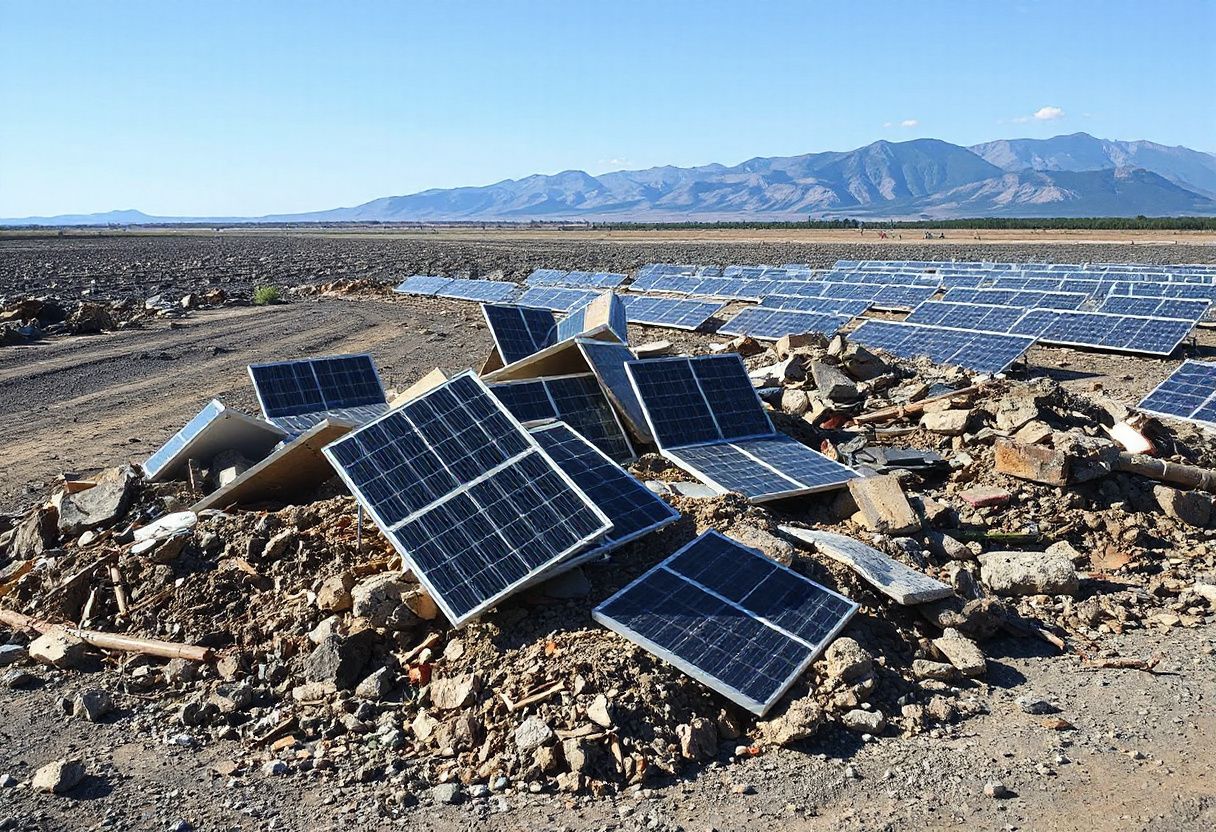
The accumulation of spent photovoltaic modules in landfills leads to the leaching of heavy metals into groundwater. Toxic compounds of lead and cadmium destroy ecosystems around household waste dumps. Under the influence of atmospheric precipitation, thin films of cadmium telluride oxidize, forming mobile compounds that easily migrate through aquifers over long distances. Such processes poison drinking water for thousands of people in nearby settlements. Industrial solar power plants require systematic equipment upgrades, which creates huge volumes of specific waste that cannot simply be buried or incinerated.
The modern alternative energy industry is developing rapidly, leaving behind worn silicon wafers, damaged tempered glass, and copper power cables. To prevent an ecological catastrophe, operators of large generation facilities must plan all stages of handling these complex multi-component structures in advance. The process requires a scientific approach. This approach is based on separating the anodized aluminum frame, the protective ethylene-vinyl acetate polymer layer, and the silicon semiconductor elements directly. The ultimate goal is to return valuable secondary raw materials into the industrial cycle.
Thermal separation of ethylene-vinyl acetate layers at 500 °C
About 75 percent of the mass of a standard photovoltaic panel consists of high-quality silicate glass. Metal parts and silicon account for the rest of the mass of the spent device. To extract pure metals, the pyrolysis method is used in special useful chambers with restricted oxygen access to prevent the formation of hazardous gases.
Application of nitric acid for silver refining
Unlike mechanical shredding, chemical refining makes it possible to preserve the crystal structure of silicon wafers for their reuse in manufacturing. Does such technology justify itself? Practical experience confirms the economic feasibility of regenerating silver and M-type copper using concentrated solutions of mineral acids at specialized chemical plants. The resulting high-purity metals are sent back to electronics industry enterprises, where new semiconductor boards are made from them.
Classification according to codes 16 02 13* and 20 01 35*
According to the classifier, spent solar panels are often classified as hazardous waste. To properly label such industrial residues, the state code 16 02 13* is used. In cases of equipment dismantling from private households, an alternative code 20 01 35* is applied, which also requires strict compliance with environmental safety rules.
Specialized trucks transport spent photovoltaic elements exclusively in closed, hermetic containers to avoid damaging fragile protective layers during transit. The licensed company UtilVtorProm ensures safe temporary storage of such fragile structures on specially equipped covered areas with a concrete surface. Where this cannot be done in the open air, strong metal reservoirs are used.
The procedure for proper electronic waste management begins with a detailed inventory of all equipment. Solar station owners need to determine the exact volume of future dismantling of outdated elements in advance. After that, it is advisable to contact specialists to conclude an agreement for the removal and subsequent processing of decommissioned photovoltaic panels. Ordering service from UtilVtorProm will completely resolve the issue of transportation and processing of hazardous materials. The work is performed quickly and reliably. Timely contact with a professional operator guarantees the complete environmental safety of your business and excludes any penalties from regulatory authorities.