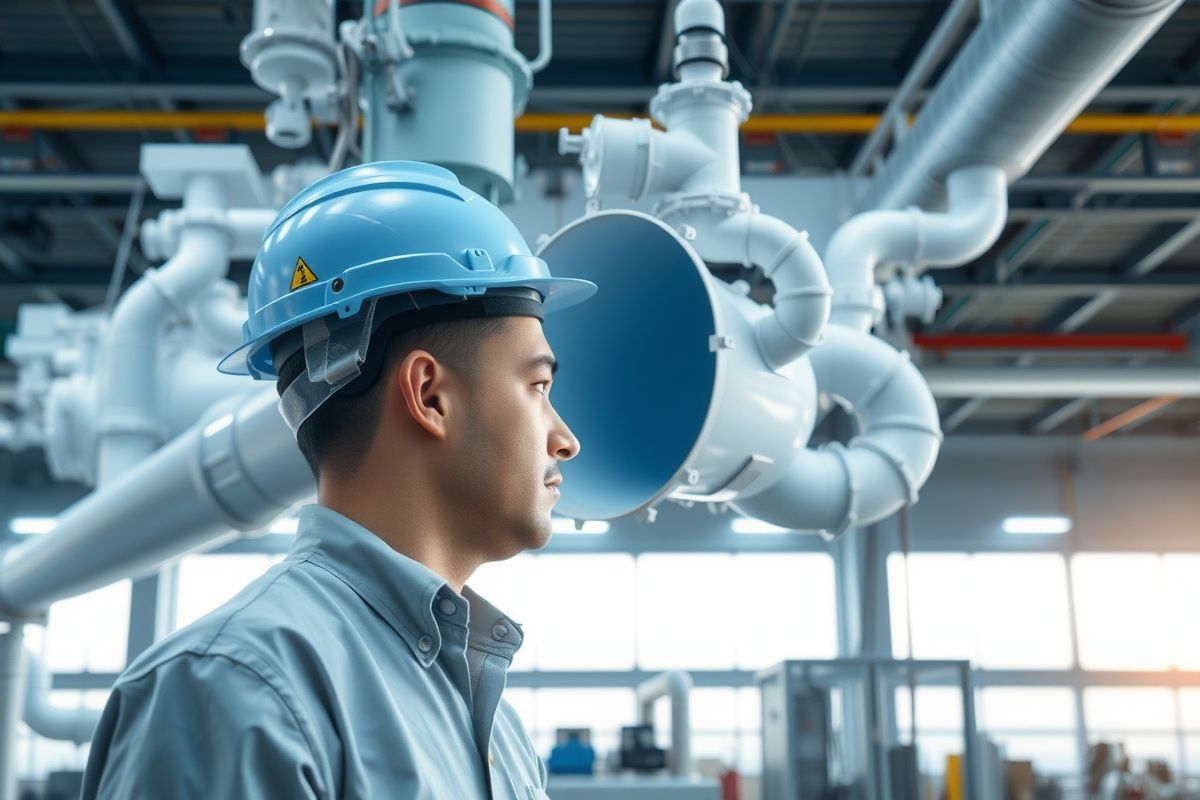
Ensuring optimal air quality in industrial premises is a critically important aspect for protecting workers' health, increasing labor productivity, and adhering to environmental standards. Modern production processes are often accompanied by the release of various pollutants, such as dust, chemical compounds, aerosols, and gases, which can negatively affect the human respiratory system and the overall state of the environment. Effective air quality control systems allow not only timely detection of exceeding permissible concentrations of harmful substances but also prompt reaction to them, preventing potential threats and minimizing risks to personnel. The implementation of such systems is an integral part of responsible business conduct and sustainable industrial development.
The relevance of integrating advanced air environment monitoring technologies is growing every year, especially given the strengthening requirements for industrial safety and occupational hygiene. Industrial enterprises, regardless of their profile, face the challenges of maintaining clean air, which directly affects product quality and equipment longevity. Insufficient control can lead to occupational diseases, emergency situations, and significant fines from regulatory bodies. That is why investments in high-quality control systems are strategically justified and economically beneficial, ensuring reliable protection and creating a safe working environment for every employee.
Comprehensive Industrial Air Monitoring: Architecture and Functionality
Air quality control systems in industrial premises represent complex integrated complexes consisting of numerous sensors, analyzers, central data processing units, and executive mechanisms. The main technical characteristics of such systems are high sensor sensitivity to specific types of pollutants, response speed, measurement accuracy, and the ability to operate continuously in aggressive industrial environments. The principle of operation is based on continuous air sampling, analysis for the presence of harmful impurities using electrochemical, optical, infrared, or other sensors, and the transmission of the obtained data to a central control panel. Modern systems are often equipped with self-calibration and remote access functions, which significantly simplifies their operation and maintenance.
A typical system's composition may include gas analyzers for measuring concentrations of carbon, sulfur, nitrogen oxides, volatile organic compounds, as well as dust meters for controlling solid particles of various sizes. Additionally, temperature, humidity, and pressure sensors can be installed, allowing for a complete picture of the indoor microclimate. The obtained data is visualized on monitors, stored in an archive for further analysis, and can be used for automatic control of ventilation systems, filtration units, or emergency alert systems. This approach ensures not only passive monitoring but also active air quality management, increasing the level of safety in production.
Integration of Air Quality Control Systems into Production Processes
The application of air quality control systems is extremely broad and covers practically all industrial sectors where there is a risk of air environment pollution. For example, in the chemical industry, where various reagents and solvents are produced, such systems are necessary for monitoring leaks of toxic gases and vapors, preventing dangerous situations. In metallurgy, they control emissions of heavy metals and dust generated during smelting processes, and in the woodworking industry – the concentration of wood dust, which can be carcinogenic. These systems are an integral part of production lines where, for example, halogen-free emulsions are used in metal machining, which, although more environmentally friendly, still require control over fumes and aerosols to maintain proper environmental control in production.
Examples of equipment include stationary and portable gas analyzers, aspiration systems with integrated sensors, ventilation duct cleanliness monitoring systems, and comprehensive solutions for "clean rooms" in the pharmaceutical or electronics industry. In the food industry, such systems help control the presence of allergens in the air and maintain necessary sanitary standards. Modern intelligent systems can predict possible contaminations based on the analysis of production cycles and weather conditions, giving operators time for preventive measures. This allows not only to protect workers but also to ensure compliance with international product quality standards.
Waste from Air Control System Operation: Classification and Management
The operation of air quality control systems, although aimed at improving the environmental situation, inevitably generates certain types of waste that require proper management. Such waste includes used filter elements, absorbents, adsorbents, as well as worn-out or failed sensory sensors and electronic components. Filters that trap dust, aerosols, and toxic substances often become hazardous due to the high concentration of these pollutants. Similar to how alternative filter materials and used absorbents are handled, these elements cannot simply be disposed of in regular landfills, as they pose a threat to the environment and human health, requiring specialized recycling or neutralization.
Waste generated during the operation of air quality control systems can be classified according to the National Waste List (NWL). For example, contaminated filter materials and absorbents containing hazardous substances are classified under code 15 02 02*. Worn-out electronic components, such as sensors, control boards containing hazardous substances (e.g., heavy metals), are classified under code 16 02 13*. UtilVtorProm company provides a full range of environmental services for enterprises, including collection, transportation, storage, and processing of these specific wastes, ensuring their safe and responsible management in accordance with all applicable regulations.
Reliable Environmental Solutions from UtilVtorProm for Your Enterprise
By choosing UtilVtorProm as a partner for waste management generated from the operation of air quality control systems, you receive a guarantee of a professional approach and adherence to all environmental standards. Our company holds the necessary licenses and permits to operate in the field of hazardous waste management, which confirms our competence and responsibility. We offer individualized solutions for each enterprise, considering the specifics of production and the type of waste, ensuring their effective collection, safe transportation, and subsequent processing with minimal environmental impact. Contact UtilVtorProm today to receive professional consultation and develop an optimal waste management plan for your industrial facility, ensuring environmental safety and compliance with legislation.