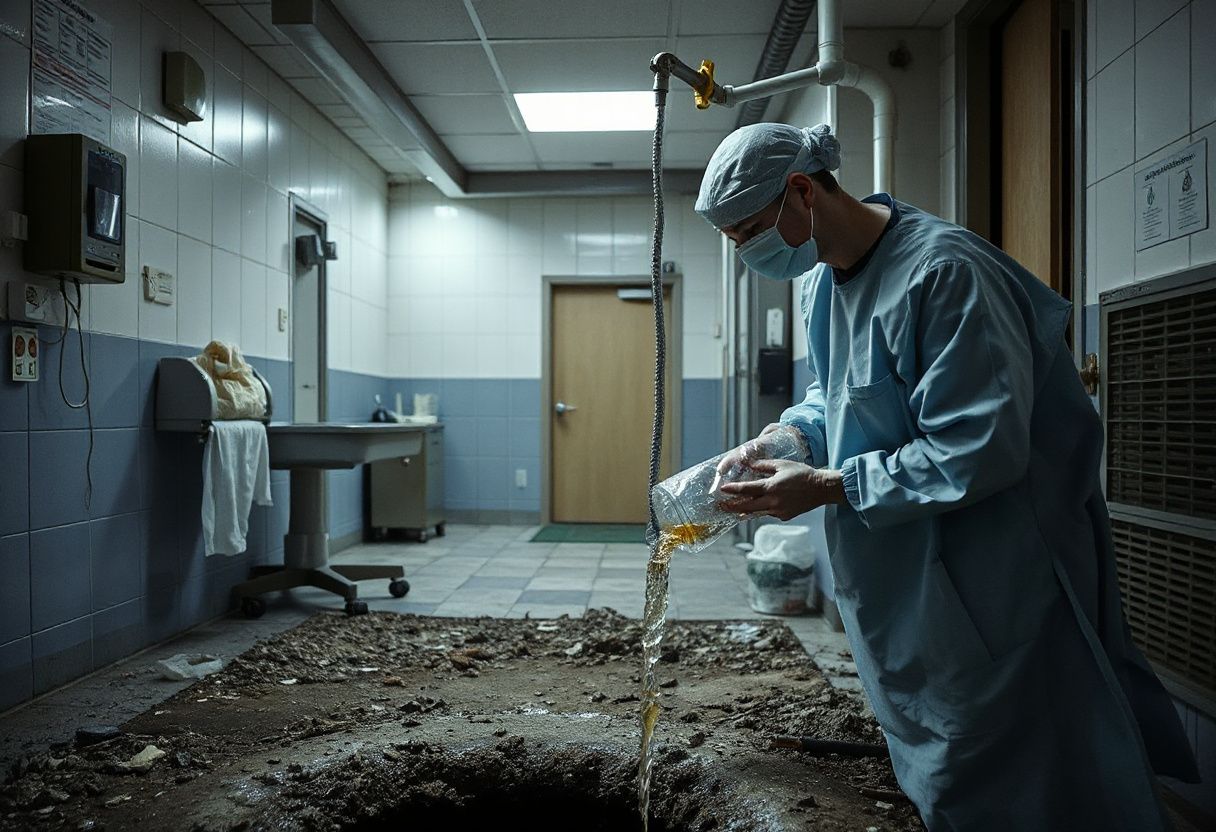
Previously, medical facilities often poured spent fixer solutions and chemical developers directly into the municipal sewage system. Modern environmental legislation completely prohibits such actions due to the high environmental toxicity of heavy metals. The Law of Ukraine "On Waste Management" establishes strict requirements for business entities, mandating the transfer of all liquid and solid toxic residues exclusively to specialized licensed operators. Failure to comply with these state regulations results in heavy fines for enterprises during inspection audits.
Requirements for Medical Facilities and NDT Equipment
Medical diagnostic centers, dental clinics, and specialized industrial non-destructive testing (NDT) laboratories must organize primary separate collection of all generated chemical reagents. If analog X-ray machines such as CREDO or RUM-20 are operated in the diagnostic room, the continuous generation of liquid toxic solutions occurs directly during the chemical processing of images. Uncontrolled accumulation of these hazardous materials without proper record-keeping poses a direct threat to staff health.
NPV Codes 09 01 01* and 09 01 04* for X-ray Waste
Classification of hazardous chemicals is carried out in accordance with the current National Waste List to clearly determine the processing method. Spent liquid developers are assigned the code 09 01 01*. Fixer solutions based on soluble silver compounds are registered under the official code 09 01 04*. Used medical X-ray film belongs to the category of hazardous materials under the code 09 01 07*. Is it justified at all to mix different types of liquid reagents in a single container directly during their primary collection inside the operating manipulation room? Such a mixed chemical mass completely loses its value for the subsequent extraction of useful components and requires much more complex multi-stage neutralization processes.
Transportation Rules in HDPE Containers and ADR Packaging
Temporary storage of liquid reagents is carried out in airtight plastic canisters made of chemically resistant high-density polyethylene (HDPE) with a wall thickness of at least 2 mm. The temperature in the workspace is 15 °C. For the safe transportation of toxic liquid substances by specialized motor transport, UtilVtorProm company uses certified packaging marked for compliance with international ADR regulations. All containers must be provided with clear warning labels indicating the specific hazard class and key physical and chemical properties of the collected contents.
Composition of Fixers and Silver Extraction by Electrolysis
Spent fixer solutions contain complex compounds of sodium thiosulfate and dissolved silver ions. The initial concentration of pure silver in such liquid waste usually reaches 3 to 8 g/l. Industrial electrolytic deposition makes it possible to effectively extract up to 98% of the valuable metal through reduction directly on cathodes made of 12Kh18N10T corrosion-resistant steel. The composition of chemical residues varies significantly only depending on the presence of different types of processed photographic film. The liquid phase, completely purified from metal, is subject to further reagent neutralization or coagulation before being sent to specialized industrial wastewater treatment plants.
Waste Treatment Services from UtilVtorProm
Systematic servicing of X-ray rooms and industrial laboratories involves the regular removal of all chemical reagents and film with strict compliance with current environmental standards. Thanks to having an official license, the UtilVtorProm enterprise carries out the collection, transportation, temporary storage, and subsequent environmental treatment of hazardous materials. Medical facilities receive legal confirmation certificates. The full cycle of handling chemical residues fully guarantees environmental safety and complete compliance of the enterprise with any state supervision requirements.