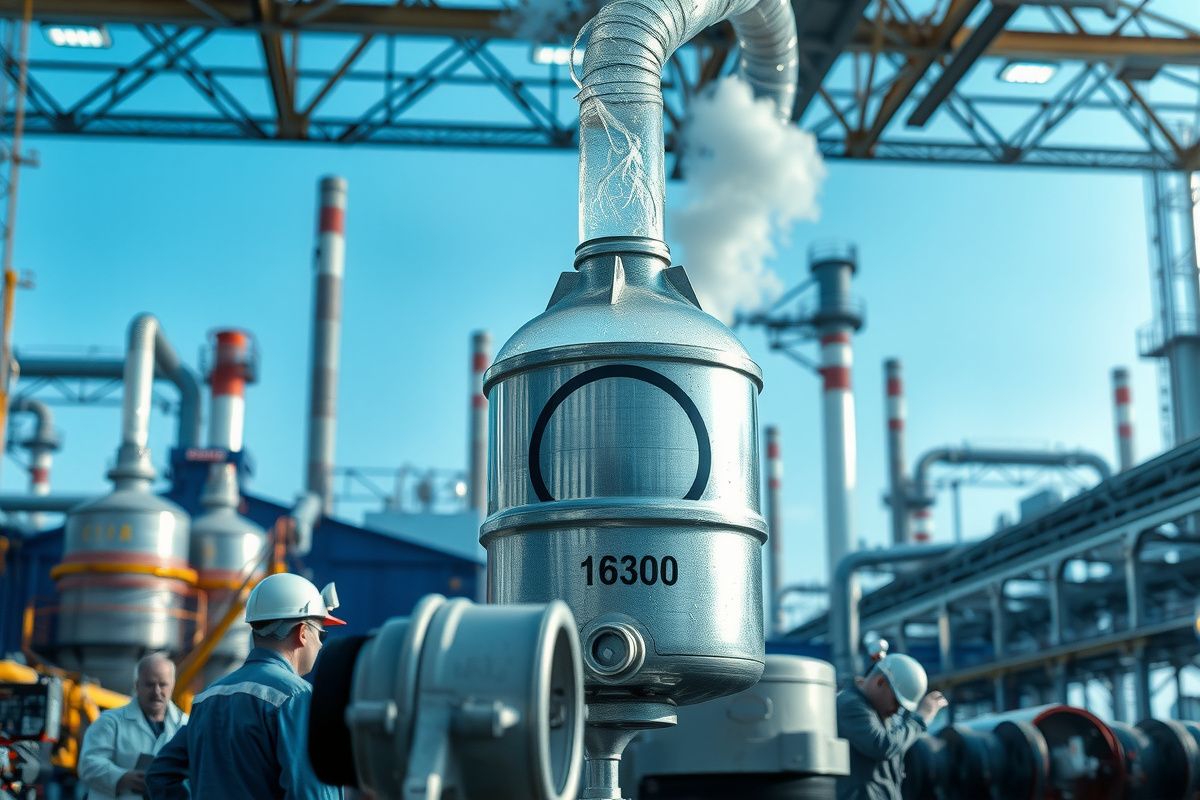
The growth of industrial production and technological progress are inextricably linked to the generation of hazardous chemical waste, which poses a serious challenge to environmental safety and sustainable development. Uncontrolled or ineffective handling of such materials can lead to contamination of soils, water resources, atmospheric air, and have catastrophic consequences for human health and biodiversity. This is precisely why the relevance of implementing and continuously improving modern methods for neutralizing hazardous chemical waste is of paramount importance for industries worldwide.
Every enterprise that works with chemical substances is responsible for the safety of production processes and minimizing negative environmental impact. Innovative approaches to processing and neutralization not only reduce environmental risk but also, in some cases, return valuable components to circulation, contributing to a circular economy. This requires deep knowledge, specialized equipment, and adherence to the highest safety standards, which emphasizes the importance of cooperation with professional companies, such as UtilVtorProm, specializing in environmental services.
Innovative Technologies for Thermal and Chemical Waste Neutralization
Modern methods for neutralizing hazardous chemical waste are based on the principles of maximum destruction of toxic compounds or their transformation into less harmful, stable forms. One of the most effective approaches is high-temperature thermal neutralization, which includes incineration in specialized furnaces at temperatures exceeding 1200°C, pyrolysis, and gasification. These processes ensure the complete decomposition of organic substances, transforming them into safer gases and ash, and effectively destroying persistent organic pollutants. The technical characteristics of such equipment include a multi-stage exhaust gas purification system to prevent the emission of harmful substances into the atmosphere.
Alongside thermal methods, chemical and physicochemical methods are actively developing, such as neutralization, oxidation/reduction, precipitation, sorption, and membrane technologies. They are used for processing inorganic waste, acids, alkalis, heavy metal salts, and other compounds. For example, for aqueous solutions containing hazardous substances, similar to those that may be formed from "Chlorine-free emulsions for processing" or "Alternative solvents and mixtures for dissolution," chemical precipitation or ion exchange is often used to remove metals. The principle of these methods lies in changing the chemical structure or phase state of the waste, making them inert or easier for further handling.
Application of Advanced Methods in Various Industries
The application of modern methods for neutralizing chemical waste is critically important for a wide range of industries where toxic substances are generated. The chemical and petrochemical industries, pharmaceuticals, metallurgy, electronics, and mechanical engineering are the main consumers of these technologies. For example, in the pharmaceutical industry, high-temperature incinerators are used for processing spent medicines and their components, guaranteeing the complete destruction of active ingredients. Metallurgical enterprises use precipitation and filtration methods to purify wastewater from heavy metals and acidic residues.
In agriculture and the agrochemical industry, where there is a need to manage pesticide and agrochemical waste, specialized installations for thermal neutralization or chemical destruction are used. Plasma neutralization equipment, operating at ultra-high temperatures, demonstrates high efficiency for processing particularly persistent organic pollutants and halogen-containing waste. This allows not only minimizing environmental impact but also complying with strict international and national environmental safety standards, which is a key aspect for any responsible manufacturer.
Classification and Safe Handling of Hazardous Chemical Waste
Correct handling of hazardous chemical waste begins with its accurate classification in accordance with current legislation. Each type of waste has its unique code according to the National Waste List (NWL), which determines its degree of hazard and the necessary conditions for collection, transportation, storage, and processing. Examples of such codes for hazardous chemical waste may include: 06 01 01* (sulfuric acid and sulfurous acid), 07 01 01* (aqueous solutions and acids), 16 01 07* (oils and lubricants containing hazardous substances). These codes help identify waste that requires a special approach due to its toxicity, corrosiveness, reactivity, or other hazardous properties.
Responsible handling of chemical waste requires not only knowledge of its characteristics but also strict adherence to technological regulations at all stages. Waste must be properly packaged, labeled, and transported by specialized vehicles that comply with all safety standards. UtilVtorProm provides comprehensive environmental services to enterprises, ensuring a professional approach to the collection, transportation, temporary storage, and processing of hazardous chemical waste. This guarantees that all processes comply with the highest environmental standards and safety requirements, similar to how we approach "Batteries and accumulators as hazardous waste: effective management for environmental protection."
Comprehensive Solutions from UtilVtorProm for Environmental Safety
Cooperation with UtilVtorProm allows enterprises of any scale to effectively and safely solve problems related to hazardous chemical waste management. Our company holds all necessary licenses and permits for its activities, which guarantees the legality and environmental safety of all processes. We offer a professional approach that includes individual development of waste management plans, the use of modern equipment and technologies, and qualified personnel who have undergone special training. By contacting UtilVtorProm, you get a reliable partner that provides a full cycle of services — from initial consultation and classification to final processing, contributing to environmental preservation and the sustainable development of your business. Contact us to discuss your needs and find optimal solutions.