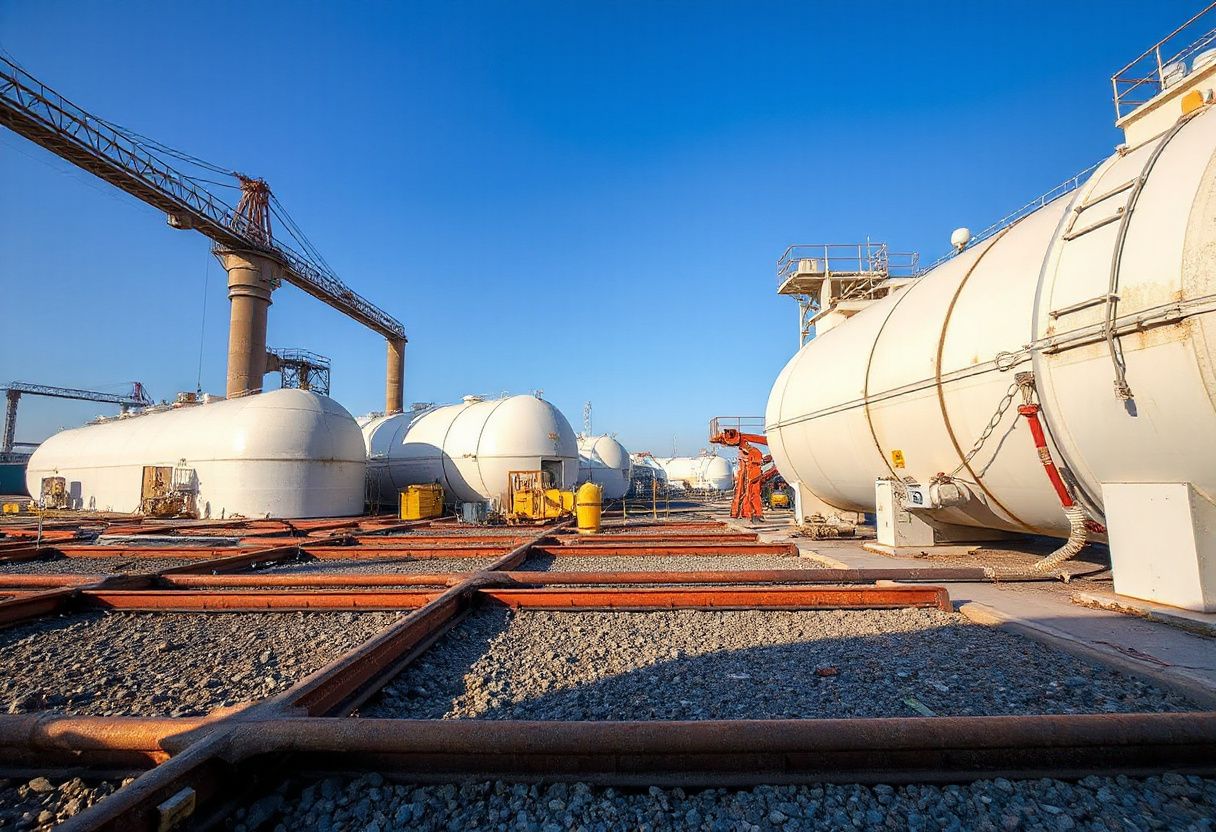
National legislation in the field of environmental safety obliges industrial enterprises to ensure proper treatment of hazardous tank residues. Today, fuel and energy complex engineers most often choose between mechanical separation and high-temperature incineration of hydrocarbon mixtures. The first option focuses on the recovery of a valuable oil phase, while the thermal method ensures complete destruction of the organic part of the waste without residue.
Three-phase separation using Flottweg decanters
The mechanical technology is based on the use of three-phase centrifuges that separate a complex emulsion into petroleum products, water, and a solid mineral phase. This method demonstrates high efficiency during the cleaning of tanks where significant volumes of liquid mixtures with mechanical impurities up to 10% accumulate. The water obtained after separation is sent to industrial treatment facilities for further filtration.
Thermal desorption at a temperature of 450 °C
Alternative thermal treatment involves heating the mixture in an oxygen-free environment of special desorption unit reactors. Such an approach completely destroys stable emulsions and prevents the formation of toxic dioxins during the process. However, the high energy intensity of the equipment and the need for preliminary sludge dewatering limit the application of this method at small enterprises.
Classification by National List of Wastes and codes 05 01 03* and 05 01 05*
Improper handling of these substances leads to soil contamination with heavy metals and prolonged poisoning of underground aquifers by oil fractions. According to the National List of Wastes, the sludges accumulated during tank cleaning are classified under code 05 01 03* as hazardous substances. Other residues from industrial wastewater treatment receive a strict environmental code 05 01 05*. This waste is subject to mandatory accounting. State regulatory authorities carefully check the balance of generation and transfer of such hazardous substances to specialized companies.
Technological capabilities of UtilVtorProm
The licensed enterprise UtilVtorProm provides a full cycle of operations with hazardous hydrocarbon waste of the fuel sector. The company's specialized vehicle fleet allows for the safe transportation of large volumes of liquid and paste-like mixtures. To pump heavy residues at customer sites, powerful KO-505 vacuum pumps are used, operating in difficult temperature conditions. The obtained oil sludge undergoes mechanical dewatering on modern membrane-type filter presses. The purified liquid phase is returned to the production cycle or sent for treatment, and the dewatered cake is subjected to further safe thermal treatment. The introduction of such comprehensive solutions helps industrial giants minimize environmental risks and fully comply with the strict regulations of Ukraine's environmental legislation.
The initial contact between representatives of an industrial enterprise and specialists of UtilVtorProm begins with a detailed analysis of the chemical composition of the accumulated oil residues. The customer provides the results of laboratory studies or coordinates the dispatch of specialists to take samples directly from operating sludge pits. After that, engineers calculate the optimal scheme for collecting and transporting the hazardous substance. The parties agree on the work schedule, the volume of specialized equipment involved, and the final cost of the range of environmental support services. The contract is signed in writing. The next stage is the direct departure of the mobile team to the industrial site to carry out the work.