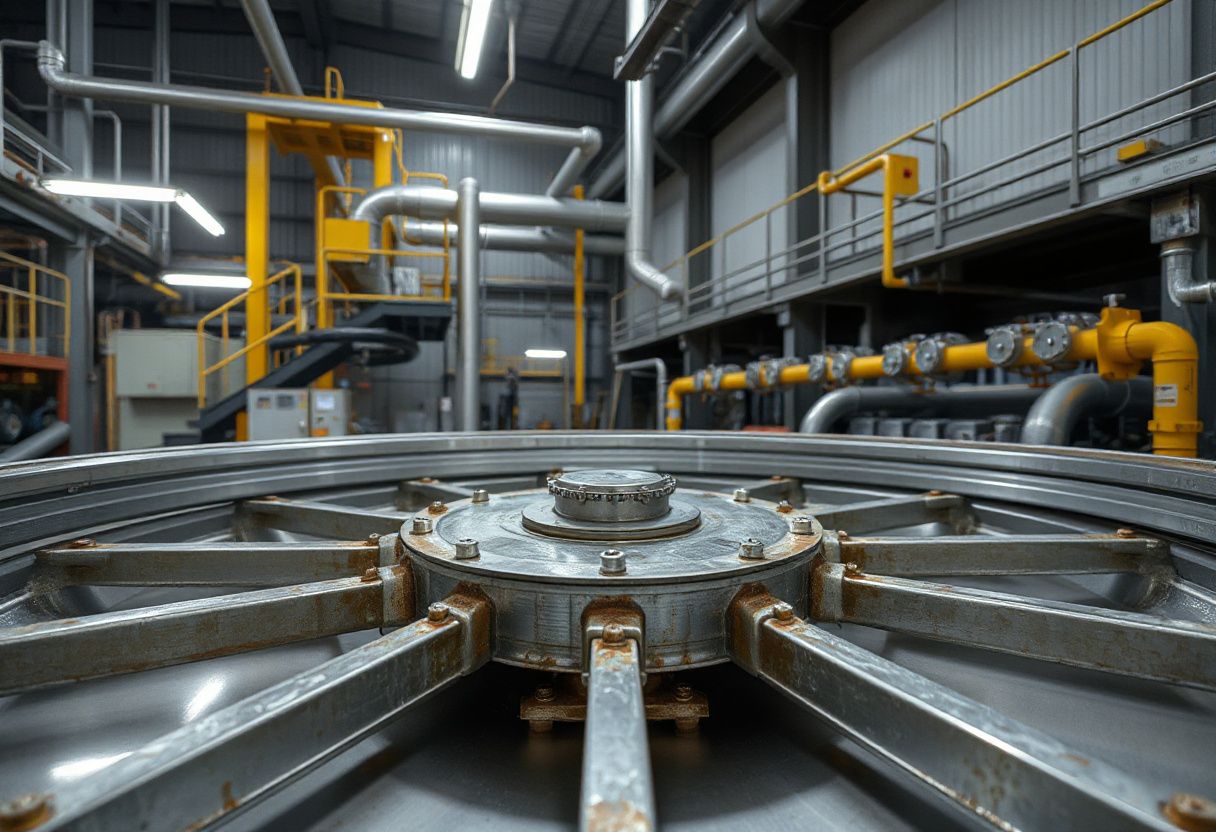
During the audit of the technological structures of the footwear factory, siltation of the primary radial clarifiers was discovered. The accumulated wet sludge hindered the uninterrupted operation of the local treatment facilities at the industrial site. Technical personnel had been discharging the sludge into sludge lagoons for a long time without preliminary dewatering, which led to the caking of the dry residue and the release of hydrogen sulfide. Laboratory measurements recorded excess concentrations of trivalent chromium compounds in soil samples around the lagoon.
Accumulation of Chromium Cr(III) Sludge in Clarifiers
The main mistake of the engineers consisted in mixing chromium-containing effluents after tanning with the general alkaline flow of liming departments without isolated precipitation. The chemical reaction caused re-dissolution. The addition of lime instead of polyaluminium oxychloride created a colloidal mass that could not be effectively dewatered on the available chamber filter presses. Due to the neglect of the sulfide stripping stage, rapid clogging of membranes and destruction of metal parts of the pumping equipment occurred due to the increased corrosiveness of the environment. Open-air sludge drying caused a significant spread of unpleasant odors in the surrounding area. The lack of automated pH control blocked the normal precipitation of chromium hydroxide into sludge.
Composition of Tanning Sludge and 85% Moisture Content
Sludge from leather factories consists of protein substances, fats, chlorides, and heavy metal compounds. The initial moisture content of the material after primary clarifiers reaches 95%. The content of chromium sulfate Cr2(SO4)3 in the dry residue ranges from 3% to 8%, which makes the substance toxic to the environment.
Anaerobic Digestion and Pyrolysis at 600 °C
Modern processing requires the separation of the general sludge flow into a dewatered organic fraction and a mineral concentrate with heavy metals. Where possible, the dewatered sludge is subjected to high-temperature thermal destruction in an oxygen-free environment of pyrolysis units at 600 °C. Unlike direct incineration, pyrolysis does not produce hazardous dioxins. The extracted chromium is leached with a sulfuric acid solution and returned to the tanning drums of the footwear production for reuse. After anaerobic methane digestion, the organic fraction is converted into high-quality biofuel.
NPV Codes 04 01 06* and 04 01 07 in the Register
The classification of leather waste depends on the presence of heavy metal compounds in the sludge structure. Sludges with tanning agent residues are classified under code 04 01 06*. Chromium-free sludges have the code 04 01 07. The transfer of such materials requires the signing of acceptance and transfer certificates along with the execution of written declarations.
Reception of Leather Sludge by UtilVtorProm Enterprise
The UtilVtorProm enterprise promptly picks up hazardous sludges from leather factories using specialized sealed transport with aeration systems to prevent caking of the dry material. The laboratory conducts mandatory incoming chemical analysis of each sample for the prompt selection of the optimal reagent regime for coagulation and dewatering. Unlike artisanal methods, dewatering is carried out on automatic belt presses. The approved technological regulations provide for the regeneration of heavy metals with subsequent drying of the organic residue to a moisture content of 20%. Modern processing is carried out using specialized licensed equipment at the industrial site. Official environmental support guarantees the absence of claims from regulatory authorities.
- Conducting an express analysis of the sludge for heavy metal content and sulfide compounds.
- Mechanical dewatering of the mass on belt filter presses with the introduction of coagulants.
- Thermal treatment and leaching of the chromium concentrate for return to production.
- Execution of confirmation treatment certificates and a full package of environmental documentation.
The transfer of waste to specialized enterprises protects the factory from environmental fines. Only the presence of a valid license guarantees safe handling of highly hazardous substances. The execution of a full package of accompanying certificates takes place in strict compliance with the requirements of the national waste list and license conditions. You can order the transfer of sludge through the official form on the website. UtilVtorProm ensures the prompt removal of hazardous materials with its own special equipment and performs environmentally safe processing of industrial sludge fractions. Timely signing of the official contract allows the enterprise to easily and completely resolve important issues of technological sludge accumulation at the production site.