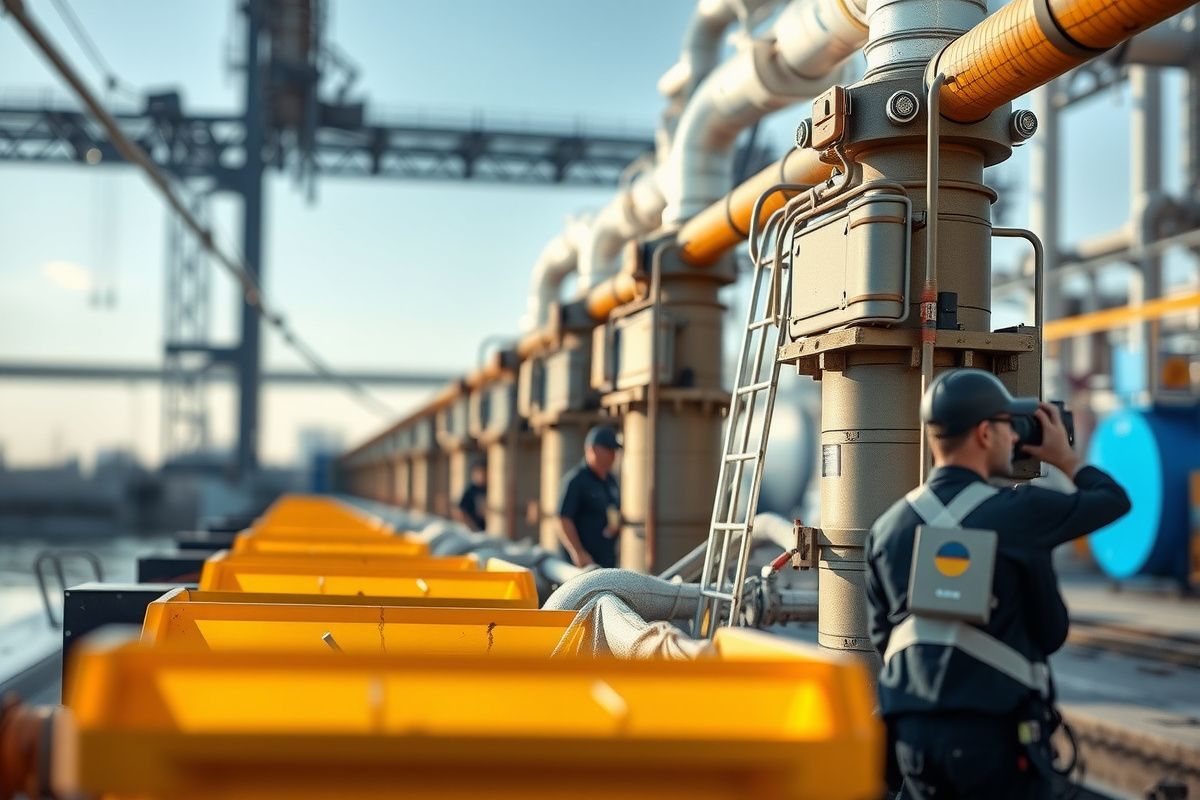
Reducing fresh water consumption and efficient water resource management are among the most pressing challenges for modern industry. The growing scarcity of water resources, tightening environmental regulations, and economic feasibility encourage enterprises to implement innovative water-saving strategies and water reuse. Such approaches not only contribute to environmental protection but also significantly reduce operating costs, increase the stability of production processes, and improve the company's image as a socially responsible entity. The implementation of integrated water-saving systems becomes not just desirable but a critically important element of sustainable development for any industrial facility in the context of global climate change and increasing pressure on natural ecosystems.
Effective water resource management at industrial enterprises includes a wide range of measures, from optimizing technological processes to implementing modern treatment and recirculation systems. This allows not only to reduce the volume of fresh water intake but also to minimize the discharge of polluted wastewater, which is a key aspect of environmental safety. For example, as in the case of handling "Alternative aqueous rinsing liquids not classified under code 11 01 11", the right approach to water treatment and reuse can turn waste into a valuable resource, providing economic and environmental benefits. Such strategies require in-depth analysis of production cycles, investment in new technologies, and continuous monitoring of the effectiveness of implemented solutions.
Integrated Treatment Systems for Industrial Water Reuse
Modern water-saving strategies are based on the integration of advanced water treatment technologies that achieve a high degree of water preparation for its reuse in production cycles. These technologies include membrane processes such as reverse osmosis (RO), ultrafiltration (UF), and nanofiltration (NF), which effectively remove dissolved salts, organic substances, and micropollutants. The principle of these systems involves passing water through semi-permeable membranes under pressure, which retain pollutants, ensuring the production of purified water with the required parameters. Biological treatment methods are also actively used to remove organic pollutants, coagulation and flocculation for the precipitation of suspended particles, as well as sorption processes, particularly using "Activated carbon", to remove specific impurities and odors.
The technical characteristics of such systems depend on the initial composition of the wastewater and the requirements for the quality of the treated water. For example, in metallurgy, coarse filtration and softening may be sufficient for cooling equipment, while for the production of high-tech products, water with minimal impurity content is required, which is achieved using multi-stage RO systems. The system composition may include preliminary mechanical filtration, chemical treatment, biological reactors, membrane modules, and post-treatment systems such as ion-exchange columns or UV disinfection. This provides flexibility in configuring the system to the specific needs of the enterprise, allowing for maximum efficiency in water reuse and minimizing discharge volumes, which is extremely important for environmental responsibility.
Practical Application of Water Recirculation Technologies in Industry
The implementation of water-saving and reuse strategies is critically important for many industries where water is a key resource or carrier. In the metallurgical industry, closed-loop water circulation systems are used for cooling furnaces, rolling mills, and other equipment. Treated water, obtained after wastewater treatment, can be reused for technical needs, significantly reducing fresh water consumption. In the chemical industry, where "Alternative aqueous rinsing liquids not classified under code 11 01 11" often form, recirculation technologies allow not only to save water but also to extract valuable components from wastewater, contributing to resource efficiency and reducing the volume of hazardous waste. Examples of equipment include water cooling units, reverse water supply systems, membrane units for wastewater treatment and concentration.
In the food industry, where high demands are placed on hygiene and water quality, water-saving strategies include the use of treated wastewater for equipment washing, premises cleaning, and technical needs not directly related to product contact. For example, after washing vegetables or fruits, the water can be treated and used for primary rinsing or for cooling systems. This significantly reduces the load on sewage systems and lowers water supply costs. The textile industry also actively implements water recirculation systems for dyeing and rinsing processes, where water consumption volumes are extremely high. The use of modern filtering materials, similar to "Alternative filtering materials and used absorbents", allows for effective purification of water from dyes and other pollutants, making it suitable for reuse.
Environmentally Sound Management of Concentrated Wastewater from Water Treatment
Despite the significant advantages of water-saving and reuse systems, their operation inevitably leads to the formation of concentrated waste. This waste is a byproduct of treatment processes and can contain high concentrations of pollutants that have been removed from industrial wastewater. Such waste includes, for example, concentrates from membrane units, sludges from physicochemical treatment, and sludges from biological treatment plants. These materials are often classified as hazardous because they may contain heavy metals, organic toxins, or other harmful components. Therefore, their safe handling, collection, transportation, and processing are key stages in ensuring the environmental safety of the enterprise. The company UtilVtorProm provides comprehensive environmental services to enterprises, helping to solve these complex tasks.
Waste generated as a result of implementing water-saving strategies requires a special approach to their identification and subsequent management. Depending on their composition, they may have different waste codes according to the National Waste List (NWL). For example, sludges from the treatment of industrial wastewater containing hazardous substances can be classified as 19 08 06*. Concentrates from membrane units, depending on the content of hazardous components, may fall under other codes, such as 11 01 11* (aqueous rinsing liquids containing hazardous substances) or 19 08 10 (membrane waste). Our company UtilVtorProm specializes in the professional handling of such waste, ensuring its safe collection, transportation, storage, and processing in accordance with all applicable environmental standards and legal requirements. This allows enterprises to avoid environmental fines and minimize negative impact on the environment.
Comprehensive Solutions from UtilVtorProm for Environmental Safety
UtilVtorProm is a reliable partner for industrial enterprises in the field of environmental services, offering professional and licensed services for handling various wastes generated during the implementation of water-saving and water reuse strategies. Our approach is based on deep knowledge of industry standards, modern equipment, and highly qualified personnel, which guarantees an effective and safe solution to the most complex environmental challenges. We do not engage in manufacturing or selling products, but focus exclusively on providing quality services for the collection, transportation, storage, and processing of waste, ensuring full compliance with environmental norms and requirements. By contacting UtilVtorProm, you gain not just a contractor, but a reliable consultant and partner who will help optimize your environmental processes and ensure the sustainable development of your enterprise. Contact us today to discuss individual solutions for your business.