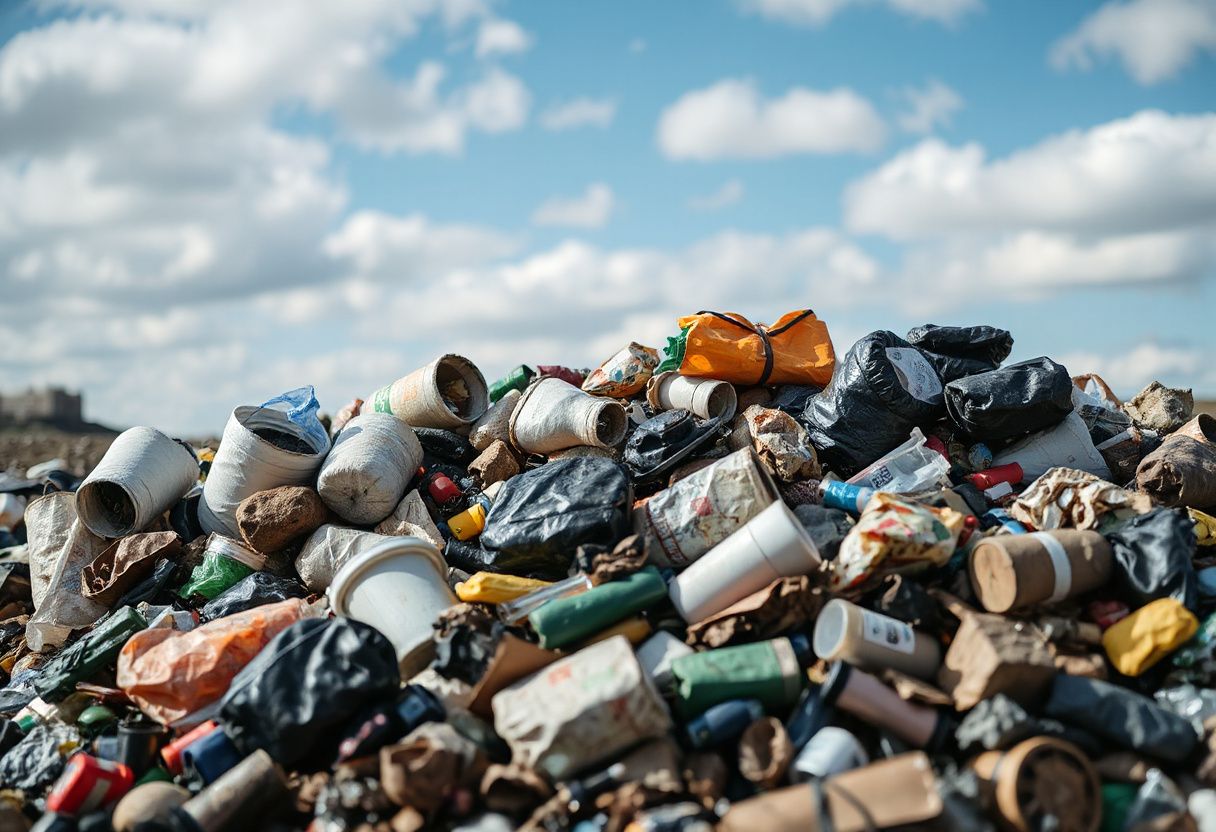
In the modern world, the problem of increasing volumes of waste is one of the most pressing environmental and economic threats. Population growth, accelerated consumption rates, and outdated waste management methods lead to overflowing landfills, environmental pollution, and the loss of valuable resources. Traditional waste sorting methods, which rely heavily on manual labor, are inefficient, slow, and often dangerous for workers. That is why the development and implementation of robotic systems for waste sorting is becoming a critically important direction for ensuring sustainable development and preserving natural resources.
The introduction of advanced technologies such as artificial intelligence, computer vision, and robotic manipulators opens up new prospects for automating the sorting process. This allows for a significant increase in accuracy, speed, and safety, minimizing the human factor and optimizing the use of secondary raw materials. UtilVtorProm actively monitors these innovations, understanding their potential to improve environmental services for enterprises and promote a circular economy.
Advanced Technologies in Robotic Waste Sorting Systems
Modern robotic systems for waste sorting are complex integrated complexes that combine mechanical, electronic, and software components. The main technical characteristics of such systems are high processing speed, accuracy of material identification, and the ability to work in conditions of high contamination. The principle of operation is based on the use of optical sensors, infrared spectrometers, and high-resolution cameras that analyze the waste stream in real time. The obtained data is processed by artificial intelligence, which recognizes various types of materials, such as plastic (PET, HDPE, PVC), paper, cardboard, metal, glass, and organic waste.
After material identification, robotic manipulators extract it from the conveyor belt with high accuracy and speed and direct it to the appropriate container for further processing. Some systems also use pneumatic or electromagnetic separators for additional material differentiation. These robots are capable of continuous operation, 24 hours a day, 7 days a week, which significantly increases the productivity of sorting lines. In addition, they can be programmed to recognize a wide range of materials, making them flexible and adaptable to various types of waste.
Application of Robotic Complexes in Waste Processing
Robotic sorting systems are widely used in various industries where efficient waste processing is required. One of the main areas is municipal services, where such systems are installed at waste sorting plants for automatic separation of household waste. This significantly increases the percentage of secondary raw material extraction, reduces the volume of waste going to landfills, and improves the quality of prepared raw materials for further processing. For example, robots can effectively separate different types of plastic, which is critically important for the production of high-quality recycled materials.
In addition, robotic systems are used in industry for sorting industrial waste, such as production waste, construction waste, and electronic scrap. For example, in the automotive industry, robots can sort metal waste, plastic parts, and other materials from disassembled cars. In the food industry, such systems can separate packaging from organic residues, ensuring the purity of secondary raw materials. This not only contributes to the rational use of resources but also reduces the environmental impact of industrial production.
Effective Waste Management from Robotic Systems
Even the most modern robotic waste sorting systems generate certain types of waste that require professional handling. These can be spent equipment components, such as worn sensors, cables, electronic boards, as well as residual materials that cannot be automatically sorted or are too contaminated for processing. It is important to ensure their proper collection, transportation, and processing or disposal in accordance with environmental standards.
UtilVtorProm provides a full range of environmental services for enterprises, including waste management generated during the operation and maintenance of robotic systems. Such waste may include: 16 02 14* (spent equipment not containing hazardous components), 16 02 13* (spent equipment containing hazardous components), 16 01 03* (spent tires), 17 04 07* (metal waste), 15 01 02* (plastic packaging), 15 01 01* (paper and cardboard packaging). Our specialists provide a professional approach to each stage of waste management, guaranteeing compliance with all regulatory requirements and minimizing negative environmental impact.
Professional Cooperation with UtilVtorProm: Guarantee of Environmental Safety
UtilVtorProm is a leader in the field of environmental services for enterprises and provides a full range of services for handling various wastes. Our activities are licensed and comply with the highest environmental safety standards. We understand the importance of implementing modern technologies, such as robotic waste sorting systems, and are ready to support our clients at all stages of their environmental cycle. By contacting UtilVtorProm, you get a reliable partner who will ensure professional collection, transportation, storage, and processing of waste generated by your enterprise. Contact us today to discuss individual solutions for your business and take a step towards a more sustainable and environmentally responsible future.