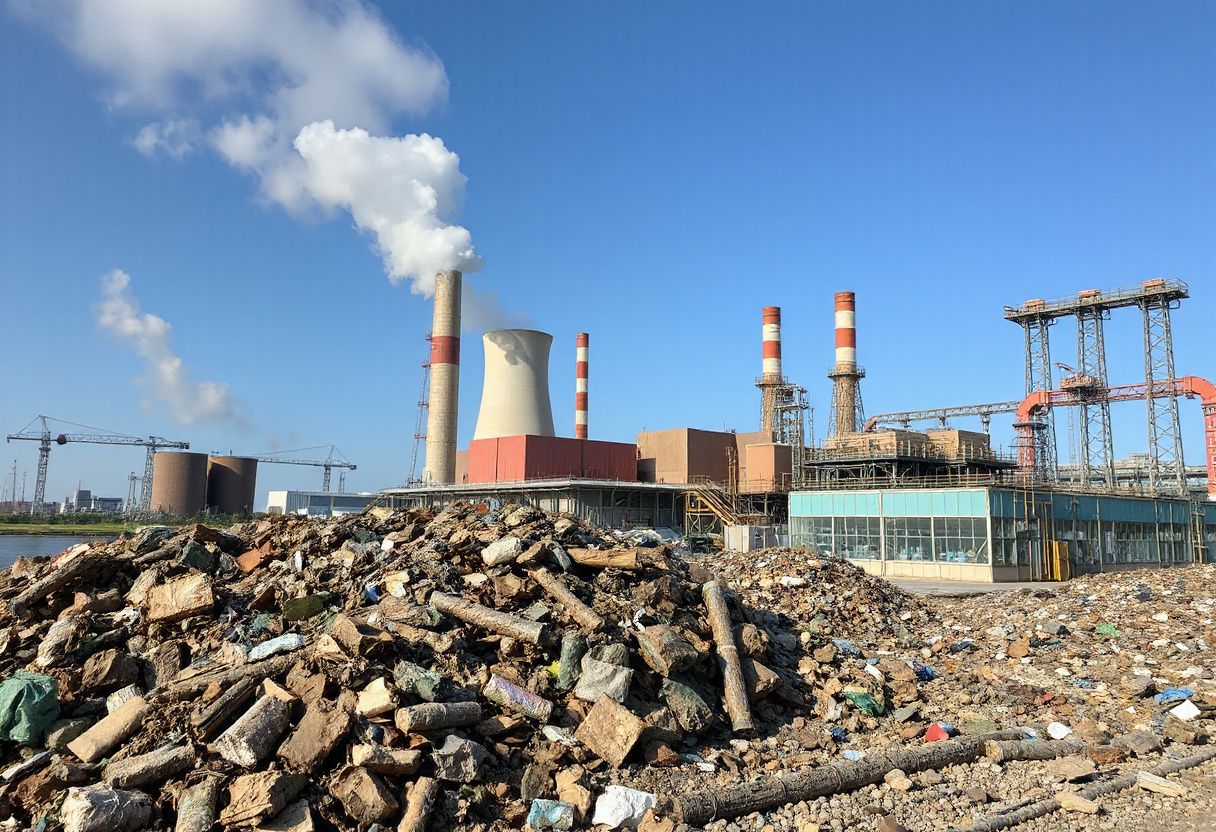
Modern industry faces a dual challenge: a growing need for energy and the necessity to effectively manage vast volumes of waste. The development and application of biofuels from industrial waste is one of the key directions that allows both problems to be solved simultaneously. This approach not only contributes to reducing negative environmental impact but also opens new economic opportunities for enterprises. Converting waste into valuable energy resources helps reduce dependence on fossil fuels and enhance energy security. UtilVtorProm actively supports and develops this initiative, offering comprehensive solutions for industrial waste management that can be used for biofuel production.
The relevance of this topic is amplified by global trends towards economic decarbonization and tightening environmental regulations. Industrial waste, previously considered merely a problem, is now viewed as a valuable raw material. This applies to various materials – from organic residues of the food industry to wood processing and agricultural waste. Their use for biofuel production not only reduces the volume of waste going to landfills but also minimizes greenhouse gas emissions. UtilVtorProm, as a leader in the field of environmental services for enterprises, provides expert support at all stages of this process, ensuring proper collection, transportation, and preliminary preparation of raw materials for further processing into biofuel.
Technologies for converting industrial waste into biofuel
Biofuels from industrial waste are obtained using various technological processes, among which the most common are anaerobic digestion, pyrolysis, gasification, and transesterification. Each of these methods has its own characteristics and is applied depending on the type and composition of the initial raw material. For example, organic waste with a high moisture content, such as food industry residues or wastewater, is ideally suited for anaerobic digestion, which results in biogas that can be used for electricity or heat production. Pyrolysis and gasification, in turn, are effective for processing solid organic waste such as wood waste, biomass, and plastic, converting them into syngas, liquid biofuel, or biochar.
The principle of these technologies is based on the decomposition of complex organic compounds into simpler ones under the influence of microorganisms (anaerobic digestion) or high temperatures without oxygen access (pyrolysis, gasification). The technical characteristics of the obtained biofuels depend on the initial raw material and the chosen process. For example, biogas consists mainly of methane (50-75%) and carbon dioxide, and has a high calorific value. Liquid biofuels, such as biodiesel or bioethanol, are similar in properties to traditional fuels and can be used in existing internal combustion engines. An important advantage of these biofuels is their environmental friendliness, as they contribute to reducing greenhouse gas emissions compared to fossil fuels.
Energy application of biofuels from industrial waste
The application of biofuels obtained from industrial waste covers a wide range of industries, contributing to energy independence and environmental sustainability. The most common is the use of biogas for electricity and heat production in cogeneration plants. Such plants can be integrated directly into industrial enterprises that generate waste, providing their own energy needs and reducing electricity costs. For example, in large livestock complexes, food industry enterprises, or urban wastewater treatment plants, biogas plants convert organic waste into a valuable energy resource. This allows not only solving the problem of waste disposal but also generating additional income from selling surplus electricity to the grid.
Liquid biofuels, such as biodiesel and bioethanol, find their application in the transport sector. Biodiesel, obtained from vegetable oils or animal fats, can be used as a standalone fuel or mixed with traditional diesel fuel in diesel engines. Bioethanol, produced from sugar- and starch-containing raw materials, is an alternative to gasoline. These biofuels help reduce dependence on imported petroleum products and cut harmful emissions into the atmosphere. Solid biofuels, such as biochar or fuel briquettes from wood processing waste, are used for heating industrial facilities and residential premises, as well as in thermal power plants, replacing coal. Thus, biofuels from waste contribute to the decarbonization of energy and ensure sustainable development.
Effective waste management for biofuel production
Effective management of industrial waste is a critically important stage for the successful development and application of biofuels. This process includes collection, sorting, transportation, and preliminary preparation of raw materials. Improper waste management can lead to environmental pollution and reduced efficiency of subsequent processing. Waste used for biofuel production may have different codes according to the National Waste List (NWL). For example, food industry waste can be classified as 02 03 04* (waste from primary processing of plant raw materials) or 02 05 01* (waste from meat and fish processing). Wood processing industry waste – 03 01 01* (wood waste). UtilVtorProm provides a full range of environmental services for enterprises, including the collection, transportation, and preparation of these wastes.
We ensure compliance with all environmental norms and standards, which guarantees safe and effective waste management. Our specialists develop individual waste management schemes for each client, taking into account the specifics of their activities and the type of generated waste. This allows for optimizing logistics, reducing costs, and maximizing the potential for converting waste into biofuel. Proper identification and classification of waste according to the NWL is a guarantee of the legality and transparency of all operations. UtilVtorProm has all the necessary licenses and permits to work with various categories of waste, ensuring a professional approach at every stage of cooperation.
Professional partnership with UtilVtorProm in waste management
UtilVtorProm is a reliable partner in industrial waste management, offering comprehensive and innovative solutions for enterprises striving for environmental responsibility and efficient resource use. Our activities are licensed and comply with the highest standards of quality and safety. We do not just collect and transport waste; we develop strategies for its processing, including the preparation of raw materials for biofuel production. By contacting UtilVtorProm, you receive not only services but also expert support that will help your enterprise integrate the principles of the circular economy and achieve its environmental goals. Contact us today to discuss your needs and find optimal solutions for managing your industrial waste.