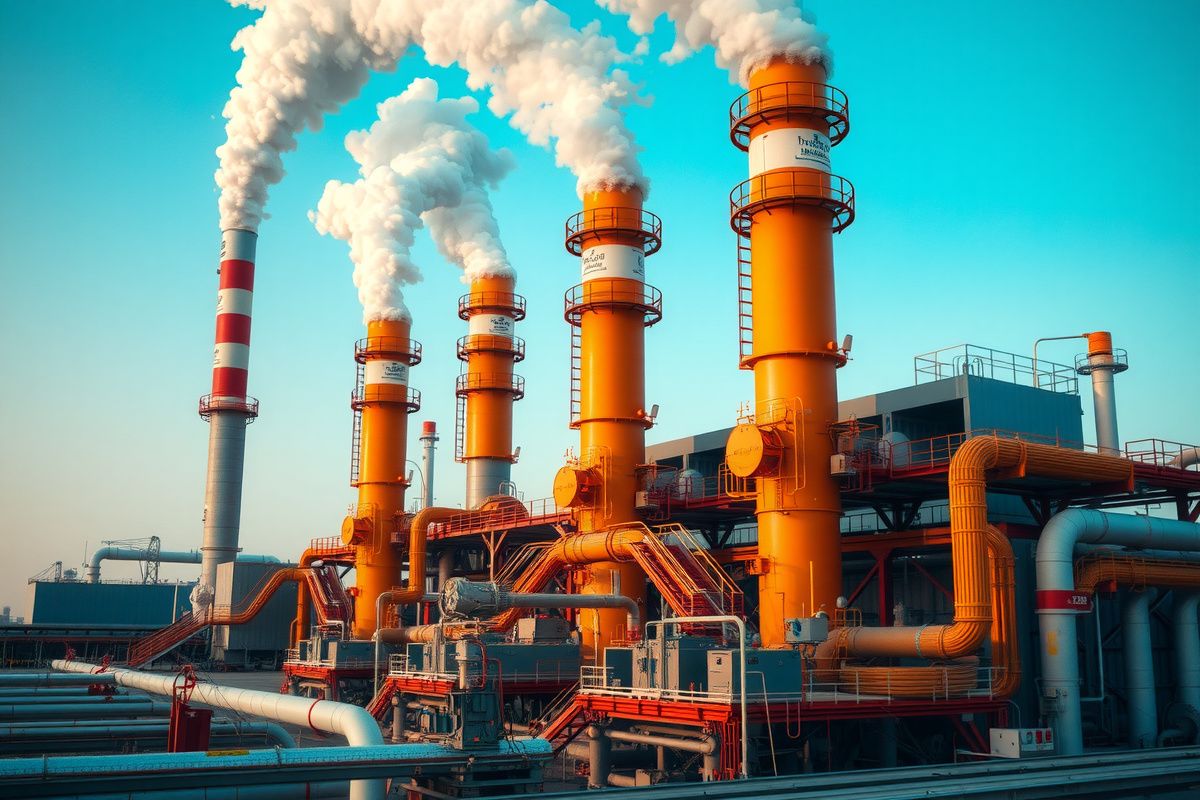
Modern industry faces ever-increasing demands for environmental safety and reduction of harmful emissions into the atmosphere. Industrial gas purification is one of the key aspects of sustainable development and responsible environmental stewardship. The use of adsorption materials for these purposes is a highly effective solution that allows for a significant reduction in the concentration of polluting components. Adsorption is a process in which gas molecules (adsorbate) adhere to the surface of a solid material (adsorbent). This method is widely used due to its versatility, cost-effectiveness, and ability to remove a wide range of pollutants, from volatile organic compounds to nitrogen and sulfur oxides. UtilVtorProm actively promotes the implementation of such technologies, providing comprehensive environmental services to enterprises, which also includes the management of waste adsorption materials.
The relevance of developing new and improving existing adsorption materials is due to the continuous growth of industrial production volumes and the tightening of environmental standards. This stimulates scientists and engineers to search for more efficient, selective, and regenerable adsorbents. Modern adsorption technologies allow not only to purify gases but also, in some cases, to utilize valuable components contained in waste streams, turning waste into resources. The development of adsorbents with increased capacity, resistance to degradation, and the possibility of multiple regeneration is a priority in this field. Our company, UtilVtorProm, understands the importance of this direction and helps enterprises effectively manage all stages of the life cycle of adsorption materials, from their application to safe waste management.
Types of Adsorption Materials and Their Physicochemical Properties
Adsorption materials used for industrial gas purification differ in their composition, structure, and mechanism of action. Among the most common are activated carbon, zeolites, silica gels, and polymer adsorbents. Activated carbon, due to its high porosity and large specific surface area, is a universal adsorbent for removing organic compounds, hydrogen sulfide, and other toxic substances. Its properties can be modified by chemical impregnation to increase selectivity for certain pollutants. Zeolites, crystalline aluminosilicates, have an ordered porous structure that allows them to act as molecular sieves, effectively separating gases by molecular size. Their ion-exchange capacity also makes them effective for removing polar molecules and some inorganic pollutants.
Silica gels, porous forms of silicon dioxide, are characterized by high hydrophilicity and are used for gas drying and removal of polar organic compounds. Polymer adsorbents, such as adsorption resins, have adjustable porosity and chemical structure, allowing for the creation of highly efficient materials for specific applications, for example, for removing low-concentration volatile organic compounds. The principle of action of these materials is based on physical adsorption (van der Waals forces) or chemical adsorption (formation of chemical bonds between the adsorbate and the adsorbent surface). The choice of a specific adsorbent depends on the type of pollutant, its concentration, the temperature and humidity of the gas stream, and the requirements for the degree of purification.
Practical Application of Adsorption Technologies in Industry
Adsorption materials are widely used in various industries for emission purification. In the chemical industry, they are used to remove solvents, volatile organic compounds (VOCs), chlorine, and other toxic gases generated during synthesis and production. For example, at paint and varnish manufacturing enterprises and pharmaceutical factories, adsorption units ensure the purification of air from organic solvent vapors. In the oil and gas industry, adsorbents are used for natural gas drying, removal of hydrogen sulfide and mercaptans, and purification of gas emissions from hydrocarbons. This ensures both environmental protection and the preservation of valuable components.
The metallurgical industry uses adsorption filters to purify flue gases from sulfur oxides, nitrogen oxides, and heavy metals, which is critically important for reducing acid rain and air pollution. At thermal power plants, adsorption units help reduce SO2 and NOx emissions. In addition, adsorption technologies are actively used in ventilation and air conditioning systems to remove unpleasant odors and harmful impurities in premises. Examples of equipment include adsorption columns, rotary adsorbers, and filters with adsorption layers. The effectiveness of these systems depends on the correct selection of the adsorbent, its periodic regeneration or replacement, and the optimization of process parameters.
Effective Management of Spent Adsorption Materials
After saturation, adsorption materials lose their effectiveness and require regeneration or management as waste. Proper handling of spent adsorbents is extremely important to prevent secondary environmental pollution. Depending on the type of adsorbent and the nature of the absorbed pollutants, spent materials can be classified as hazardous or non-hazardous waste. For example, activated carbon saturated with heavy metals or toxic organic compounds is considered hazardous waste. UtilVtorProm provides a full range of environmental services to enterprises, including collection, transportation, storage, and processing of spent adsorption materials.
Spent adsorbents can be codified according to the National Waste List (NWL). Depending on their composition and hazard, their codes may be: 15 02 02* (absorbents, filter materials, wiping cloths and protective clothing contaminated with hazardous substances) or 15 02 03 (absorbents, filter materials, wiping cloths and protective clothing not falling under code 15 02 02). In some cases, if the adsorbent was used for purifying specific gases, its code may correspond to other categories, for example, 19 01 07* (solid waste from gas purification containing hazardous substances). Our company ensures strict adherence to all environmental norms and standards in handling these wastes, using modern and safe processing methods, including thermal destruction, chemical treatment, or safe disposal for non-regenerated materials.
A Reliable Partner in Environmental Management: UtilVtorProm
Cooperation with UtilVtorProm guarantees your enterprise a professional and responsible approach to all aspects of environmental management, in particular, to the handling of spent adsorption materials. Our company has all the necessary licenses and permits to carry out activities for the collection, transportation, storage, processing, and disposal of hazardous and non-hazardous waste. We offer individual solutions developed taking into account the specifics of your production and the requirements of current legislation. By contacting UtilVtorProm, you get a reliable partner who will help you not only comply with environmental standards but also optimize waste management costs, minimizing risks to the environment and the reputation of your business. Contact us today to discuss your needs and get qualified advice.