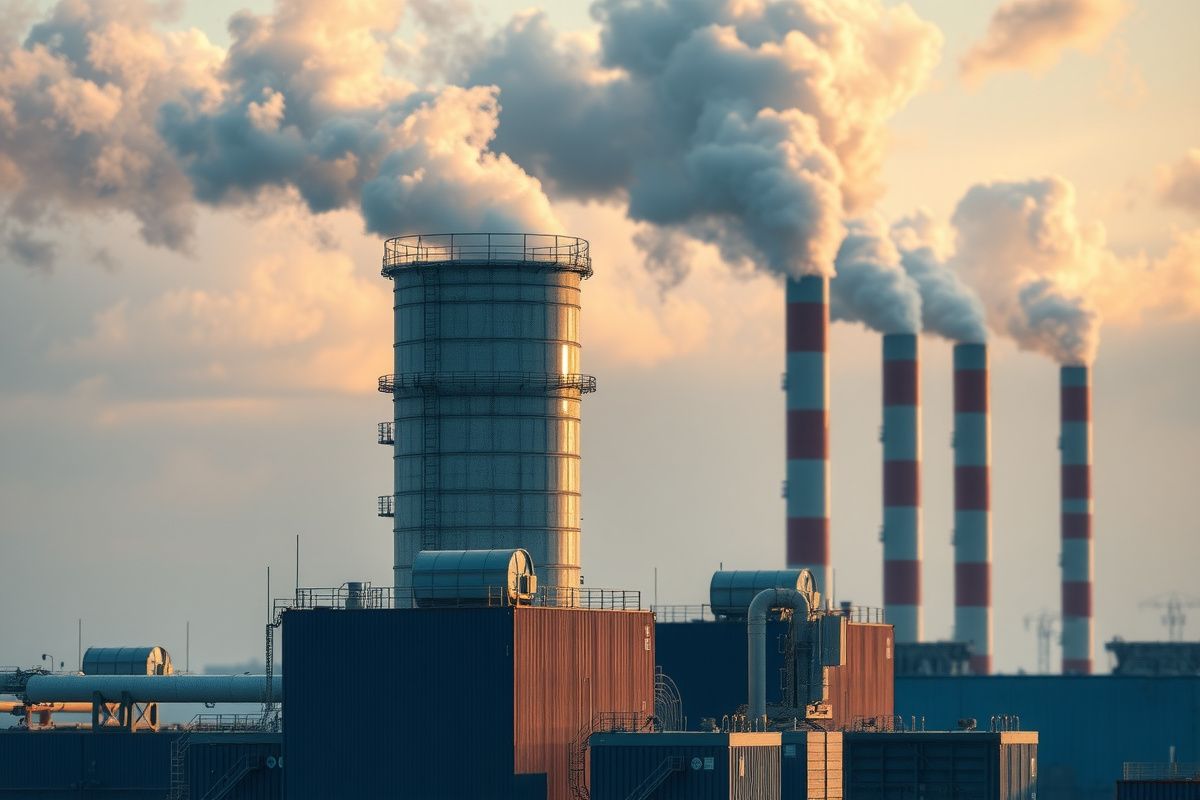
In today's world, where climate change issues are becoming increasingly acute, the development and implementation of effective greenhouse gas (GHG) emission monitoring systems by industrial enterprises are not just desirable, but critically necessary for sustainable development. This allows companies not only to comply with national and international environmental standards but also to optimize their production processes, reducing their carbon footprint and increasing their competitiveness. Effective monitoring is the basis for making informed decisions on emission reduction, investing in green technologies, and forming transparent reporting for stakeholders.
The relevance of this topic for industry in Ukraine and worldwide is growing every year, as global commitments to reduce GHG emissions, such as the Paris Agreement, require concrete actions from states and businesses. The implementation of advanced monitoring systems allows enterprises not only to fulfill these obligations but also to gain access to new markets, attract environmentally responsible investors, and enhance their reputation. UtilVtorProm, as a leading specialist in environmental services, understands the importance of these processes and is ready to provide expert support in the development and integration of such systems.
Automated Complexes for Greenhouse Gas Accounting
Modern GHG emission monitoring systems are complex automated complexes that integrate various sensors, analyzers, and software for continuous data collection, processing, and analysis. The main components of such systems are gas analyzers that measure the concentration of CO2, CH4, N2O, and other GHGs in flue gases and technological emissions, as well as fuel and raw material consumption control systems that allow calculating emissions based on emission factors. The principle of operation is based on continuous gas sampling, their analysis using optical, electrochemical, or infrared methods, and the transmission of the obtained data to a central server for further processing and visualization.
The technical characteristics of these systems are distinguished by high measurement accuracy, reliability, and the ability to integrate with existing enterprise management systems. They provide real-time monitoring, which allows for prompt reaction to changes in production processes and timely detection of abnormal emissions. The modular architecture of such systems allows them to be adapted to the specific needs of each enterprise, taking into account the type of production, emission volumes, and regulatory requirements. In addition, modern systems are equipped with self-diagnostic and calibration functions, which significantly simplifies their operation and maintenance.
Application of Integrated Environmental Control Systems in Production
Integrated environmental control systems for GHG emissions are widely used in various industries where GHG emissions are a significant problem. For example, in the metallurgical industry, where metal smelting processes are accompanied by significant emissions of CO2 and other gases, such systems allow monitoring the efficiency of blast furnaces and converters, optimizing fuel use, and reducing the overall carbon footprint. In the oil and gas industry, they are used to monitor methane emissions from pipelines, storage facilities, and processing plants, which is critically important for preventing leaks and reducing product losses.
Energy enterprises, particularly thermal power plants, are among the largest sources of greenhouse gas emissions. For them, the implementation of monitoring systems allows controlling the efficiency of fuel combustion, optimizing the operating modes of boilers and turbines, and evaluating the effectiveness of implemented carbon capture and storage technologies. In the chemical industry, these systems ensure control over emissions of specific GHGs generated during the synthesis of various substances, helping enterprises comply with strict environmental standards. Examples of equipment include stationary and portable gas analyzers, continuous emission monitoring systems (CEMS), as well as software complexes for modeling and forecasting emissions.
Waste Management of Control and Measuring Instruments and Reagents
The implementation and operation of GHG emission monitoring systems inevitably lead to the generation of specific wastes that require proper handling. Such wastes include spent filters and cartridges of gas analyzers, residues of reagents for calibration and maintenance of equipment, as well as failed electronic components. These wastes may contain hazardous substances such as heavy metals, organic compounds, and chemical reagents, so their improper handling can lead to environmental pollution and threats to human health. UtilVtorProm provides comprehensive environmental services to enterprises, including the collection, transportation, storage, and processing of such wastes.
Spent filters and cartridges containing sorbents or other chemical substances are classified as hazardous waste with code 15 02 02*. Failed electronic components and boards may contain heavy metals and are classified as waste electrical and electronic equipment with code 16 02 13* or 16 02 11* depending on the presence of hazardous components. Residues of chemical reagents used for calibration and maintenance may belong to the category of solvent, acid, or alkali wastes, which are assigned appropriate codes, for example, 16 05 08* for waste solutions containing organic solvents. UtilVtorProm guarantees full compliance with all regulatory requirements and standards in handling these wastes, ensuring safety and environmental responsibility.
Partnership with UtilVtorProm: A Reliable Path to Environmental Safety
Cooperation with UtilVtorProm in the development and implementation of GHG emission monitoring systems, as well as in waste management, is a guarantee of a professional approach and environmental safety for your enterprise. We have all the necessary licenses and permits to carry out activities in the field of hazardous waste management, and our specialists possess deep knowledge and many years of experience in this field. We offer individual solutions that meet all legislative requirements and the specifics of your production, providing a full cycle of services — from consultations to the implementation of complex projects. Contact us to discuss your needs and get qualified support in building an effective environmental monitoring and waste management system.